Love this? Save it for later!
Share the inspiration with your friends
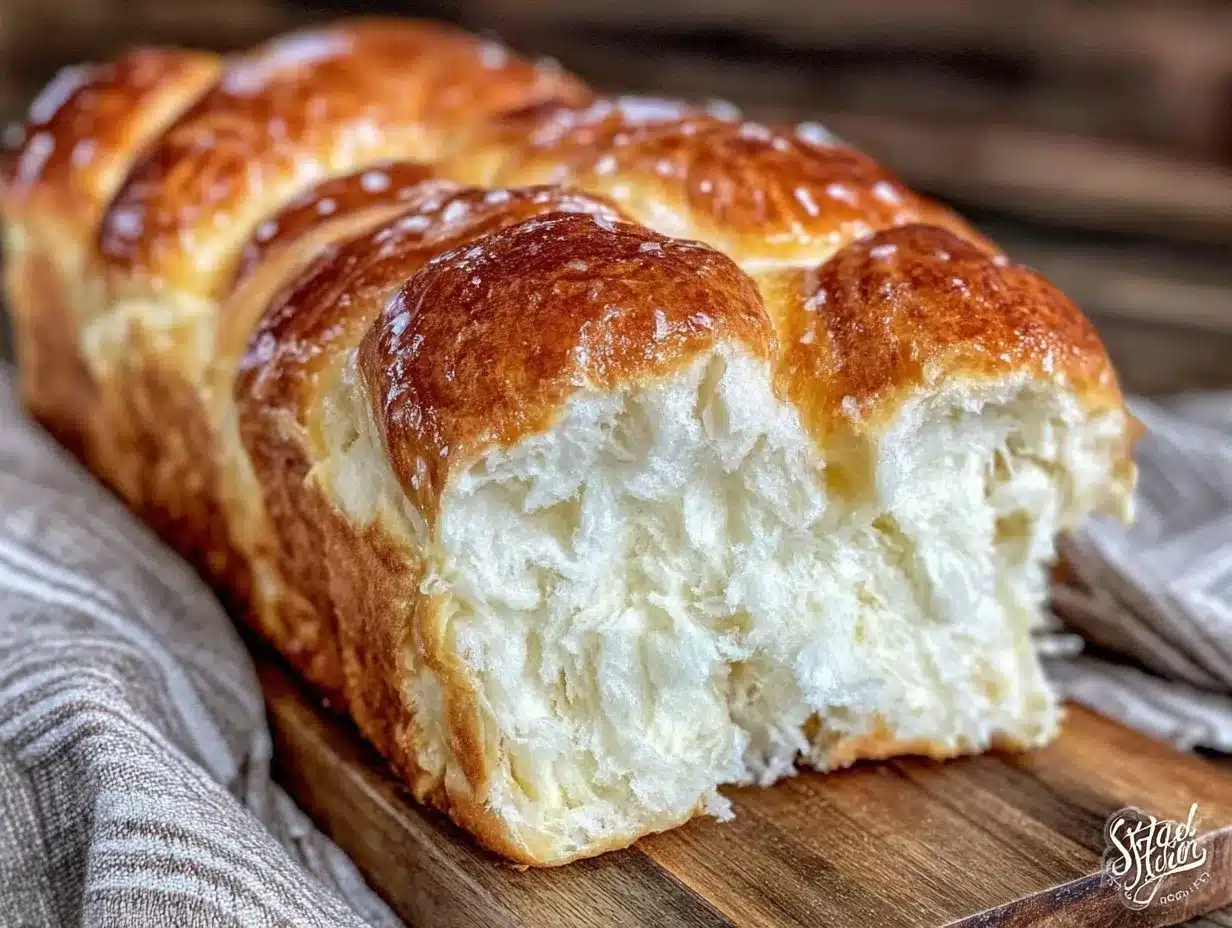
“I never thought a loaf of bread could change how I see my kitchen,” I confessed to my friend Lisa last Sunday morning, crumbs still dusting my shirt. It all started when I stumbled upon a quaint little bakery tucked away in an unassuming corner of the city’s art district. The sign was faded, the windows fogged with flour dust, but the scent wafting out was unmistakable—a sweet, milky aroma that felt like a warm hug in bread form.
Curious, I bought a loaf of Shokupan, the famous Japanese milk bread known for its irresistibly fluffy, pull-apart texture. Honestly, I wasn’t expecting much beyond a soft loaf. But when I tore into it, the clouds of bread seemed to melt on my tongue with a subtle richness that reminded me of childhood breakfasts I never had. The next day, determined to recreate that magic, I made a complete mess of my kitchen trying to capture the exact softness and flavor.
Maybe you’ve been there—wanting something comforting yet delicate, simple yet special. This fluffy pull-apart Japanese milk bread recipe is the one that finally stuck after a few flour-covered attempts and late-night tweaks. I mean, the dough’s slight sweetness, the tender crumb, and that satisfying pull-apart action make it more than just bread. It’s a little moment of joy you can make yourself, even if you’re not a bread expert. Let me tell you, this Shokupan recipe has become my go-to whenever I want to impress guests or just treat myself to something ridiculously good without fuss.
Why You’ll Love This Recipe
After baking this fluffy pull-apart Japanese milk bread more times than I can count, I’m convinced it’s one of the most rewarding homemade breads you can make. Here’s why this recipe has earned a permanent place in my baking routine:
- Quick & Easy: Comes together in under 3 hours, which means you don’t need to block your whole day for it.
- Simple Ingredients: No bizarre components here—just pantry basics like milk, butter, and yeast.
- Perfect for Breakfast & Snacks: Whether it’s a cozy Sunday brunch or an afternoon tea, this bread fits right in.
- Crowd-Pleaser: The pillowy texture always gets people asking for the recipe, no matter their usual bread preferences.
- Unbelievably Delicious: The subtle sweetness with a buttery finish is comfort food with a delicate twist.
What makes this version different? The secret lies in the tangzhong method—a cooked flour paste that locks in moisture and keeps the bread incredibly soft for days. Plus, I balance the ingredients just right so you get that classic Shokupan pull-apart effect without the dough turning sticky or tough. Honestly, it’s like the bread hugs you back every time you pull it apart. If you’ve tried other recipes that ended up dense or dry, this one will surprise you.
This recipe is more than just baking; it’s about capturing that little burst of happiness in every bite. And trust me, once you try it, you’ll want to make it again and again.
What Ingredients You Will Need
This fluffy pull-apart Japanese milk bread recipe uses simple, wholesome ingredients to deliver that perfect soft texture and subtle sweetness without any fuss. Most are pantry staples, and where possible, I’ve included easy substitutions for dietary needs.
- For the Tangzhong (Flour Paste):
- 40g (3 tbsp) bread flour – I prefer King Arthur for consistent texture
- 200ml (¾ cup + 1 tbsp) whole milk – full-fat gives best richness, but you can use plant-based milk if needed
- For the Dough:
- 320g (2 ½ cups) bread flour – bread flour is key for that chewy pull-apart texture
- 50g (¼ cup) granulated sugar – balances the mild tang from the yeast
- 7g (2 tsp) instant yeast – I recommend Fleischmann’s for reliable rise
- 6g (1 tsp) fine sea salt – enhances flavor without overpowering
- 160ml (⅔ cup) whole milk, warm – about 110°F/43°C
- 1 large egg, room temperature – adds richness and structure
- 40g (3 tbsp) unsalted butter, softened – European-style butter works beautifully
Ingredient tips: If you want a dairy-free option, swap whole milk with almond or oat milk, and use vegan butter. For gluten-free baking, this recipe is trickier, but using a high-quality gluten-free bread flour blend might work with some adjustments.
Equipment Needed
- Mixing Bowls: One medium and one small bowl for tangzhong and dough mixing.
- Measuring Cups and Spoons: For precise ingredient measurement; kitchen scales are even better for baking accuracy.
- Whisk and Wooden Spoon: To mix the tangzhong and dough initially.
- Dough Hook or Stand Mixer (optional): Helps knead the dough effortlessly, but you can knead by hand if you’re up for some arm work.
- Loaf Pan: A 9×5-inch (23×13 cm) loaf pan is ideal for shaping the bread.
- Plastic Wrap or Clean Kitchen Towel: To cover the dough during proofing.
- Pastry Brush: For brushing melted butter on the bread after baking (optional but recommended).
Personally, I use a stand mixer with a dough hook because it saves time and gives me a consistent knead, but if you don’t have one, kneading by hand for about 15-20 minutes works just fine. Don’t rush it—your arms will thank you later! Also, keeping your equipment clean and dry is key for a good rise, especially when working with yeast doughs.
Preparation Method
- Make the Tangzhong: In a small saucepan, whisk together 40g bread flour and 200ml milk until smooth. Cook over medium-low heat, stirring constantly, until the mixture thickens to a pudding-like consistency (about 3-5 minutes). Remove from heat and let cool to room temperature (about 20 minutes). This step locks moisture inside the bread for softness.
- Combine Dry Ingredients: In a large mixing bowl, whisk together 320g bread flour, 50g sugar, 7g instant yeast, and 6g salt. Make sure the salt and yeast are on opposite sides of the bowl to prevent salt from killing the yeast.
- Mix Wet Ingredients: In a separate container, whisk the egg and warm 160ml milk together.
- Form the Dough: Add the cooled tangzhong and the egg-milk mixture to the dry ingredients. Stir with a wooden spoon or your mixer on low speed until the dough begins to come together.
- Knead the Dough: Knead for 10 minutes by hand or 6-7 minutes with a stand mixer using a dough hook. The dough should be smooth, elastic, and slightly tacky but not sticky. Add softened butter and knead for another 5 minutes until fully incorporated and the dough is shiny and stretchy.
- First Proof: Shape the dough into a ball and place it in a lightly oiled bowl. Cover with plastic wrap or a damp kitchen towel. Let it rise in a warm place for about 1 to 1.5 hours, or until doubled in size. (Tip: I usually place mine in the oven with just the light on for consistent warmth.)
- Shape the Loaf: Once risen, punch down the dough gently to release air. Divide into 3 equal portions (about 200g each). Roll each into an oval shape, fold the long edges towards the center, then roll up tightly. Place the three rolls side by side in a greased 9×5-inch loaf pan.
- Second Proof: Cover the pan loosely and let rise for another 40-50 minutes until the dough puffs up about 1 inch above the pan edges.
- Bake: Preheat oven to 350°F (175°C). Brush the top of the dough gently with milk or egg wash for a golden crust. Bake for 30-35 minutes until the loaf is golden brown and sounds hollow when tapped.
- Cool & Serve: Remove from oven and immediately brush with melted butter for a soft, shiny crust. Let cool in the pan for 10 minutes, then transfer to a wire rack to cool completely before slicing. This keeps the crumb from getting gummy.
Cooking Tips & Techniques
Making fluffy pull-apart Japanese milk bread can seem intimidating, but a few tricks make it straightforward and foolproof.
- Temperature Matters: Use warm milk (about 110°F/43°C) to activate yeast, but not too hot to kill it. I once ruined a batch by pouring boiling milk—lesson learned the hard way!
- Patience with Proofing: Don’t rush the rising stages. Proper fermentation develops flavor and texture. If your kitchen is cold, find a warm spot like near a radiator or inside an off oven with the light on.
- Kneading Texture: The dough should be tacky but not sticky. If sticking excessively, lightly dust your surface with flour—but don’t overdo it, or the bread can turn tough.
- Tangzhong Magic: This cooked flour paste is the secret to softness. Make sure it cools completely before adding to the dough to avoid killing the yeast.
- Butter Timing: Adding softened butter after initial kneading helps with gluten development and richer flavor. Avoid adding it too early or cold.
- Loaf Shaping: Rolling the dough into tight cylinders ensures an even crumb and those classic pull-apart layers.
- Bake Check: If the top browns too quickly, loosely tent foil over the loaf during the last 10 minutes.
Variations & Adaptations
This fluffy pull-apart Japanese milk bread recipe is versatile and adapts well to different tastes and dietary needs.
- Whole Wheat Version: Substitute half the bread flour with whole wheat flour for a nuttier flavor and added fiber. The bread will be denser but still soft.
- Sweet Variations: Add 1 tsp vanilla extract or 1 tbsp honey to the dough for a subtly sweet twist perfect for dessert bread.
- Dairy-Free Adaptation: Use almond or oat milk in place of cow’s milk, and swap butter for coconut oil or vegan butter. The texture stays surprisingly close to the original!
- Herb-Infused: Mix in 1 tbsp finely chopped fresh rosemary or thyme to the dough for a savory flavor boost that pairs wonderfully with cheese.
- Stuffed Loaf: Before rolling the dough, spread softened cream cheese or sweet red bean paste for a delightful surprise inside.
Once, I tried adding matcha powder to the tangzhong for a green tea version. It gave the bread a subtle earthiness and a beautiful pale green color—perfect for special occasions!
Serving & Storage Suggestions
Serve this fluffy pull-apart Japanese milk bread slightly warm or at room temperature. The soft texture and mild sweetness make it ideal for toast, sandwiches, or simply with butter and jam. For an extra treat, slice thick and toast lightly to bring out that subtle caramelized flavor.
This bread pairs beautifully with savory dishes too. Think homemade chicken curry or a bowl of miso soup, where the bread’s pillowy softness balances the bold flavors perfectly.
Storage: Store leftover bread in an airtight container or resealable bag at room temperature for up to 3 days. For longer storage, freeze slices or the whole loaf wrapped tightly in plastic wrap and foil for up to 1 month.
Reheating: Thaw frozen bread overnight in the fridge or on the counter. Warm slices in a toaster or oven at 320°F (160°C) for 5-7 minutes to restore softness and warmth.
Over time, the bread’s flavor deepens slightly, making it even more comforting on day two or three. Honestly, sometimes I prefer it a day old with a slather of honey butter.
Nutritional Information & Benefits
One slice (about 60g) of this fluffy pull-apart Japanese milk bread provides approximately:
- Calories: 150-170 kcal
- Carbohydrates: 28g
- Protein: 5g
- Fat: 3.5g
- Fiber: 1g
- Sugar: 4g
The recipe’s key ingredients like milk and egg add valuable protein and calcium, making it a more nourishing option than many store-bought breads. Using bread flour supports better gluten structure, which helps with digestibility for some people.
This bread is naturally free from preservatives and artificial additives, and you can easily make it dairy-free or lower-sugar with simple swaps. For anyone mindful about gluten, opting for a mix with whole wheat can add fiber and nutrients.
Conclusion
This fluffy pull-apart Japanese milk bread recipe is a wonderful way to bring a little softness and sweetness into your daily bread routine. It’s approachable for beginners yet rewarding enough for avid bakers to appreciate the subtleties of the tangzhong method. I love how it transforms simple ingredients into something irresistibly tender and comforting.
Feel free to tweak this recipe to match your tastes or dietary needs—maybe a hint of vanilla or a sprinkle of herbs will become your signature twist! I’d love to hear about how you make it your own, so don’t hesitate to share your baking stories and photos in the comments below.
Trust me, once you try this Shokupan recipe, pulling apart your own homemade loaf will become one of your favorite kitchen moments. Happy baking!
FAQs
What makes Japanese milk bread so fluffy compared to regular bread?
It’s the tangzhong method—a cooked flour and milk paste—that locks in moisture and creates a soft, tender crumb that stays fresh longer.
Can I make this bread without a stand mixer?
Absolutely! Kneading by hand works well; just be prepared for about 15-20 minutes of kneading until the dough is smooth and elastic.
How do I know when the dough has risen enough?
The dough should roughly double in size and look puffy. You can do the “poke test”—gently press a finger into the dough; if the indentation springs back slowly, it’s ready.
Can I freeze the bread after baking?
Yes, wrap the cooled loaf tightly and freeze for up to one month. Thaw overnight and warm before serving for best results.
Is it possible to make this recipe gluten-free?
Gluten-free baking is tricky with this method, but using a high-quality gluten-free bread flour blend and adjusting liquids may work. It may not be as fluffy but still delicious.
Pin This Recipe!
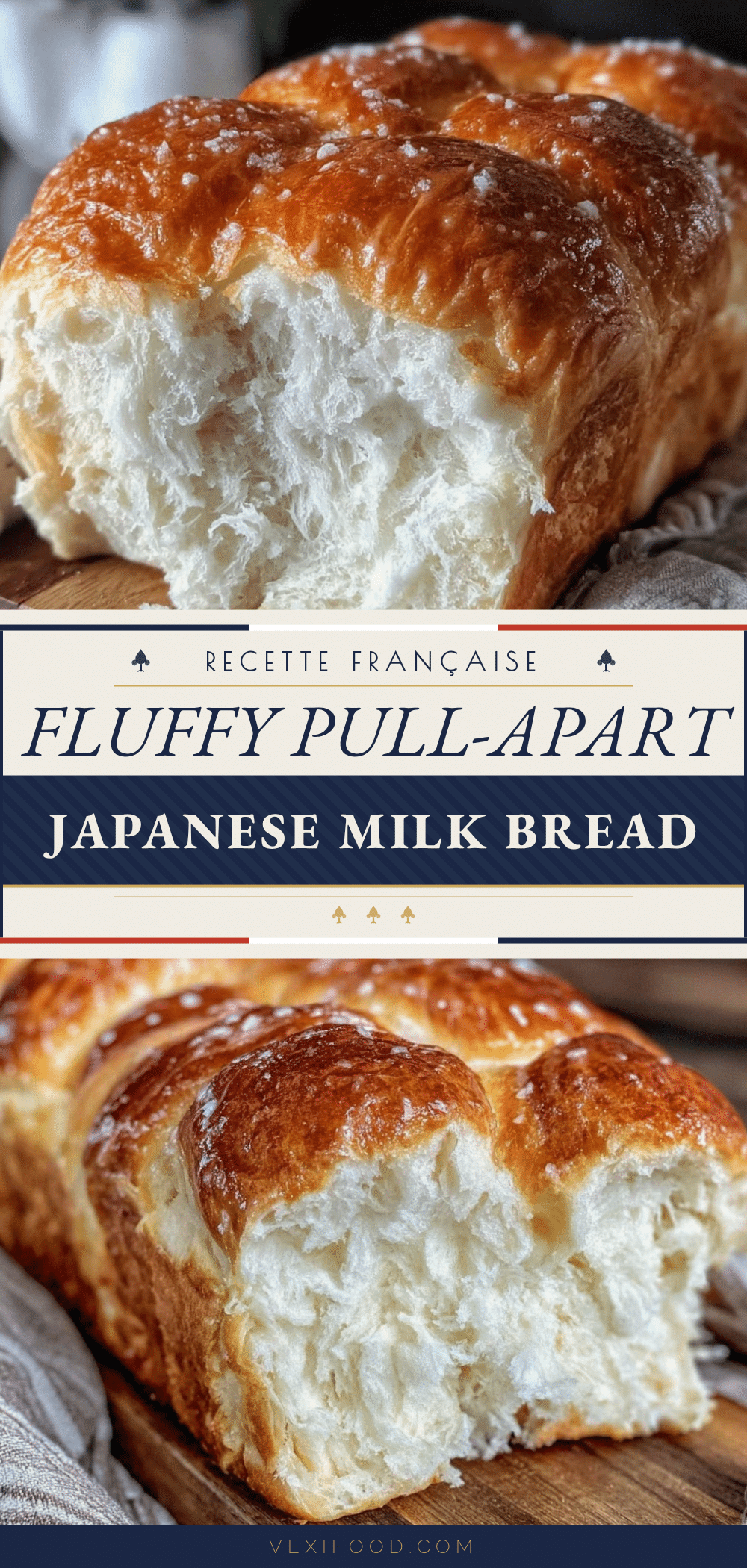
Fluffy Pull-Apart Japanese Milk Bread
This fluffy pull-apart Japanese milk bread, also known as Shokupan, features a soft, tender crumb and subtle sweetness using the tangzhong method for extra moisture and softness.
- Prep Time: 30 minutes
- Cook Time: 35 minutes
- Total Time: 2 hours 45 minutes
- Yield: 1 loaf (about 12 slices) 1x
- Category: Bread
- Cuisine: Japanese
Ingredients
- 40g (3 tbsp) bread flour for tangzhong
- 200ml (¾ cup + 1 tbsp) whole milk for tangzhong
- 320g (2 ½ cups) bread flour for dough
- 50g (¼ cup) granulated sugar
- 7g (2 tsp) instant yeast
- 6g (1 tsp) fine sea salt
- 160ml (⅔ cup) whole milk, warm (about 110°F/43°C)
- 1 large egg, room temperature
- 40g (3 tbsp) unsalted butter, softened
Instructions
- Make the Tangzhong: In a small saucepan, whisk together 40g bread flour and 200ml milk until smooth. Cook over medium-low heat, stirring constantly, until thickened to pudding-like consistency (3-5 minutes). Remove from heat and cool to room temperature (about 20 minutes).
- Combine Dry Ingredients: In a large bowl, whisk together 320g bread flour, 50g sugar, 7g instant yeast, and 6g salt, keeping salt and yeast on opposite sides.
- Mix Wet Ingredients: Whisk the egg and warm 160ml milk together.
- Form the Dough: Add cooled tangzhong and egg-milk mixture to dry ingredients. Stir until dough begins to come together.
- Knead the Dough: Knead 10 minutes by hand or 6-7 minutes with stand mixer dough hook until smooth and elastic. Add softened butter and knead another 5 minutes until shiny and stretchy.
- First Proof: Shape dough into ball, place in lightly oiled bowl, cover, and let rise in warm place 1 to 1.5 hours until doubled.
- Shape the Loaf: Punch down dough, divide into 3 equal portions (~200g each). Roll each into oval, fold edges to center, roll tightly. Place rolls side by side in greased 9×5-inch loaf pan.
- Second Proof: Cover pan loosely and let rise 40-50 minutes until dough puffs about 1 inch above pan edges.
- Bake: Preheat oven to 350°F (175°C). Brush dough top with milk or egg wash. Bake 30-35 minutes until golden brown and hollow sounding when tapped.
- Cool & Serve: Remove from oven, brush with melted butter. Cool in pan 10 minutes, then transfer to wire rack to cool completely before slicing.
Notes
Use warm milk (about 110°F) to activate yeast without killing it. Do not rush proofing stages for best flavor and texture. Dough should be tacky but not sticky; lightly dust flour if needed. Cool tangzhong completely before adding to dough. Add softened butter after initial kneading. If top browns too quickly, tent with foil during last 10 minutes of baking.
Nutrition
- Serving Size: 1 slice (about 60g)
- Calories: 160
- Sugar: 4
- Fat: 3.5
- Carbohydrates: 28
- Fiber: 1
- Protein: 5
Keywords: Japanese milk bread, Shokupan, pull-apart bread, tangzhong bread, fluffy bread, homemade bread, soft bread