Love this? Save it for later!
Share the inspiration with your friends
Introduction
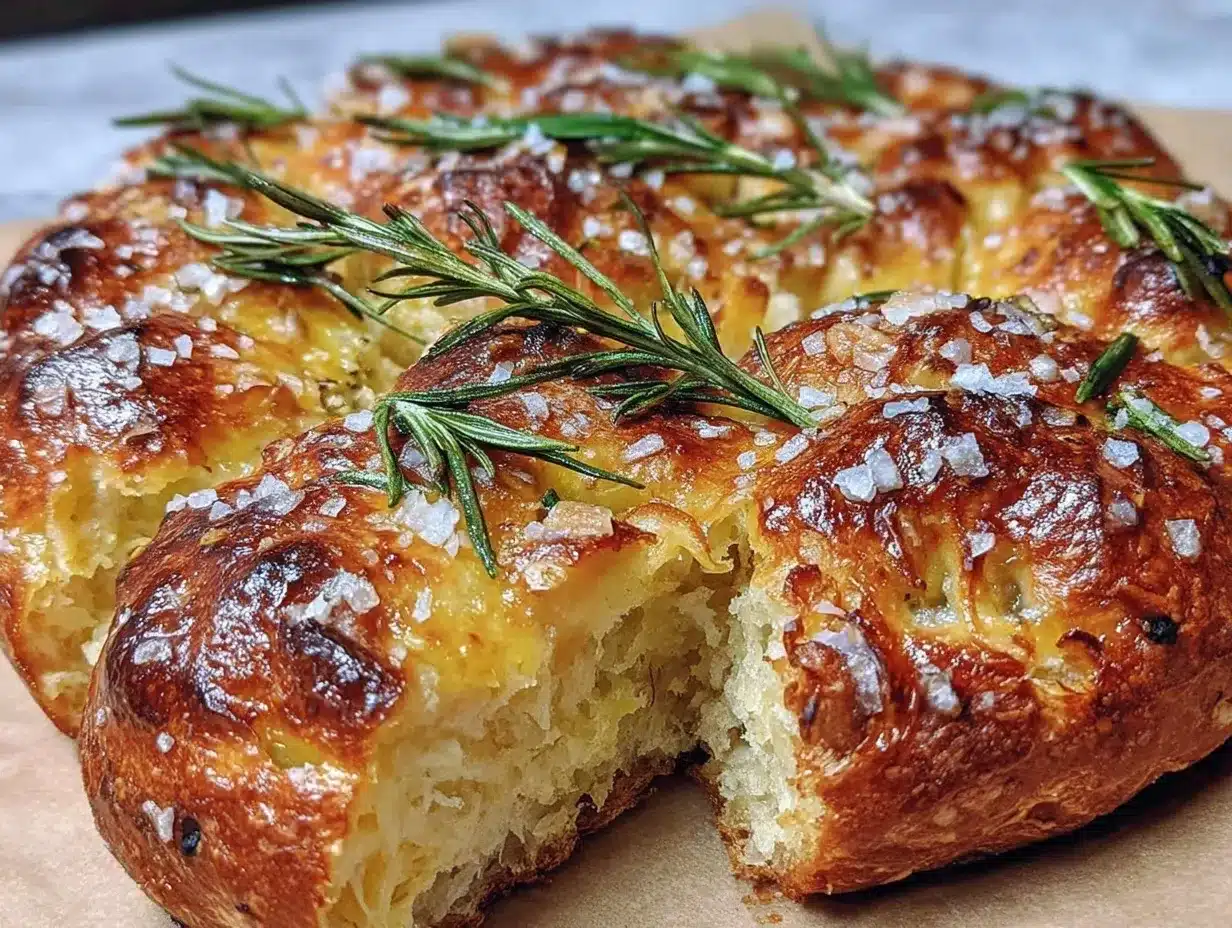
“I wasn’t expecting much when I dropped by just to grab a book I’d forgotten,” I remember thinking, but the moment I stepped in, the unmistakable aroma of garlic and rosemary wrapped around me like a warm hug. My neighbor, Paul, wasn’t making a big deal of it — just casually sliding a golden-brown focaccia from the oven like it was no effort at all. Honestly, it looked effortless, but that crisp crust and those fluffy, sourdough pockets spoke volumes about some serious kitchen magic.
He laughed off my praise, shrugging as if baking this crispy no-knead rosemary garlic sourdough focaccia with flaky sea salt was something he whipped up every other day without breaking a sweat. The kitchen was a mess — a cracked bowl here, a sprinkle of flour there — and I got distracted trying to jot down the recipe before his doorbell rang, interrupting the moment. You know that feeling when something so simple smells this incredible? That’s why this recipe stuck with me. It’s the kind of bread you don’t bake to impress, but somehow, everyone ends up impressed anyway.
If you’ve ever been caught off guard by a neighbor’s seemingly effortless homemade bread that tastes like a bakery masterpiece, you know exactly what I mean. This crispy no-knead rosemary garlic sourdough focaccia with flaky sea salt is just that—simple, rustic, and absolutely unforgettable.
Why You’ll Love This Recipe
Having baked this recipe countless times in my own kitchen (with a few experiments and occasional happy accidents), I can say it’s a game-changer for homemade bread lovers. Here’s why you’ll want this crispy no-knead rosemary garlic sourdough focaccia in your baking rotation:
- Quick & Easy: No kneading required — just mix, rest, and bake. It comes together in under 3 hours, making it perfect for busy weeknights or spontaneous weekend baking.
- Simple Ingredients: Uses pantry staples like flour, yeast, and garlic with fresh rosemary — no fancy or hard-to-find components needed.
- Perfect for Entertaining: Whether for a casual dinner or a holiday spread, this focaccia impresses guests with its crispy crust and tender crumb.
- Crowd-Pleaser: The combo of garlic, rosemary, and flaky sea salt always wins over both kids and adults—trust me, it disappears fast!
- Unbelievably Delicious: The crispy outer crust contrasts with the chewy, sourdough-infused interior, creating a texture that’s pure comfort food bliss.
This isn’t your everyday focaccia. The no-knead method means it’s approachable, but the sourdough starter brings complex flavor, and the generous sprinkling of flaky sea salt on top adds that perfect finishing touch. I’ve tried other versions, but this one nails the balance of flavor and texture every time. It’s just the kind of recipe that makes you close your eyes and savor that first bite, knowing you nailed it without the fuss.
What Ingredients You Will Need
This recipe uses simple, wholesome ingredients that come together to create bold flavor and satisfying texture without fuss. Most are pantry staples, and substitutions are easy if needed.
- For the Dough:
- 500g (4 cups) bread flour (I prefer King Arthur for consistent results)
- 100g (½ cup) active sourdough starter (fed and bubbly; if you’re new, you can substitute with 2 tsp instant yeast)
- 350ml (1½ cups) lukewarm water (around 75°F/24°C)
- 10g (2 tsp) fine sea salt (balances the flavor)
- 2 tbsp olive oil (plus extra for drizzling)
- For the Topping:
- 3 cloves garlic, thinly sliced (adds sharp aromatic punch)
- 2 tbsp fresh rosemary leaves, roughly chopped (use fresh for best flavor)
- Flaky sea salt, to sprinkle generously (Maldon is my go-to)
- Olive oil, for drizzling before baking
Substitution tips: If you don’t have sourdough starter, instant yeast works fine, but the flavor won’t have that signature tang. You can swap bread flour for all-purpose, but expect a slightly less chewy texture. For a gluten-free version, try a blend designed for bread baking, although results vary.
Equipment Needed
- Large mixing bowl (glass or plastic preferred for dough resting)
- Measuring cups and spoons or digital kitchen scale (a scale ensures accuracy)
- Wooden spoon or dough whisk (great for mixing sticky doughs)
- 9×13 inch (23×33 cm) rimmed baking sheet or cast iron pan (cast iron yields a crispier bottom crust)
- Plastic wrap or kitchen towel (to cover dough during fermentation)
- Sharp knife or dough scraper (for dimpling the dough)
- Oven thermometer (optional but helpful for consistent baking temperature)
If you don’t own a dough whisk, a sturdy wooden spoon works just fine for mixing. I’ve used disposable parchment paper on baking sheets — makes cleanup a breeze! For budget-friendly options, a simple rimmed baking tray will do; you don’t need fancy pans to get that crispy crust.
Preparation Method
- Mix the dough (10 minutes): In your large mixing bowl, combine 500g bread flour, 100g active sourdough starter, and 350ml lukewarm water. Stir with a wooden spoon until a shaggy dough forms. Cover loosely with plastic wrap and let rest for 30 minutes. (This autolyse step helps gluten develop naturally.)
- Add salt and oil (5 minutes): Sprinkle 10g sea salt over the dough, add 2 tablespoons olive oil, and mix thoroughly. The dough will be sticky — don’t add flour here! Cover again.
- Bulk fermentation (2 to 3 hours): Let the dough rest at room temperature (about 70°F/21°C). Every 30 minutes for the first 2 hours, stretch and fold the dough inside the bowl — grab one side, pull it up, and fold it over the center. This builds strength without kneading. After the last fold, cover tightly and let it finish fermenting until airy and bubbly.
- Prepare the pan and shape dough (10 minutes): Generously oil your baking sheet or cast iron pan. Transfer the dough gently, using a wet spatula or your hands. Press the dough out to the edges, but don’t overwork it. Cover and rest for 20 to 30 minutes.
- Dimple and add toppings (5 minutes): Using your fingertips dipped in olive oil, press deep dimples all over the dough surface. Scatter thin garlic slices and chopped rosemary evenly. Drizzle with more olive oil and sprinkle flaky sea salt generously.
- Bake (25 to 30 minutes): Preheat your oven to 450°F (230°C) with a rack in the lower third. Bake the focaccia for 25 to 30 minutes until golden brown and crispy on top. The bottom should be crisp and slightly charred in spots — that’s the magic.
- Cool and serve: Let the focaccia cool on a wire rack for at least 15 minutes before slicing. This resting period lets the crumb set and makes cutting easier.
Pro tip: If you notice the garlic starting to brown too quickly during baking, tent the focaccia loosely with foil in the last 5 minutes. Also, if your kitchen is chilly, the dough may take longer to rise — patience pays off here.
Cooking Tips & Techniques
One thing I learned the hard way is that focaccia dough hates rushing. The no-knead approach depends on time to develop that airy texture. Don’t skip the stretch-and-folds; they’re the secret to building strength without toughening the dough.
Keep your fingers oiled when dimpling to avoid the dough sticking. Also, don’t be shy with the olive oil drizzle — it creates that irresistible golden crust and that slight crunch on top.
Watch your oven temperature carefully; too hot, and the garlic can burn, too low and the crust won’t crisp properly. I always use an oven thermometer to be precise.
When mixing, resist adding extra flour even if the dough feels sticky — that stickiness is key to a tender crumb. For best results, use a sourdough starter that’s recently fed and bubbly; it makes all the difference in flavor and rise.
Variations & Adaptations
- Dietary: For a vegan version, confirm your sourdough starter is vegan (most are) and swap olive oil with avocado oil if preferred.
- Seasonal: In summer, swap rosemary with fresh thyme or oregano, or add halved cherry tomatoes on top for a juicy pop of flavor.
- Flavor: Add caramelized onions or olives to the dough before the final rest for an extra savory twist.
- Cooking Method: This focaccia can be baked in a cast iron skillet for a rustic look or on a pizza stone for an extra crispy base.
- Personal Variation: Once, I added a light dusting of smoked paprika before baking — subtle heat and smokiness that paired beautifully with the garlic and rosemary.
Serving & Storage Suggestions
This focaccia is best served warm or at room temperature, ideally fresh from the oven or within a few hours. It pairs wonderfully with a simple olive oil and balsamic dip or alongside hearty soups and salads.
Leftovers keep well wrapped in foil or a cloth-lined container at room temperature for up to 2 days. For longer storage, freeze slices wrapped tightly in plastic wrap and foil — thaw at room temperature, then warm in a toaster oven for best texture.
Reheating gently in the oven at 350°F (175°C) for about 5-7 minutes revives the crispiness without drying it out. Flavors deepen after a day, so if you can resist, letting it sit wrapped overnight is worth it.
Nutritional Information & Benefits
Estimated per serving (based on 8 servings): 220 calories, 5g fat, 35g carbohydrates, 4g protein.
The sourdough starter aids digestion and can improve nutrient absorption due to natural fermentation. Olive oil provides heart-healthy fats, while fresh rosemary adds antioxidants. Garlic is not just flavorful but also supports immune health.
This recipe is naturally vegetarian and can be made vegan easily. It’s free from refined sugars and can be adapted gluten-free with specialty flours, keeping it a wholesome choice for many diets.
Conclusion
This crispy no-knead rosemary garlic sourdough focaccia with flaky sea salt is one of those recipes that feels fancy but is honestly so easy anyone can master it. Whether you’re new to baking bread or a seasoned sourdough fan, this recipe brings rustic charm and impressive flavor without the fuss.
Feel free to tweak the herbs, garlic amount, or shape to make it your own. I keep coming back to this recipe because it reminds me of that casual afternoon with Paul — effortless yet extraordinary.
Give it a try and share your version! I love hearing how you make it yours or what unexpected twists you add. Happy baking and may your kitchen always smell like garlic and rosemary!
Frequently Asked Questions
Can I use instant yeast instead of sourdough starter?
Yes! Use about 2 teaspoons of instant yeast if you don’t have a starter. The flavor won’t be as tangy, but the focaccia will still be delicious.
How do I make sure my focaccia is crispy?
Use a well-oiled pan, bake at a high temperature (450°F/230°C), and don’t skip the olive oil drizzle. Baking on a preheated pizza stone or cast iron pan helps too.
Can I prepare the dough the night before?
Absolutely. After mixing, cover and refrigerate overnight. Bring the dough to room temperature before shaping and baking the next day.
What if my dough is too sticky to handle?
That’s normal! Use oiled hands or a wet spatula to shape it. Avoid adding extra flour to keep the crumb tender.
How long does this focaccia keep fresh?
It stays fresh at room temperature for about 2 days. For longer storage, freeze slices and reheat before serving.
Pin This Recipe!

Crispy No-Knead Rosemary Garlic Sourdough Focaccia
A simple, rustic, and unforgettable no-knead sourdough focaccia with crispy crust, infused with garlic, rosemary, and flaky sea salt.
- Prep Time: 15 minutes
- Cook Time: 25 to 30 minutes
- Total Time: 3 hours 10 to 15 minutes
- Yield: 8 servings 1x
- Category: Bread
- Cuisine: Italian
Ingredients
- 4 cups (500g) bread flour
- ½ cup (100g) active sourdough starter (fed and bubbly; or 2 tsp instant yeast as substitute)
- 1½ cups (350ml) lukewarm water (around 75°F/24°C)
- 2 tsp (10g) fine sea salt
- 2 tbsp olive oil (plus extra for drizzling)
- 3 cloves garlic, thinly sliced
- 2 tbsp fresh rosemary leaves, roughly chopped
- Flaky sea salt, to sprinkle generously
- Olive oil, for drizzling before baking
Instructions
- Mix the dough (10 minutes): In a large mixing bowl, combine bread flour, active sourdough starter, and lukewarm water. Stir with a wooden spoon until a shaggy dough forms. Cover loosely with plastic wrap and let rest for 30 minutes.
- Add salt and oil (5 minutes): Sprinkle sea salt over the dough, add olive oil, and mix thoroughly. The dough will be sticky. Cover again.
- Bulk fermentation (2 to 3 hours): Let the dough rest at room temperature (about 70°F/21°C). Every 30 minutes for the first 2 hours, stretch and fold the dough inside the bowl. After the last fold, cover tightly and let it finish fermenting until airy and bubbly.
- Prepare the pan and shape dough (10 minutes): Generously oil your baking sheet or cast iron pan. Transfer the dough gently and press it out to the edges. Cover and rest for 20 to 30 minutes.
- Dimple and add toppings (5 minutes): Using oiled fingertips, press deep dimples all over the dough surface. Scatter garlic slices and chopped rosemary evenly. Drizzle with more olive oil and sprinkle flaky sea salt generously.
- Bake (25 to 30 minutes): Preheat oven to 450°F (230°C) with a rack in the lower third. Bake focaccia until golden brown and crispy on top, with a crisp and slightly charred bottom.
- Cool and serve: Let the focaccia cool on a wire rack for at least 15 minutes before slicing.
Notes
If garlic browns too quickly, tent focaccia with foil in last 5 minutes of baking. Use oiled fingers when dimpling dough to prevent sticking. Avoid adding extra flour even if dough is sticky. Use a recently fed, bubbly sourdough starter for best flavor and rise. Dough can be prepared the night before and refrigerated. For vegan version, confirm starter is vegan and swap olive oil with avocado oil. Baking on cast iron or pizza stone yields crispier crust.
Nutrition
- Serving Size: 1 slice (1/8 of foca
- Calories: 220
- Fat: 5
- Carbohydrates: 35
- Protein: 4
Keywords: focaccia, sourdough, no-knead bread, rosemary garlic bread, homemade bread, crispy crust, easy bread recipe