Love this? Save it for later!
Share the inspiration with your friends
I was standing in my neighbor Carol’s driveway last September, holding a cardboard box of Roma tomatoes that were threatening to split their skins, when the smell hit me. It wasn’t the tomatoes themselves—it was the faint, sweet-acrid scent of tomato skins hitting a hot stovetop, drifting from her open kitchen window. And just like that, I was eight years old again, sitting on a step stool in my aunt’s tiny apartment kitchen, watching her drop handfuls of plum tomatoes into a pot of boiling water. She’d fish them out with a slotted spoon, the skins slipping off like little red coats, and she’d hum along to the radio while the whole room turned steamy and smelled like August.
I never learned her recipe. I mean, she didn’t really have one—it was just what she did every year when the farmer’s market had too many tomatoes and the counter was about to collapse. She passed away a few years ago, and I realized I’d never asked her the simple things: how long she boiled them, whether she added basil, if she ever got nervous about the jars sealing. So last fall, I decided to figure it out myself. And honestly? I messed up the first batch pretty badly. Forgot to add the lemon juice, and the jars didn’t seal. I stood there staring at six pints of perfectly good sauce that would go bad in a week, and I almost cried over tomatoes. Maybe you’ve been there—that moment when a simple kitchen project turns into a little emotional landmine.
But I kept at it, and what I ended up with is this recipe. It’s the small-batch canned tomato sauce I wish I’d had back then—the one that doesn’t assume you own a pressure canner or have a separate refrigerator for your canning supplies. It’s forgiving, it’s straightforward, and it tastes like the end of summer in a jar. That’s why I keep making it, year after year.
Why You’ll Love This Recipe
Let me be honest with you—I tested this recipe four times before I felt confident enough to share it. I wanted it to be the kind of thing you could make on a Saturday afternoon without stressing about botulism or broken jars. And you know what? It worked. This small-batch canned tomato sauce is the real deal.
- Beginner-Friendly: If you’ve never canned anything in your life, this is the recipe to start with. It uses the water bath method, which is way less intimidating than pressure canning.
- Small Batch: We’re talking about 4 to 5 pints here—not 20 quarts. Perfect for when you have a few pounds of tomatoes from the garden or the farmer’s market.
- Simple Ingredients: Tomatoes, salt, lemon juice, and maybe some basil. That’s it. No fancy vinegar blends or mysterious powders.
- Completely Customizable: Want it chunky? Leave it that way. Prefer it smooth? Give it a quick blitz with an immersion blender before canning.
- Incredibly Satisfying: There is something deeply rewarding about opening a jar of your own tomato sauce in the middle of January. Trust me on this one.
What makes this recipe different from the dozens of others out there is the balance. It’s not too thick, not too watery. It’s got enough acidity to be safe for water bath canning without tasting like you’re eating lemon juice. And the texture—oh, the texture. It’s rustic but not chunky, smooth but not baby-food-smooth. It’s the kind of sauce that makes you close your eyes after the first bite, even if you’re just eating it on a spoon straight from the jar. Not that I’ve done that. More than once.
What Ingredients You Will Need
This recipe uses simple, wholesome ingredients to deliver bold flavor without the fuss. Most of these are pantry staples or easy to find at any grocery store or farmer’s market.
- Roma Tomatoes (5 pounds) – These are your best bet for canning. They have fewer seeds and less water than other varieties, which means a thicker sauce with less cooking time. Look for ones that are firm and deep red. If you can only find beefsteak or heirloom tomatoes, that’s fine—just expect to simmer the sauce a bit longer to thicken it up.
- Lemon Juice (bottled, 2 tablespoons per pint jar) – This is non-negotiable for safety. Bottled lemon juice has a consistent acidity level, while fresh lemons can vary. I know it feels wrong to use bottled juice when you’re using fresh tomatoes, but trust the science on this one.
- Canning Salt (1/2 teaspoon per pint jar) – Regular table salt can have additives that make your sauce cloudy or affect the flavor. Canning salt is pure and dissolves cleanly. I use Morton’s canning salt and it works perfectly every time.
- Fresh Basil (optional, 1-2 sprigs per jar) – Adds a lovely herbal note without overwhelming the tomato flavor. If you’re feeling adventurous, try adding a small clove of garlic or a pinch of dried oregano to each jar.
- Olive Oil (optional, 1 tablespoon per jar) – Some people like to add a little olive oil for richness. Just be aware that oil can float to the top and might affect the seal if you add too much. I usually skip it and drizzle oil in when I open the jar later.
One thing I’ve learned the hard way: don’t skip the lemon juice. I tried it once thinking, “Oh, these tomatoes are super acidic, I’ll be fine.” Two weeks later, I had mold growing on top of one of the jars. Not worth the risk, folks.
Equipment Needed
You don’t need a fancy canning setup for this small-batch recipe. Here’s what you’ll actually use:
- Large stockpot (8-10 quarts) – For blanching the tomatoes and for the water bath. If you don’t have a dedicated canning pot, any deep pot will work as long as the jars are covered by at least an inch of water.
- Canning jars (4-5 pint-sized) – Wide-mouth jars are easier to fill and clean. I like Ball or Kerr brands. Make sure you inspect the rims for chips or cracks before using.
- New lids and screw bands – Never reuse lids. The sealing compound only works once. Bands can be reused as long as they’re not rusty or bent.
- Jar lifter – This is worth the $10 investment. Trying to grab hot jars with tongs is a recipe for disaster. Ask me how I know.
- Large pot for blanching – Any pot big enough to hold the tomatoes and water. A pasta pot works great.
- Slotted spoon – For fishing tomatoes out of the boiling water.
- Immersion blender or food mill – For getting the sauce to your desired consistency. I prefer an immersion blender because it’s one less thing to wash.
- Kitchen towels – For drying jars and catching spills. Keep a few clean ones handy.
If you’re on a budget, skip the jar lifter and use heavy-duty tongs with silicone grips. It’s a little more awkward, but it works in a pinch.
Preparation Method
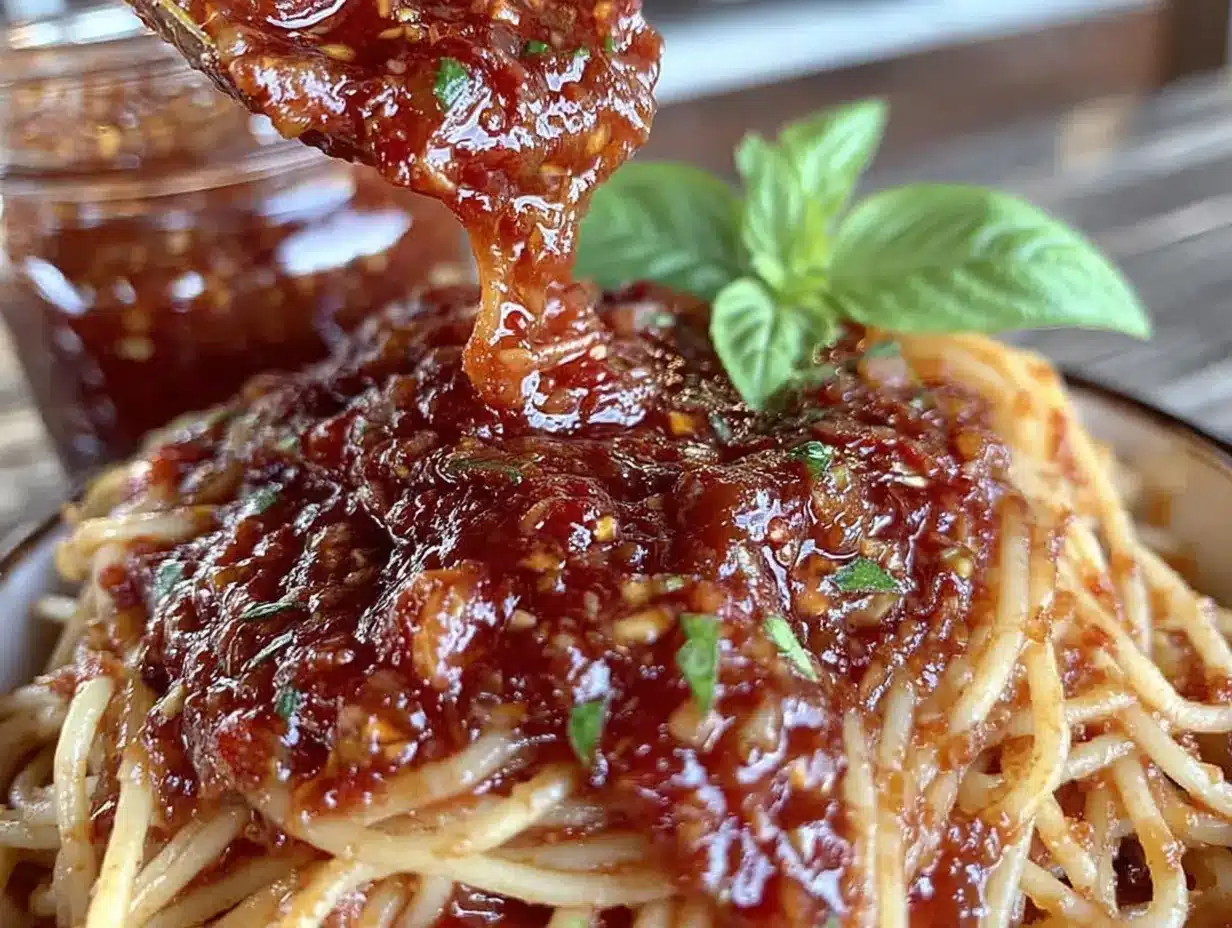
Alright, let’s get to the good part. Set aside about 3 hours for this—most of it is hands-off simmering time.
- Prepare your jars and lids (15 minutes) – Wash your jars, lids, and bands in hot, soapy water. Rinse well. Place the jars in your stockpot, cover with water, and bring to a simmer. Keep them hot until you’re ready to fill them. Place the lids in a small bowl and cover with hot water (not boiling) to soften the sealing compound.
- Blanch the tomatoes (10 minutes) – Bring a large pot of water to a rolling boil. While you’re waiting, fill a large bowl with ice water. Using a slotted spoon, carefully lower the tomatoes into the boiling water in batches. Leave them for about 30-45 seconds, or until you see the skins start to split. Immediately transfer them to the ice water bath. This stops the cooking and makes the skins slip right off.
- Peel and core the tomatoes (15 minutes) – Once the tomatoes are cool enough to handle, slip the skins off. They should come off in big pieces, almost like peeling a boiled potato. Cut out the core (the tough white part where the stem was) and discard. Don’t worry about getting every single seed—a few seeds add flavor and texture.
- Crush the tomatoes (10 minutes) – You can do this by hand if you like a chunkier sauce, or use an immersion blender for a smoother result. I usually give them a quick blitz—about 5 seconds—to break them down without turning them into juice. If you’re using a food mill, process them now.
- Simmer the sauce (45 minutes to 1 hour) – Transfer the crushed tomatoes to a large pot (not the canning pot). Bring to a gentle boil over medium-high heat, then reduce to a simmer. Stir occasionally to prevent sticking. You’re looking for the sauce to reduce by about a third and thicken slightly. It should coat the back of a spoon but still be pourable. If it starts to splatter, turn the heat down.
- Fill the jars (15 minutes) – Using your jar lifter, remove a hot jar from the stockpot and drain the water back into the pot. Place the jar on a clean kitchen towel. Add 2 tablespoons of bottled lemon juice and 1/2 teaspoon of canning salt to the jar. Ladle the hot sauce into the jar, leaving 1/2 inch of headspace (that’s the space between the sauce and the rim). Run a clean chopstick or bubble remover tool around the inside of the jar to release any air bubbles. Wipe the rim with a clean, damp paper towel. Center a lid on the jar and screw on the band until it’s fingertip-tight—don’t crank it down.
- Process the jars (40 minutes) – Using your jar lifter, carefully lower the filled jars back into the stockpot of simmering water. Make sure the jars are covered by at least 1 inch of water. Bring the water to a full rolling boil, then start your timer. Process pint jars for 40 minutes at altitudes up to 1,000 feet. If you’re above 1,000 feet, add 5 minutes for every additional 1,000 feet.
- Cool and check seals (12-24 hours) – Turn off the heat and remove the jars with your jar lifter. Place them on a clean kitchen towel, leaving at least an inch of space between them. Don’t tighten the bands or touch the lids. You should hear a satisfying “pop” as each jar seals. Let them cool completely—overnight is best. The next day, press the center of each lid. If it doesn’t flex up and down, it’s sealed. If it does flex, refrigerate that jar and use it within a week.
One thing I wish someone had told me: don’t be alarmed if a jar doesn’t seal. It happens to everyone. Just stick it in the fridge and use it for pasta night. No big deal.
Cooking Tips & Techniques
I’ve made this small-batch canned tomato sauce enough times to have a few tricks up my sleeve. Here’s what I’ve learned:
- Don’t skip the blanching step. I know it’s tempting to just chop the tomatoes and throw them in the pot, but peeling them makes a huge difference in the final texture. Those skins get tough and chewy when cooked, and nobody wants that in their spaghetti sauce.
- Use a wide pot for simmering. A wider surface area means faster evaporation, which means a thicker sauce in less time. If you use a narrow, tall pot, you’ll be simmering for hours.
- Watch for scorching. Tomato sauce likes to burn on the bottom of the pot. Stir it every 10-15 minutes, especially toward the end of the simmering time. If you notice it sticking, turn the heat down just a little.
- Test your acidity. If you’re unsure about your tomatoes, add an extra tablespoon of lemon juice per jar. Better safe than sorry.
- Label your jars. I know this sounds obvious, but I’ve definitely opened a jar in February and wondered, “Is this my tomato sauce or did someone gift me marinara?” Write the date and contents on the lid with a permanent marker.
I once forgot to stir the sauce for about 20 minutes while I was on the phone with my sister. Let me tell you, scraping burnt tomato off the bottom of a pot is not a fun way to spend an afternoon. Set a timer on your phone if you need to. I do it every time now.
Variations & Adaptations
This small-batch canned tomato sauce is a blank canvas. Here are a few ways to make it your own:
- Herb-Infused: Add a sprig of fresh basil, oregano, or thyme to each jar before filling. The heat from the processing will infuse the sauce with flavor without making it bitter.
- Garlic Lover’s Version: Add one peeled garlic clove to each jar. It’ll mellow out during processing and give you a subtle garlic undertone.
- Spicy Kick: Drop a small dried chili pepper or a pinch of red pepper flakes into each jar. This is amazing for making arrabbiata sauce later.
- Roasted Tomato Base: Before simmering, roast your peeled tomatoes on a baking sheet at 400°F for 20 minutes. This adds a smoky, caramelized depth that’s incredible in winter soups.
- No-Salt Version: If you’re watching your sodium, you can omit the canning salt. Just know that the sauce might taste a little flat—you can always add salt when you open the jar.
I tried the roasted tomato variation last summer and it was a game-changer. The sauce came out almost jammy, with this deep, concentrated flavor that made the best pizza sauce I’ve ever had. Definitely give it a shot if you have the extra time.
Serving & Storage Suggestions
Once your jars are sealed and cooled, store them in a cool, dark place like a pantry or basement. Properly canned tomato sauce will keep for 12 to 18 months. I always try to use mine within a year for the best flavor.
When you’re ready to use it, here’s what I recommend:
- Serve it warm – Heat the sauce gently in a saucepan over medium-low heat. Don’t boil it aggressively or the texture can change.
- Pair it simply – This sauce shines on pasta, in lasagna, or as a base for shakshuka. It’s also amazing spooned over roasted vegetables or used as a dipping sauce for crusty bread.
- Add fresh herbs at serving – Stir in a handful of fresh basil or parsley right before serving. It brightens up the flavor and makes it feel fresh.
- Freeze extra – If you have a jar that didn’t seal, or if you made a double batch, you can freeze the sauce in freezer-safe containers for up to 6 months.
One thing I love about this sauce is how the flavor develops over time. After about a month in the pantry, the flavors meld together and the sauce tastes even better than the day you made it. It’s like a little gift from your past self.
Nutritional Information & Benefits
This small-batch canned tomato sauce is naturally low in calories and packed with nutrients. Here’s a rough estimate per 1/2 cup serving (based on a plain version without added oil):
- Calories: 45
- Fat: 0.5g
- Sodium: 200mg (varies with added salt)
- Carbohydrates: 10g
- Fiber: 2g
- Sugar: 6g (natural)
- Protein: 2g
- Vitamin C: 20% of daily value
- Vitamin A: 15% of daily value
- Potassium: 8% of daily value
Tomatoes are rich in lycopene, a powerful antioxidant that’s been linked to heart health and reduced inflammation. Cooking tomatoes actually increases the bioavailability of lycopene, so this sauce is even more beneficial than eating raw tomatoes. Plus, since you’re controlling the salt and oil, you can make it as heart-healthy as you like.
If you’re watching your sodium, use the no-salt variation and add a pinch of salt only when you serve it. The lemon juice adds a nice dose of vitamin C, too.
Conclusion
Look, I’m not going to pretend that canning your own tomato sauce is the fastest thing you’ll ever do in the kitchen. It takes a few hours and a little bit of planning. But honestly? It’s one of the most rewarding things you can make. There’s something about opening a jar of your own sauce in the dead of winter—when the tomatoes at the grocery store are pale and mealy—and tasting that bright, sun-ripened flavor that just makes you smile.
This recipe is designed to be forgiving. It’s for beginners, for people who are a little nervous about canning, for anyone who’s ever stared at a pile of tomatoes and thought, “I should do something with these.” You can tweak the herbs, adjust the salt, make it chunky or smooth. Make it yours. That’s the whole point.
I’d love to hear how it turns out for you. Drop a comment below and let me know if you added garlic, or if you tried the roasted tomato version, or if your jars all sealed with that satisfying pop. And if you have questions, just ask—I’ve probably made the same mistake already, so I can save you the trouble. Happy canning, friend!
Frequently Asked Questions
Can I use this recipe for water bath canning if I live at a high altitude?
Yes, but you’ll need to adjust the processing time. For altitudes above 1,000 feet, add 5 minutes of processing time for every additional 1,000 feet. So at 3,000 feet, you’d process pint jars for 50 minutes instead of 40.
Do I really have to use bottled lemon juice?
Yes, for safety reasons. Bottled lemon juice has a standardized acidity level (usually around 5% acidity), while fresh lemons can vary. Using bottled juice ensures your sauce is acidic enough to prevent bacterial growth during storage.
What if my jars don’t seal?
Don’t panic! If a lid doesn’t pop down and stays flexible when pressed, just remove the band, check the rim for nicks, and refrigerate that jar. Use it within a week. You can also reprocess it with a new lid if you catch it within 24 hours.
Can I double this recipe?
Absolutely. Just make sure your pot is large enough to hold the doubled amount of sauce, and that you have enough jars and space in your canning pot. The processing time stays the same for pint jars.
How do I know when the sauce is thick enough?
The sauce should coat the back of a spoon without running off immediately. It will thicken slightly as it cools, so don’t cook it down too much. If you’re unsure, err on the side of slightly thinner—you can always simmer it more when you open the jar.
Pin This Recipe!
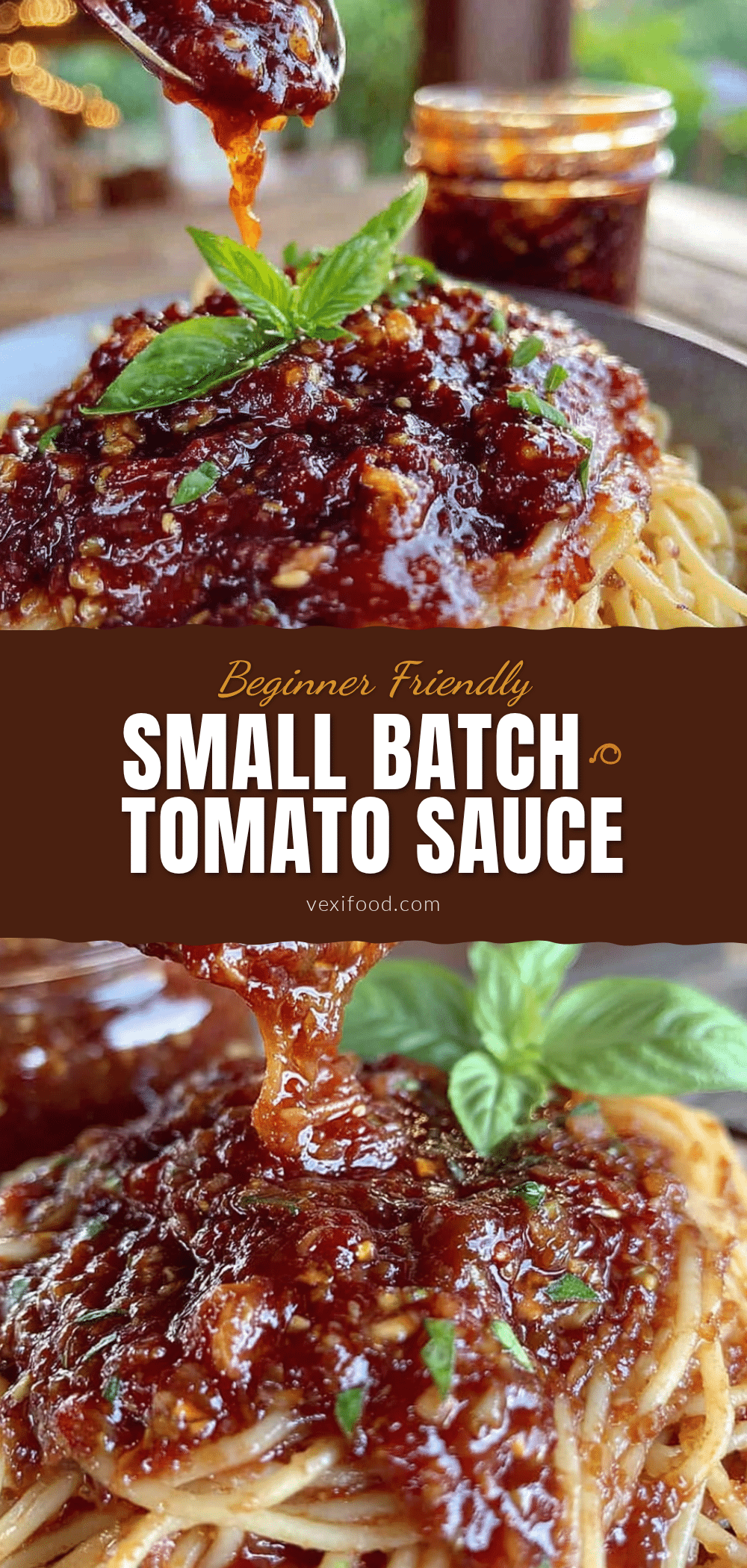
Easy Small-Batch Canned Tomato Sauce: Best Beginner Recipe

This small-batch canned tomato sauce is forgiving, straightforward, and tastes like the end of summer in a jar. Perfect for beginners, it uses the water bath method and simple ingredients to create a rustic, balanced sauce that’s safe and satisfying.
- Prep Time: 30 minutes
- Cook Time: 1 hour 40 minutes
- Total Time: 3 hours
- Yield: 4-5 pints 1x
- Category: Preserves
- Cuisine: American
Ingredients
- 5 pounds Roma tomatoes
- 2 tablespoons bottled lemon juice per pint jar
- 1/2 teaspoon canning salt per pint jar
- 1–2 sprigs fresh basil per jar (optional)
- 1 tablespoon olive oil per jar (optional)
Instructions
- Prepare your jars and lids: Wash jars, lids, and bands in hot, soapy water. Rinse well. Place jars in a stockpot, cover with water, and bring to a simmer. Keep hot until ready to fill. Place lids in a small bowl and cover with hot water (not boiling) to soften the sealing compound.
- Blanch the tomatoes: Bring a large pot of water to a rolling boil. Fill a large bowl with ice water. Using a slotted spoon, lower tomatoes into boiling water in batches for 30-45 seconds until skins start to split. Immediately transfer to ice water bath.
- Peel and core the tomatoes: Once cool enough to handle, slip off the skins. Cut out the core and discard. Don’t worry about every seed.
- Crush the tomatoes: Crush by hand for chunkier sauce or use an immersion blender for smoother result. Give a quick blitz (about 5 seconds) to break them down.
- Simmer the sauce: Transfer crushed tomatoes to a large pot. Bring to a gentle boil over medium-high heat, then reduce to a simmer. Stir occasionally. Simmer for 45 minutes to 1 hour until sauce reduces by about a third and thickens slightly.
- Fill the jars: Using a jar lifter, remove a hot jar from stockpot and drain water. Place on a clean kitchen towel. Add 2 tablespoons bottled lemon juice and 1/2 teaspoon canning salt to jar. Ladle hot sauce into jar, leaving 1/2 inch headspace. Run a clean chopstick around inside to release air bubbles. Wipe rim with a clean, damp paper towel. Center lid on jar and screw on band until fingertip-tight.
- Process the jars: Using jar lifter, lower filled jars back into stockpot of simmering water. Ensure jars are covered by at least 1 inch of water. Bring water to a full rolling boil. Process pint jars for 40 minutes at altitudes up to 1,000 feet. Add 5 minutes for every additional 1,000 feet above 1,000 feet.
- Cool and check seals: Turn off heat and remove jars with jar lifter. Place on a clean kitchen towel, leaving space between them. Don’t tighten bands or touch lids. Let cool completely (overnight is best). The next day, press center of each lid. If it doesn’t flex up and down, it’s sealed. If it flexes, refrigerate that jar and use within a week.
Notes
Don’t skip the lemon juice for safety. If a jar doesn’t seal, refrigerate and use within a week. For high altitude, adjust processing time. The sauce will thicken slightly as it cools. Label jars with date and contents.
Nutrition
- Serving Size: 1/2 cup
- Calories: 45
- Sugar: 6
- Sodium: 200
- Fat: 0.5
- Carbohydrates: 10
- Fiber: 2
- Protein: 2
Keywords: small-batch canned tomato sauce, beginner canning recipe, water bath canning, homemade tomato sauce, Roma tomatoes, easy canning recipe