Love this? Save it for later!
Share the inspiration with your friends
My sister-in-law, Claire, had sworn off homemade dinner rolls for years. Eight years, to be exact. Then I caught her at my Thanksgiving table, tearing into one of my test batches with actual butter dripping down her chin. She didn’t even notice I was watching. That moment—the quiet, unguarded pleasure of someone who thought they hated something—is exactly why this recipe exists.
I get it, honestly. Dinner rolls can be tricky. They can turn out dense, dry, or just plain sad. And the pressure of Thanksgiving? Let me tell you, it’s real. You’ve got the turkey, the gravy, the pies—the last thing you need is a batch of hockey pucks on the table. I mean, I’ve been there. I once spent an entire Thanksgiving morning wrestling with a dough that refused to rise. It was a Tuesday, I think. Or maybe it was a Wednesday. Doesn’t matter. What matters is that I learned from every single failure.
This recipe came from that place of frustration. I wanted rolls that were soft, fluffy, and forgiving. Rolls that wouldn’t stress you out on the biggest cooking day of the year. Rolls that would make even a self-proclaimed roll-hater change their mind. And you know what? They work. Every. Single. Time. The secret isn’t some fancy technique—it’s a few simple tweaks that make the dough practically foolproof. So if you’ve been burned by dinner rolls before, I promise you, this is the one to trust.
Why You’ll Love This Recipe
These aren’t just any dinner rolls. They’re the kind that disappear before the turkey even hits the table. Here’s why they work so well, especially for Thanksgiving:
- Foolproof Dough: This recipe uses a technique called the “tangzhong” method, where you cook a bit of the flour and milk into a paste. It sounds fancy, but it’s dead simple. This keeps the rolls incredibly soft and moist for days.
- Make-Ahead Magic: You can prep the dough the night before. Let it rise in the fridge overnight, then shape and bake the next day. This is a lifesaver on Thanksgiving morning.
- Simple Pantry Ingredients: No need for a trip to a specialty store. Flour, butter, milk, eggs, yeast—things you probably already have.
- Crowd-Pleaser Approved: I’ve brought these to three different Thanksgivings now, and they get devoured every time. Even the picky eaters go back for seconds.
- Perfectly Portioned: This recipe makes 16 generous rolls. Enough for a big gathering, with a few left for leftover turkey sandwiches.
What makes these rolls different from every other recipe out there? It’s the tangzhong. I know, I know, it sounds like a trendy internet thing. But honestly, it’s just a smart way to add moisture. I tried this method after reading a blog from a Japanese baker, and it was a total game-changer. My old rolls would be dry by the next morning. These? They’re still soft and pillowy two days later. Plus, I’ve added a touch of honey to the dough, which gives them a subtle sweetness that pairs perfectly with savory gravy. This isn’t just another dinner roll recipe—it’s the one I’ve perfected over five years of trial and error. It’s the one that finally made Claire a believer.
What Ingredients You Will Need
This recipe uses simple, wholesome ingredients to deliver that soft, fluffy texture without any fuss. Most of these are pantry staples, which is exactly what you want on a busy holiday.
- For the Tangzhong (the secret starter):
- 3 tablespoons (45ml) water
- 3 tablespoons (45ml) whole milk (or 2% works fine)
- 2 tablespoons (16g) all-purpose flour (I use Gold Medal, it’s reliable)
- For the Dough:
- 2 ½ cups (350g) all-purpose flour, plus more for dusting
- 2 ¼ teaspoons (7g) instant yeast (one packet; I prefer SAF Red)
- 3 tablespoons (45g) granulated sugar
- 1 teaspoon (6g) fine sea salt
- ½ cup (120ml) whole milk, lukewarm (about 110°F)
- 1 large egg, room temperature (this adds richness)
- 4 tablespoons (56g) unsalted butter, melted and slightly cooled (Kerrygold is my go-to for flavor)
- For the Butter Wash (optional but recommended):
- 2 tablespoons (28g) unsalted butter, melted
- Flaky sea salt, for sprinkling (like Maldon)
Ingredient Tips & Substitutions:
- Milk: Whole milk gives the richest result, but 2% or even oat milk will work. Just avoid skim milk—it’s too thin.
- Butter: Unsalted is key here so you control the salt level. If you only have salted, reduce the added salt to ½ teaspoon.
- Yeast: Instant yeast is my favorite because you don’t need to proof it. If you use active dry, proof it in the warm milk with a pinch of sugar for 5-10 minutes first.
- Flour: All-purpose is perfect. Bread flour will make them slightly chewier, which some people love. I’ve tried both, and all-purpose gives that classic soft dinner roll texture.
- Egg: Room temperature is important. If you forget to take it out, place it in a bowl of warm water for 5 minutes.
Equipment Needed
You don’t need a lot of fancy gear for these rolls. Here’s what I use:
- Stand Mixer with Dough Hook: This makes kneading effortless. I have a KitchenAid Artisan, and it handles this dough beautifully. You can also knead by hand—it just takes about 10 minutes of elbow grease.
- 9×13-inch Baking Pan: A metal pan works best for even browning. Glass pans can cause the bottoms to brown too quickly.
- Small Saucepan: For making the tangzhong. Any small pot will do.
- Instant-Read Thermometer: This is my secret weapon. It ensures your milk is the perfect temperature (110°F) for the yeast. Too hot and you’ll kill it; too cold and it won’t activate.
- Plastic Wrap or a Clean Kitchen Towel: For covering the dough while it rises.
- Pastry Brush: For that gorgeous butter wash on top. If you don’t have one, use a paper towel.
- Cooling Rack: Essential for letting the rolls cool without getting soggy on the bottom.
Budget-Friendly Tip: If you don’t have a stand mixer, a large bowl and a wooden spoon will work. The dough is fairly forgiving. Just be prepared to knead for a bit longer. I actually made these by hand for years before getting my mixer, and they turned out just as good.
Preparation Method
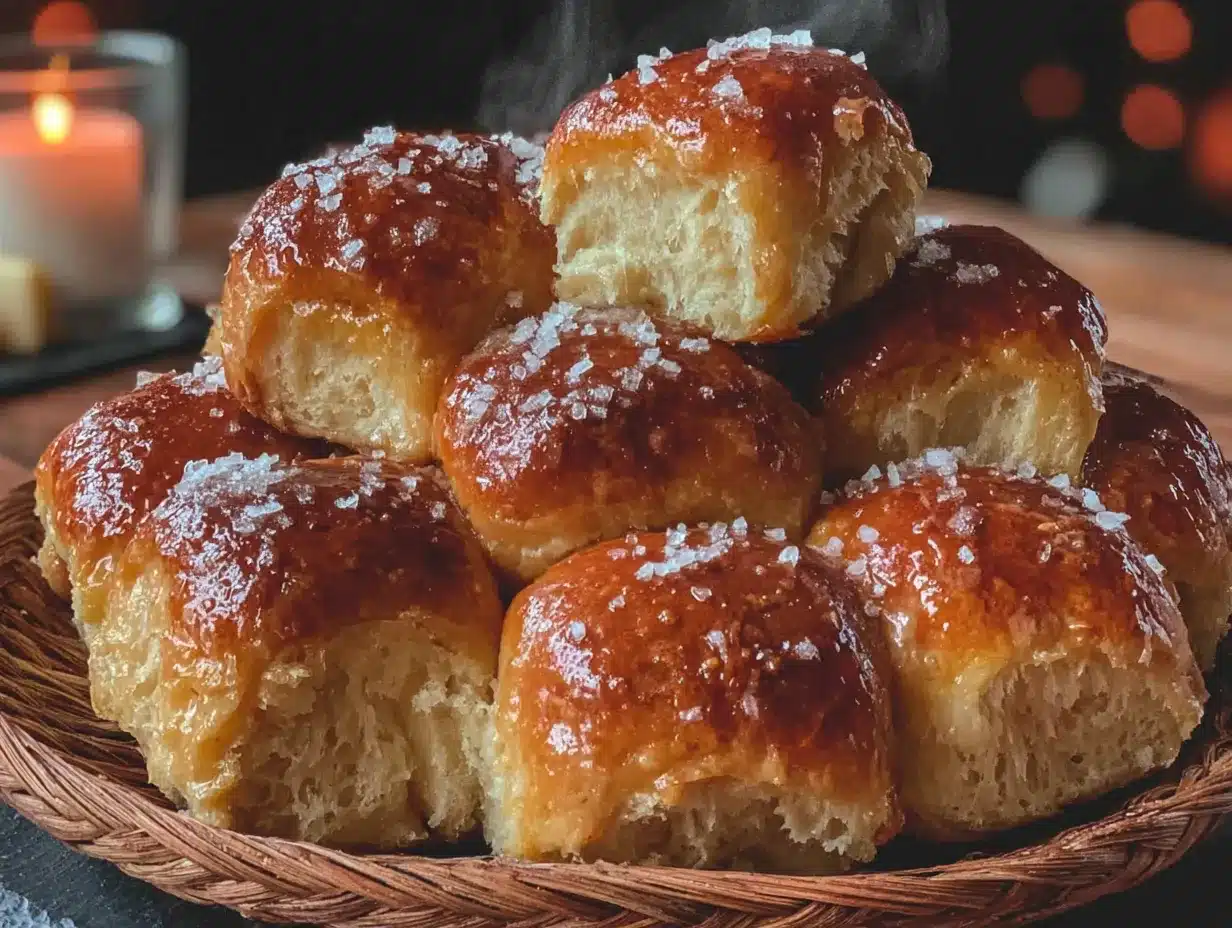
Let’s get to it. This process is broken down into simple steps. Take your time, and you’ll be rewarded with the softest rolls of your life.
- Make the Tangzhong (5 minutes): In your small saucepan, whisk together the water, milk, and flour for the tangzhong. Place over medium heat and cook, whisking constantly, until it thickens into a smooth paste. This takes about 1-2 minutes. It should look like thick pudding. Remove from heat and let it cool for 10 minutes.
- Activate the Yeast (2 minutes): In the bowl of your stand mixer (or a large bowl if kneading by hand), combine the instant yeast, sugar, and warm milk. Give it a quick stir and let it sit for 1-2 minutes. You should see some bubbles forming. If it doesn’t bubble, your milk might have been too hot or too cold. (I’ve killed yeast with hot milk before—it’s a sad moment. Trust the thermometer!)
- Mix the Dough (5 minutes): Add the cooled tangzhong, room temperature egg, melted butter, and salt to the yeast mixture. Add the 2 ½ cups of flour. Using the dough hook, mix on low speed until the flour is incorporated and a shaggy dough forms. This takes about 2 minutes. Scrape down the sides of the bowl as needed.
- Knead the Dough (8-10 minutes): Increase the speed to medium-low and knead for 8-10 minutes. The dough should be smooth, elastic, and slightly tacky to the touch. It should pull away from the sides of the bowl but still stick to the bottom. If it’s too sticky, add flour one tablespoon at a time. If it’s too dry, add a teaspoon of milk. (I’ve learned that a slightly tacky dough yields the fluffiest rolls. Don’t be afraid of it.)
- First Rise (1 to 1.5 hours): Lightly grease a large bowl with oil or butter. Place the dough in the bowl, turning it once to coat. Cover tightly with plastic wrap or a clean kitchen towel. Let it rise in a warm, draft-free place until doubled in size. This usually takes 60-90 minutes. On a cold day, I put the bowl in my oven with the light on—it’s the perfect warm spot.
- Shape the Rolls (15 minutes): Punch down the dough to release the air. Turn it out onto a lightly floured surface. Divide the dough into 16 equal pieces. I use a bench scraper to cut it into quarters, then cut each quarter into four pieces. Shape each piece into a smooth ball by pulling the edges toward the center and pinching them together. Place the balls seam-side down in your greased 9×13-inch baking pan, arranging them in a 4×4 grid. They should be touching slightly.
- Second Rise (30-45 minutes): Cover the pan loosely with plastic wrap or a towel. Let the rolls rise in a warm place until they are puffy and have doubled in size. They should be touching each other now. This takes about 30-45 minutes. (Pro tip: Don’t skip this rise. It’s what gives them that light, airy texture.)
- Bake (20-25 minutes): While the rolls are rising, preheat your oven to 350°F (175°C). Once risen, bake the rolls for 20-25 minutes, until the tops are golden brown and the rolls sound hollow when tapped. The internal temperature should be around 190°F. (I always check with my thermometer—it’s the only way to be sure.)
- Butter Wash & Cool (5 minutes): As soon as the rolls come out of the oven, brush the tops with the melted butter. Sprinkle with flaky sea salt if you’re using it. Let them cool in the pan for 5 minutes, then transfer to a wire rack. Serve warm or at room temperature.
Cooking Tips & Techniques
I’ve made these rolls more times than I can count, and I’ve learned a few things the hard way. Here are my best tips to make sure your batch is perfect.
Don’t Skip the Tangzhong. I know it’s an extra step, but it’s the single most important thing for soft rolls. The gelatinized starch holds onto moisture, keeping the rolls tender for days. I once tried to skip it to save time, and the rolls were noticeably drier. Never again.
Temperature Matters. Yeast is a living thing. It likes warmth, not heat. Milk that’s too hot (above 130°F) will kill it. Milk that’s too cold (below 100°F) will slow it down. That 110°F sweet spot is key. I use my instant-read thermometer every single time.
Kneading is Your Friend. Under-kneaded dough won’t develop enough gluten, resulting in dense rolls. But over-kneading can make them tough. The dough is ready when it passes the “windowpane test”: tear off a small piece and stretch it gently. If it stretches thin enough to see light through without tearing, you’re done.
My Biggest Failure: One Thanksgiving, I forgot the salt. The rolls looked beautiful, but they tasted flat and bland. Salt isn’t just for flavor—it strengthens the gluten and controls yeast activity. Don’t leave it out!
Timing Strategy for Thanksgiving: Make the dough the night before. After the first rise, punch it down, cover it tightly, and refrigerate it. The next day, let it sit at room temperature for 30 minutes before shaping. Then proceed with the second rise and baking. This spreads the work out beautifully.
Variations & Adaptations
These rolls are a fantastic base for customization. Here are some ways I’ve adapted them over the years.
- Herb & Garlic Rolls: Add 1 teaspoon of garlic powder and 2 tablespoons of finely chopped fresh rosemary or thyme to the flour mixture. The herbs infuse the dough with a savory aroma that’s incredible with roast turkey.
- Whole Wheat Version: Swap 1 cup of the all-purpose flour for whole wheat flour. You’ll need to add an extra 2-3 tablespoons of milk, as whole wheat absorbs more liquid. The rolls will be denser but have a lovely nutty flavor.
- Cheesy Pull-Apart Rolls: After shaping the dough balls, tuck a small cube of cheddar or mozzarella cheese into the center of each one. Pinch the seams to seal. The cheese melts into a gooey surprise in the middle.
- Gluten-Free Adaptation: I’ve tested this with a 1:1 gluten-free flour blend (like King Arthur Measure for Measure). The texture is slightly more delicate, but it works. Add an extra tablespoon of milk to the dough.
- Sweet Cinnamon Rolls: Increase the sugar to ¼ cup and add 1 teaspoon of cinnamon to the flour. After baking, skip the salt and brush with a simple glaze of powdered sugar and milk. Perfect for Thanksgiving breakfast!
My personal favorite is the herb and garlic version. I made it for a Friendsgiving last year, and someone asked for the recipe before they’d even finished their first roll. It’s that good.
Serving & Storage Suggestions
These rolls are best served warm, straight from the oven, with a generous pat of butter. But they’re also fantastic at room temperature.
Serving Ideas: Place them in a beautiful bread basket lined with a clean kitchen towel to keep them warm. Serve alongside your Thanksgiving turkey, mashed potatoes, and gravy. They’re also incredible for leftover turkey sandwiches the next day—just slice and toast lightly.
Storage: Store leftover rolls in an airtight container at room temperature for up to 3 days. The tangzhong keeps them soft, but they’re best eaten within 2 days. Do not refrigerate—the cold air will dry them out.
Freezing: These freeze beautifully. Let the baked rolls cool completely, then wrap them tightly in plastic wrap and place them in a freezer-safe bag. They’ll keep for up to 3 months. To reheat, thaw at room temperature and warm in a 300°F oven for 5-10 minutes.
Reheating: The best way to revive day-old rolls is to wrap them in foil and heat them in a 350°F oven for 5-7 minutes. They’ll taste almost fresh-baked. You can also microwave them for 15 seconds, but they won’t have that oven-crisp exterior.
Nutritional Information & Benefits
While these are definitely a treat, here’s a rough estimate of what’s in each roll (based on 16 servings):
Per Roll (approx.): Calories: 180 | Fat: 7g | Saturated Fat: 4g | Carbohydrates: 25g | Fiber: 1g | Sugar: 4g | Protein: 5g | Sodium: 180mg
Health Highlights:
- Butter in Moderation: While butter is high in saturated fat, it’s also a source of vitamin A and butyrate, which supports gut health. Using it in moderation is key.
- Eggs: Provide high-quality protein and choline, which is important for brain health.
- Flour: If you use enriched all-purpose flour, you’re getting added iron and B vitamins (like folic acid).
Dietary Considerations: This recipe is not gluten-free (unless adapted), but it can be made dairy-free by using plant-based milk and vegan butter. It’s also suitable for a vegetarian diet. For a lower-carb option, I’ve experimented with almond flour blends, but the texture changes significantly—I’d recommend enjoying these as an occasional indulgence.
From a personal perspective, I believe food is about joy and connection. A dinner roll isn’t a health food, but it’s part of a beautiful meal shared with people you love. That has its own kind of nourishment.
Frequently Asked Questions
Can I make these rolls ahead of time?
Absolutely. After the first rise, punch down the dough and refrigerate it overnight. The next day, let it sit at room temperature for 30 minutes, then shape and proceed with the second rise and baking. You can also bake them fully, cool them, and freeze them for up to 3 months.
Why didn’t my rolls rise?
This usually happens for one of three reasons: your yeast was old (check the expiration date!), your milk was too hot and killed the yeast, or your kitchen was too cold. Try using an instant-read thermometer for the milk and finding a warm spot for rising, like your oven with the light on.
Can I use bread flour instead of all-purpose?
Yes! Bread flour has more protein, which creates more gluten. This will give your rolls a slightly chewier texture. Some people prefer this for dinner rolls. If you use bread flour, you may need an extra tablespoon or two of milk, as it absorbs more liquid.
My rolls came out dense. What went wrong?
Dense rolls are often the result of under-kneading or not letting them rise long enough. Make sure you knead until the dough passes the windowpane test. Also, be patient with the second rise—the rolls should be puffy and touching each other before they go into the oven.
Can I halve this recipe?
Certainly. Simply divide all ingredients in half. You’ll get about 8 rolls. Bake them in an 8×8-inch pan for the same amount of time. The tangzhong will be a bit trickier to make in a smaller batch, but it’s still doable—just whisk constantly so it doesn’t burn.
Conclusion
These perfect no-fail dinner rolls are more than just a recipe—they’re a little piece of Thanksgiving peace of mind. They’re the kind of rolls that make you look like a hero in the kitchen without the stress. The tangzhong method, the simple ingredients, the make-ahead option—it all adds up to a recipe you can trust on the biggest cooking day of the year.
I love these rolls because they remind me that sometimes, the simplest things bring the most joy. A warm, buttery roll fresh from the oven has a way of making everything feel right. And honestly, watching Claire—a self-proclaimed roll-hater—go back for thirds? That’s a memory I’ll treasure.
So go ahead, give these a try. Customize them with herbs, cheese, or keep them classic. I’d love to hear how they turn out for you. Drop a comment below and share your Thanksgiving roll success story. And if you make them for your holiday table, snap a photo and tag me—I can’t wait to see your beautiful, golden-brown creations!
Pin This Recipe!
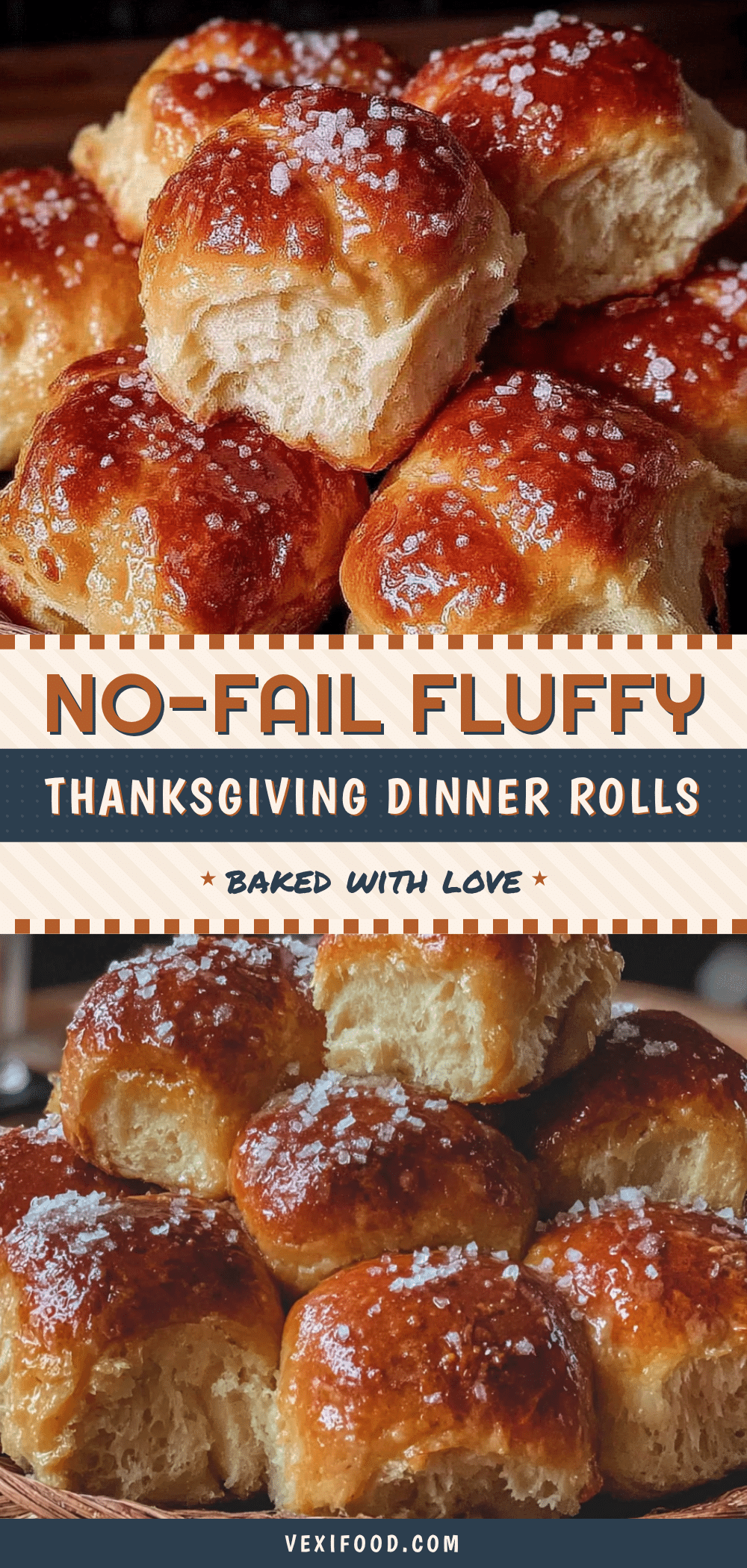
Perfect No-Fail Dinner Rolls: Best Thanksgiving Recipe

These soft, fluffy dinner rolls use the tangzhong method for incredible moisture and are foolproof for Thanksgiving. They’re make-ahead friendly and guaranteed to be a crowd-pleaser.
- Prep Time: 20 minutes
- Cook Time: 25 minutes
- Total Time: 2 hours 30 minutes (including rising time)
- Yield: 16 rolls 1x
- Category: Side Dish
- Cuisine: American
Ingredients
- For the Tangzhong:
- 3 tablespoons (45ml) water
- 3 tablespoons (45ml) whole milk (or 2%)
- 2 tablespoons (16g) all-purpose flour
- For the Dough:
- 2 ½ cups (350g) all-purpose flour, plus more for dusting
- 2 ¼ teaspoons (7g) instant yeast (one packet)
- 3 tablespoons (45g) granulated sugar
- 1 teaspoon (6g) fine sea salt
- ½ cup (120ml) whole milk, lukewarm (about 110°F)
- 1 large egg, room temperature
- 4 tablespoons (56g) unsalted butter, melted and slightly cooled
- For the Butter Wash (optional):
- 2 tablespoons (28g) unsalted butter, melted
- Flaky sea salt, for sprinkling
Instructions
- Make the Tangzhong: In a small saucepan, whisk together water, milk, and flour for the tangzhong. Cook over medium heat, whisking constantly, until it thickens into a smooth paste (about 1-2 minutes). Remove from heat and let cool for 10 minutes.
- Activate the Yeast: In the bowl of a stand mixer, combine instant yeast, sugar, and warm milk. Stir and let sit for 1-2 minutes until bubbly.
- Mix the Dough: Add cooled tangzhong, room temperature egg, melted butter, and salt to the yeast mixture. Add 2 ½ cups flour. Mix on low speed with dough hook until a shaggy dough forms (about 2 minutes).
- Knead the Dough: Increase speed to medium-low and knead for 8-10 minutes until smooth, elastic, and slightly tacky. Add flour or milk as needed.
- First Rise: Place dough in a greased bowl, cover, and let rise in a warm place until doubled in size (60-90 minutes).
- Shape the Rolls: Punch down dough and turn onto a lightly floured surface. Divide into 16 equal pieces. Shape each into a smooth ball and place seam-side down in a greased 9×13-inch baking pan in a 4×4 grid.
- Second Rise: Cover and let rise in a warm place until puffy and doubled (30-45 minutes).
- Bake: Preheat oven to 350°F (175°C). Bake rolls for 20-25 minutes until golden brown and internal temperature reaches 190°F.
- Butter Wash & Cool: Brush tops with melted butter and sprinkle with flaky sea salt. Cool in pan for 5 minutes, then transfer to a wire rack. Serve warm or at room temperature.
Notes
The tangzhong method is key for soft rolls. For make-ahead, refrigerate dough after first rise overnight. Let sit at room temperature 30 minutes before shaping. Do not refrigerate baked rolls; store at room temperature for up to 3 days or freeze for up to 3 months.
Nutrition
- Serving Size: 1 roll
- Calories: 180
- Sugar: 4
- Sodium: 180
- Fat: 7
- Saturated Fat: 4
- Carbohydrates: 25
- Fiber: 1
- Protein: 5
Keywords: dinner rolls, Thanksgiving rolls, soft rolls, tangzhong, no-fail rolls, homemade rolls, holiday rolls