Love this? Save it for later!
Share the inspiration with your friends
The neighborhood cookie exchange was in twelve hours and I’d completely forgotten. Everyone else would be bringing those intricate little tartlets, the kind with the perfect crimped edges that look like they belong in a bakery window. I had a sad-looking butternut squash sitting on my counter, a half-stick of butter, and a vague sense of panic. Honestly, I almost just showed up with a store-bought pie and took the shame. But then, in that frantic, what-do-I-have-this-is-fine energy, I remembered my grandmother’s trick for stretching a single squash into something that feels like a celebration. I threw together a quick bechamel, browned some butter for the first time in my life (nearly set off the smoke alarm, let me tell you), and layered it all with no-bake noodles because I hadn’t even thought about boiling pasta. The next day, my neighbor Karen—who once brought a three-tiered Yule log—asked for the recipe. That’s the thing about this butternut squash lasagna. It looks like you spent all day fussing, but really, you just got lucky with brown butter.
Why You’ll Love This Recipe
This isn’t just another lasagna. It’s the one that makes people close their eyes after the first bite, then immediately ask for the recipe. I’ve tested this version about six times, tweaking the brown butter sauce until it had that perfect nutty depth without burning. It’s the kind of dish that makes you look like a hero with very little actual effort.
- Looks Fancy, Feels Easy : The brown butter sauce does all the heavy lifting. It tastes complex and luxurious, but you’re really just watching butter turn golden in a pan for a few minutes.
- No-Boil Noodles : We’re using the oven to do the work. No extra pot, no draining, no sticky pasta mess.
- Perfect for Hosting : You can assemble this whole thing the day before your dinner party. When guests arrive, just pop it in the oven and let the magic happen while you pour the wine.
- Crowd-Pleasing Flavor : Even folks who swear they don’t like squash end up going back for seconds. The brown butter and sage combination is basically a cheat code for deliciousness.
- Vegetarian Showstopper : This lasagna is so satisfying that no one will miss the meat. It’s the main event, not a side dish.
What makes this version different? It’s the double hit of brown butter—once in the sauce and once drizzled over the top before baking. That extra step creates a crispy, golden crust that’s absolutely addictive. I’ve tried versions with just bechamel, and they’re fine, but they don’t have that same wow factor. This one does.
What Ingredients You Will Need
This recipe relies on simple, whole ingredients that work together to create something truly special. Most of these are pantry staples, but a few deserve a little extra attention.
- For the Roasted Butternut Squash:
- 1 medium butternut squash (about 2.5 to 3 pounds), peeled, seeded, and cut into 1-inch cubes
- 2 tablespoons olive oil
- 1 teaspoon salt
- 1/2 teaspoon black pepper
- 1/2 teaspoon dried sage (or 1 tablespoon fresh, chopped)
I prefer roasting the squash myself rather than buying pre-cut cubes. The flavor concentrates beautifully, and you get those lovely caramelized edges. If you’re in a real hurry, you can use frozen cubed squash, just thaw and pat it very dry before roasting.
- For the Brown Butter Sauce:
- 1/2 cup (1 stick) unsalted butter (I use Kerrygold for its rich flavor)
- 1/4 cup all-purpose flour
- 3 cups whole milk, warmed
- 1 cup heavy cream
- 1 teaspoon salt
- 1/2 teaspoon black pepper
- 1/4 teaspoon ground nutmeg (freshly grated is best)
- 1 cup grated Parmesan cheese (the real stuff, not the green can)
The key to the sauce is browning the butter without burning it. We’ll do that in the same pot we make the bechamel, which saves on dishes and adds depth to every layer.
- For the Filling and Assembly:
- 2 cups ricotta cheese (whole milk for creaminess)
- 1 large egg
- 1/2 cup grated Parmesan cheese
- 1/4 cup chopped fresh parsley
- 1/4 cup chopped fresh sage leaves
- 3 cups shredded mozzarella cheese
- 12 to 15 no-boil lasagna noodles (I like Barilla or Ronzoni)
For the ricotta mixture, don’t skimp on the fresh herbs. They brighten up the rich, nutty flavors and keep the lasagna from feeling too heavy. If you can’t find fresh sage, dried works in a pinch—just use half the amount.
Equipment Needed
You don’t need a professional kitchen for this one. Here’s what you’ll want on hand:
- A 9×13-inch baking dish (glass or ceramic works best for even heating)
- A large, heavy-bottomed saucepan or Dutch oven for the sauce
- A rimmed baking sheet for roasting the squash
- A sharp chef’s knife and a sturdy vegetable peeler (butternut squash is tough!)
- Mixing bowls in various sizes
- A whisk (a good one helps prevent lumps in the sauce)
- Aluminum foil for covering the lasagna while it bakes
If you don’t have a heavy-bottomed pan for the brown butter, just watch it closely—thinner pans heat unevenly and can burn the butter faster. I learned that lesson the hard way and had to start over. Twice.
Preparation Method
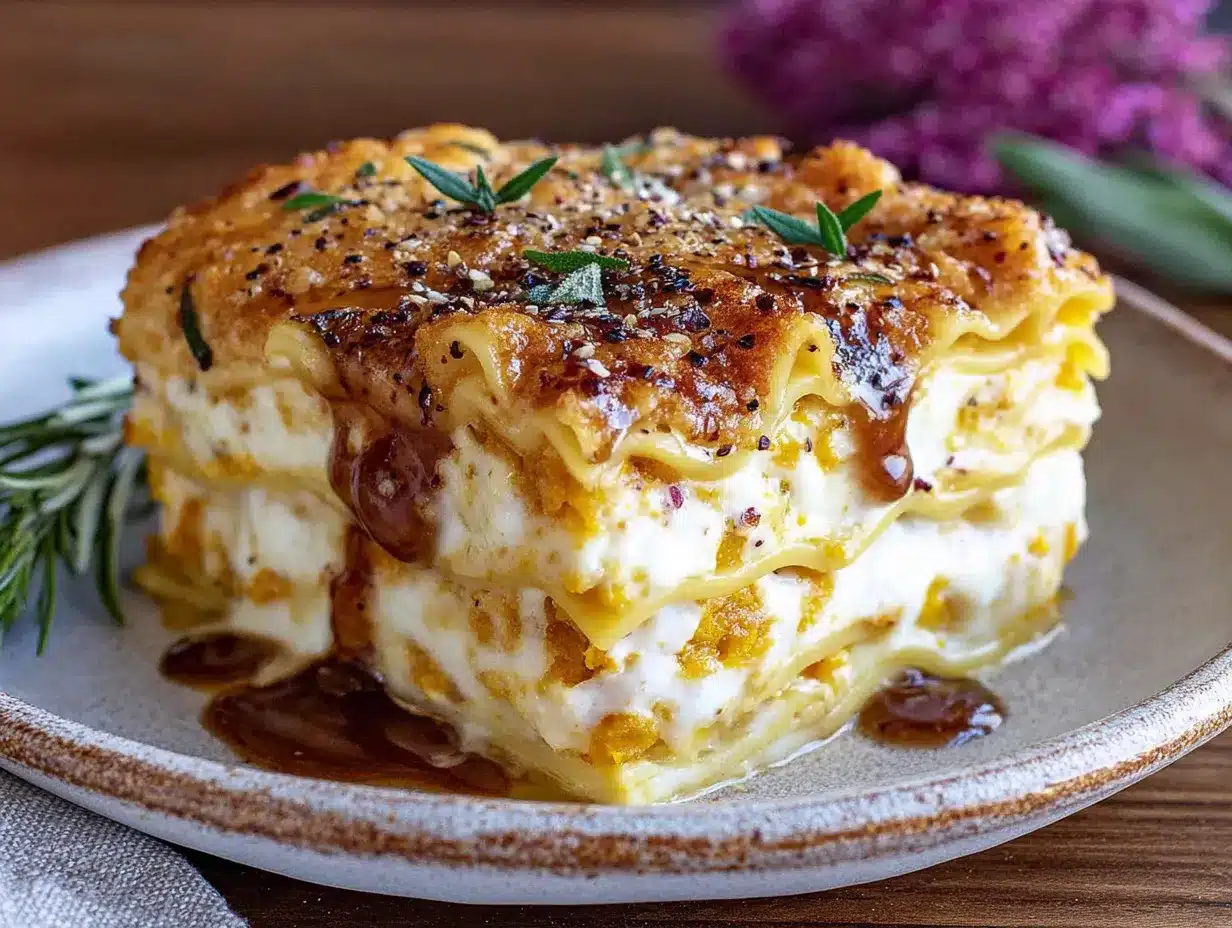
This looks like a lot of steps, but I promise it flows. Here’s how we build this beauty.
- Roast the Squash. Preheat your oven to 400°F (200°C). Toss the cubed butternut squash with olive oil, salt, pepper, and dried sage. Spread it in a single layer on a rimmed baking sheet. Roast for 25 to 30 minutes, flipping halfway, until the squash is tender and the edges are starting to brown. Let it cool slightly, then mash it roughly with a fork. You want some chunks for texture, not a puree.
- Make the Brown Butter Sauce. While the squash roasts, melt the butter in a large saucepan over medium heat. Cook, swirling the pan occasionally, until the butter turns a deep golden brown and smells nutty—about 5 to 7 minutes. Watch it closely; it can go from perfect to burnt in seconds. Once it’s browned, immediately whisk in the flour and cook for 1 minute, stirring constantly.
- Finish the Sauce. Slowly pour in the warm milk and heavy cream, whisking continuously to prevent lumps. Bring the mixture to a gentle simmer and cook for 3 to 4 minutes, until it thickens enough to coat the back of a spoon. Remove from heat and stir in the salt, pepper, nutmeg, and 1 cup of Parmesan cheese. Taste and adjust seasoning—you want it well-seasoned since the noodles will absorb some.
- Prepare the Ricotta Filling. In a medium bowl, combine the ricotta, egg, 1/2 cup Parmesan, parsley, and half the fresh sage. Mix until smooth. Set aside.
- Assemble the Lasagna. Spread about 1/2 cup of the brown butter sauce on the bottom of your 9×13-inch dish. This prevents the noodles from sticking. Layer 3 to 4 no-boil noodles over the sauce, overlapping slightly. Spread one-third of the mashed roasted squash over the noodles. Dollop one-third of the ricotta mixture over the squash and spread gently. Sprinkle with 1 cup of mozzarella. Drizzle with about 1 cup of the brown butter sauce. Repeat the layers—noodles, squash, ricotta, mozzarella, sauce—two more times. For the final layer, top with noodles, the remaining sauce, the last of the mozzarella, and a sprinkle of the reserved fresh sage.
- Bake. Cover the dish tightly with aluminum foil. Bake at 375°F (190°C) for 40 minutes. Remove the foil and bake for another 15 to 20 minutes, until the top is bubbly and golden brown. Let it rest for at least 15 minutes before slicing. This step is crucial—if you cut into it too soon, it will turn into a soupy mess.
A note on the resting time: I know it’s hard to wait, especially when your kitchen smells like brown butter and sage. But trust me on this. The lasagna needs that time to set so you get clean, beautiful slices. Use those 15 minutes to set the table, toss a salad, or pour yourself a well-deserved glass of wine.
Cooking Tips & Techniques
I’ve made this lasagna enough times to know where things can go sideways. Here’s what I’ve learned.
Don’t rush the brown butter. This is the heart of the recipe. Keep the heat at medium, not high, and swirl the pan often. The butter will foam up, then subside, and that’s when you’ll see brown specks forming at the bottom. The moment it smells like toasted hazelnuts, pull it off the heat. I once walked away to answer my phone and came back to a pan of black, acrid butter. The whole kitchen smelled like regret for hours.
Warm your milk. Cold milk added to a hot roux can cause lumps that are nearly impossible to whisk out. I microwave mine for about 90 seconds before adding it to the pan. It’s a small step that makes a big difference in the smoothness of your sauce.
Don’t over-soak the no-boil noodles. These noodles absorb moisture from the sauce as they bake. If your sauce is too thin, the noodles can turn mushy. That’s why we let the sauce simmer until it’s nice and thick—it creates the perfect environment for the noodles to cook through without getting waterlogged.
Let the squash shine. When you mash the roasted squash, leave some texture. A few larger chunks add nice pockets of sweetness throughout the lasagna. If you puree it completely, it just blends into the sauce and you lose that distinct squash flavor.
Plan ahead for hosting. This lasagna is a host’s best friend. Assemble it completely the day before, cover it, and refrigerate. When you’re ready to bake, add about 10 minutes to the covered baking time since you’re starting from cold. It actually tastes better the next day as the flavors meld together.
Variations & Adaptations
This recipe is flexible, and I’ve played around with it quite a bit. Here are some of my favorite versions.
Make it Gluten-Free. Swap the all-purpose flour for a 1:1 gluten-free flour blend in the sauce, and use gluten-free no-boil lasagna noodles. I’ve tested this with Capello’s brand and it works beautifully. Just keep an eye on the sauce as gluten-free flours can thicken a bit differently.
Add Some Greens. For a pop of color and extra nutrients, layer in some sautéed spinach or kale between the squash and ricotta. Wilt about 4 cups of spinach in a hot pan with a clove of garlic, squeeze out the excess moisture, and spread it over the squash layer. My friend Sarah calls this the “I’m eating vegetables” version, and she’s not wrong.
Go Nutty with Toppings. Before the final bake, sprinkle the top with 1/2 cup of chopped walnuts or pecans. They toast up in the oven and add a wonderful crunch that contrasts with the creamy layers. I tried this on a whim during Thanksgiving prep and it was a hit.
Make it a Main Course with Meat. If you’re feeding serious carnivores, add a layer of cooked, crumbled Italian sausage or shredded rotisserie chicken. Brown the sausage first, then layer it over the squash. It transforms the dish into a heartier, more traditional lasagna experience while keeping that brown butter magic.
Spice It Up. Add a pinch of red pepper flakes to the brown butter sauce for a subtle warmth. It doesn’t make the dish spicy, just more interesting. I do this when I’m serving it to my spice-loving friends and it always gets compliments.
Serving & Storage Suggestions
This lasagna is a showstopper on its own, but here’s how to make it part of a memorable meal.
Serving. Let the lasagna rest for a full 15 to 20 minutes after baking. Slice it into generous squares and serve warm, not piping hot. The flavors are more pronounced when it’s had a chance to settle. I like to garnish each plate with a few fresh sage leaves and a light drizzle of good olive oil. It looks intentional and elegant.
What to Serve Alongside. A simple arugula salad with lemon vinaigrette cuts through the richness perfectly. For a heartier meal, add a side of roasted broccoli or green beans. If you’re hosting a dinner party, start with a light appetizer like bruschetta and end with a simple fruit dessert. This lasagna is the star, so keep the supporting cast simple.
Storage. Leftovers keep beautifully in the refrigerator for up to 4 days. Cover the dish tightly with foil or transfer individual portions to airtight containers. The flavors actually deepen overnight, so it might taste even better the next day.
Freezing. This lasagna freezes like a dream. Assemble it completely but don’t bake it. Wrap the dish tightly in a layer of plastic wrap, then a layer of foil. Freeze for up to 3 months. To bake from frozen, remove the plastic wrap, cover with foil, and bake at 375°F (190°C) for about 60 minutes. Remove the foil for the last 15 minutes to brown the top.
Reheating. Individual slices reheat beautifully in a 350°F (175°C) oven for about 15 minutes, or in the microwave for 2 to 3 minutes. If the lasagna seems dry when reheating, add a splash of milk or cream before warming.
Nutritional Information & Benefits
This lasagna is indulgent, but it also packs some surprising nutritional benefits. Here’s the breakdown per serving (based on 8 servings):
- Calories: approximately 580
- Protein: 24g
- Fat: 36g
- Carbohydrates: 42g
- Fiber: 5g
- Sugar: 12g
Butternut squash is a nutritional powerhouse. It’s loaded with vitamin A (one serving covers over 100% of your daily needs), vitamin C, potassium, and fiber. The beta-carotene in squash gives it that beautiful orange color and supports eye health. The brown butter sauce, while rich, provides calcium from the milk and cheese. And the fresh herbs add antioxidants and flavor without extra calories.
If you’re watching your sodium, you can reduce the salt in the sauce and rely more on the herbs and nutmeg for flavor. For a lighter version, swap the heavy cream for half-and-half and use part-skim mozzarella. It won’t be quite as luxurious, but it’s still delicious.
Conclusion
This butternut squash lasagna with brown butter sauce is the kind of recipe that becomes a tradition. It’s the one you make for Thanksgiving when you want something different from the usual. It’s the one you bring to a dinner party when you need to impress without stress. And it’s the one you make on a quiet Sunday, just because the smell of brown butter and sage makes everything feel right.
I love that this recipe feels fancy but is actually forgiving. You can mess up the layers, use a slightly different cheese blend, or forget to add the extra sage on top, and it still turns out beautiful. It’s a recipe that builds confidence in the kitchen. So give it a try, and don’t be afraid to make it your own. Maybe you’ll add some mushrooms, or swap the ricotta for goat cheese. That’s the beauty of a good lasagna—it’s a canvas.
I’d love to hear how yours turns out. Drop a comment below and tell me about your dinner party, your family gathering, or your quiet Sunday cooking session. Share your photos, your variations, your happy accidents. And if you loved it, pass it along to a friend who needs a showstopper recipe in their back pocket. Happy cooking!
Frequently Asked Questions
Can I use fresh lasagna noodles instead of no-boil?
Absolutely. If you use fresh noodles, you don’t need to boil them first—just layer them directly as you would the no-boil kind. If you’re using dried noodles that require boiling, cook them according to package directions until al dente, then layer as usual. Just be careful not to overcook them since they’ll continue cooking in the oven.
Can I make this lasagna dairy-free?
You can! Use a high-quality dairy-free butter for browning, unsweetened almond or oat milk for the sauce, and dairy-free mozzarella and ricotta alternatives. The brown butter flavor won’t be quite the same, but it will still be delicious. I recommend Miyoko’s or Violife for the best melt and flavor.
How do I prevent the lasagna from being watery?
This usually happens if the squash releases too much moisture. Make sure you roast the squash until it’s nicely caramelized and any excess liquid has evaporated. Also, let the brown butter sauce simmer until it’s thick enough to coat a spoon. Finally, let the lasagna rest for at least 15 minutes after baking—this allows the sauce to set and the layers to firm up.
Can I add meat to this recipe?
Yes, and it’s wonderful. Cooked Italian sausage, ground beef, or shredded rotisserie chicken all work beautifully. Brown the meat first, then layer it over the roasted squash. If you’re adding sausage, remove the casings and crumble it as it cooks. The savory meat balances the sweetness of the squash perfectly.
How far in advance can I assemble this lasagna?
You can assemble it up to 24 hours ahead. Just cover it tightly with foil and refrigerate. When you’re ready to bake, add about 10 minutes to the covered baking time since you’re starting from a cold dish. If you’re assembling more than 24 hours ahead, I recommend freezing it instead for the best texture.
Pin This Recipe!
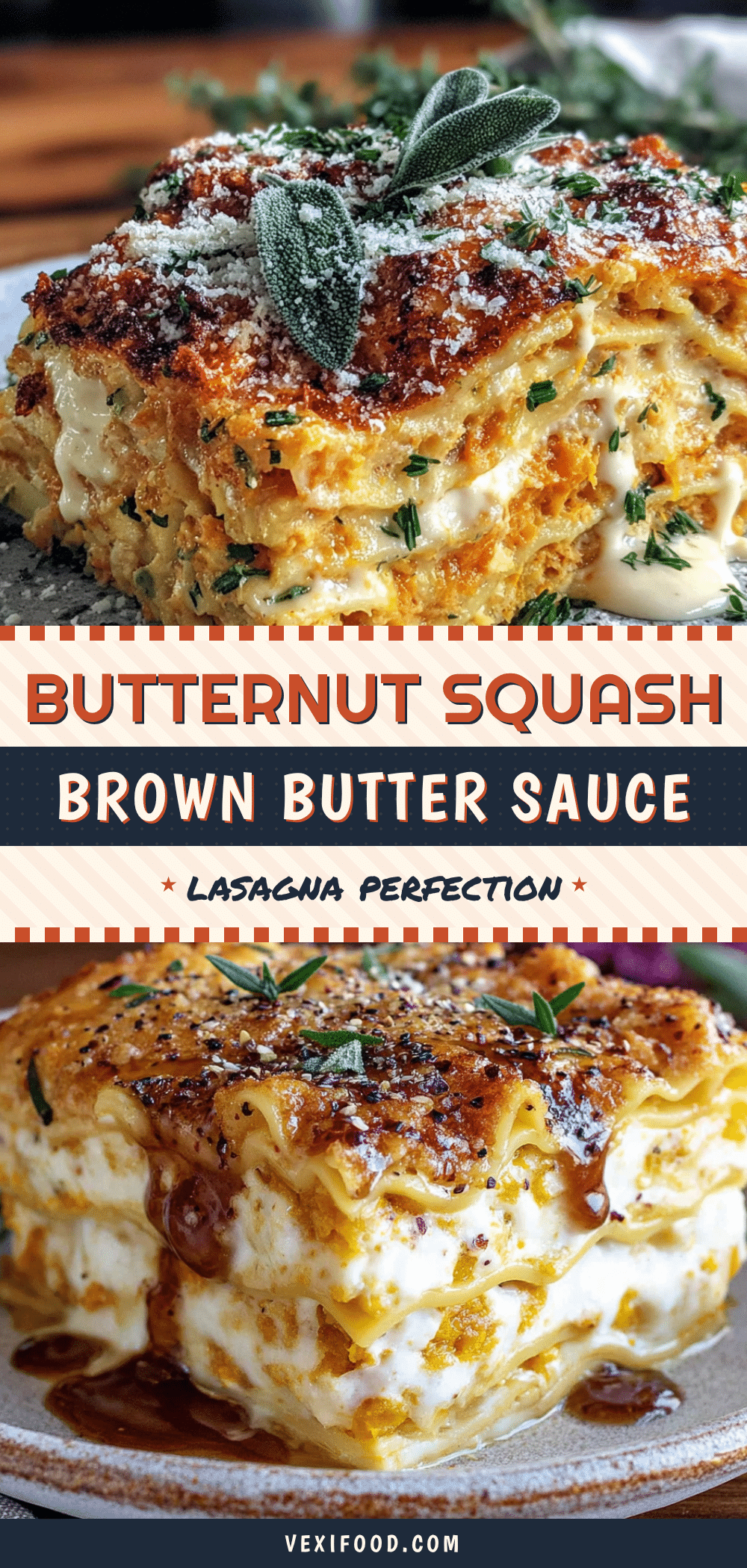
Perfect Butternut Squash Lasagna with Easy Brown Butter Sauce
This butternut squash lasagna features a rich brown butter sauce, roasted squash, and creamy ricotta, all layered with no-boil noodles for an impressive yet easy vegetarian main dish.
- Prep Time: 30 minutes
- Cook Time: 1 hour 10 minutes
- Total Time: 1 hour 40 minutes
- Yield: 8 servings 1x
- Category: Main Course
- Cuisine: Italian-American
Ingredients
- 1 medium butternut squash (about 2.5 to 3 pounds), peeled, seeded, and cut into 1-inch cubes
- 2 tablespoons olive oil
- 1 teaspoon salt
- 1/2 teaspoon black pepper
- 1/2 teaspoon dried sage (or 1 tablespoon fresh, chopped)
- 1/2 cup (1 stick) unsalted butter
- 1/4 cup all-purpose flour
- 3 cups whole milk, warmed
- 1 cup heavy cream
- 1 teaspoon salt
- 1/2 teaspoon black pepper
- 1/4 teaspoon ground nutmeg
- 1 cup grated Parmesan cheese
- 2 cups ricotta cheese (whole milk)
- 1 large egg
- 1/2 cup grated Parmesan cheese
- 1/4 cup chopped fresh parsley
- 1/4 cup chopped fresh sage leaves
- 3 cups shredded mozzarella cheese
- 12 to 15 no-boil lasagna noodles
Instructions
- Preheat oven to 400°F (200°C). Toss cubed butternut squash with olive oil, salt, pepper, and dried sage. Spread in a single layer on a rimmed baking sheet. Roast for 25 to 30 minutes, flipping halfway, until tender and edges are browned. Let cool slightly, then mash roughly with a fork.
- While squash roasts, melt butter in a large saucepan over medium heat. Cook, swirling occasionally, until butter turns deep golden brown and smells nutty, about 5 to 7 minutes. Immediately whisk in flour and cook for 1 minute, stirring constantly.
- Slowly pour in warm milk and heavy cream, whisking continuously. Bring to a gentle simmer and cook for 3 to 4 minutes until thickened. Remove from heat and stir in salt, pepper, nutmeg, and 1 cup Parmesan cheese. Adjust seasoning.
- In a medium bowl, combine ricotta, egg, 1/2 cup Parmesan, parsley, and half the fresh sage. Mix until smooth.
- Spread about 1/2 cup of brown butter sauce on the bottom of a 9×13-inch dish. Layer 3 to 4 no-boil noodles over sauce. Spread one-third of mashed squash over noodles. Dollop one-third of ricotta mixture over squash and spread gently. Sprinkle with 1 cup mozzarella. Drizzle with about 1 cup of brown butter sauce. Repeat layers two more times. For final layer, top with noodles, remaining sauce, last of mozzarella, and reserved fresh sage.
- Cover dish tightly with aluminum foil. Bake at 375°F (190°C) for 40 minutes. Remove foil and bake for another 15 to 20 minutes until top is bubbly and golden brown. Let rest for at least 15 minutes before slicing.
Notes
Don’t rush the brown butter; watch it closely to avoid burning. Warm the milk before adding to the roux to prevent lumps. Let the lasagna rest for at least 15 minutes after baking for clean slices. Can be assembled up to 24 hours ahead and refrigerated; add 10 minutes to covered baking time if starting cold.
Nutrition
- Serving Size: 1 slice (1/8 of lasa
- Calories: 580
- Sugar: 12
- Sodium: 800
- Fat: 36
- Saturated Fat: 20
- Carbohydrates: 42
- Fiber: 5
- Protein: 24
Keywords: butternut squash lasagna, brown butter sauce, vegetarian lasagna, no-boil noodles, fall recipe, holiday dinner