Love this? Save it for later!
Share the inspiration with your friends
My sister swore she hated salmon. For years. Every family gathering, every holiday dinner, every time I suggested it. “Too fishy,” she’d say with a wrinkled nose. “I just don’t get the hype.” I stopped trying to convince her, honestly. You can’t argue with someone who’s made up their mind that firmly.
Then last Tuesday happened. I was testing this honey mustard baked salmon recipe on a whim, mostly because I had a leftover fillet in the fridge and a jar of Dijon that was about to expire. I threw it together in about ten minutes, asparagus and all, and figured I’d have leftovers for lunch the next day. I walked away to answer a text, came back, and found my sister standing at the kitchen island, fork in hand, mid-bite. She froze like a kid caught stealing cookies. “This doesn’t count,” she mumbled with her mouth full. “This is different.”
And honestly? She was right. This honey mustard salmon is different. It’s the kind of recipe that sneaks up on you — not because it’s complicated or fancy, but because it’s so ridiculously simple that you almost don’t believe it could taste this good. The glaze caramelizes into this sticky, tangy-sweet coating that locks in all the moisture. The asparagus roasts right alongside it, soaking up all those same flavors. One sheet pan, twenty minutes in the oven, and you’ve got a dinner that looks like you actually tried. Maybe you’ve been there — that moment when a weeknight meal actually feels like a win instead of a chore. That’s this recipe. I keep making it because it proves you don’t need a dozen ingredients or an hour of prep to eat something that makes you close your eyes on the first bite.
Why You’ll Love This Recipe
Let’s be real for a second. Weeknight dinners are hard. You’re tired, you’re hungry, and the last thing you want is a recipe with a paragraph-long ingredient list. This quick honey mustard baked salmon solves that problem without sacrificing an ounce of flavor.
- Quick & Easy: From start to finish, this meal is on your table in under 30 minutes. The active prep time is maybe ten minutes — the oven does the rest. That’s faster than takeout delivery, I promise.
- Simple Ingredients: You probably have honey, mustard, and olive oil in your kitchen right now. No fancy fish markets or specialty grocery runs required. Just good, honest pantry staples.
- Perfect for Busy Weeknights: This is the definition of a low-effort, high-reward dinner. It works when you’re cooking for one, for a family, or when you just need something that doesn’t demand your full attention.
- Crowd-Pleaser: Even salmon skeptics (yes, I’m looking at my sister) end up going back for seconds. The honey mustard glaze is sweet enough for kids, tangy enough for adults, and just all-around irresistible.
- Unbelievably Delicious: The texture here is what gets me every time. The salmon stays buttery and tender in the middle, while the edges get this gorgeous caramelized crust. And the asparagus? It comes out perfectly crisp-tender with just a hint of char.
What makes this recipe different from all the other salmon recipes out there is the balance. Most honey mustard glazes lean too sweet or too sharp. This one hits that perfect middle ground — the honey rounds out the mustard’s bite, and a tiny splash of olive oil keeps everything from feeling sticky or cloying. It’s not just another version of baked salmon. It’s the version I keep coming back to, the one I’ve made for dinner guests who asked for the recipe before they finished eating, the one that turned my salmon-hating sister into someone who now texts me “making that salmon again” on random Tuesday nights.
What Ingredients You Will Need
This recipe keeps things refreshingly simple. You don’t need a long list of specialty items — just a few quality ingredients that work together to create something genuinely special. Here’s what you’ll need and why each one matters.
For the Salmon and Asparagus
- 4 salmon fillets (6 ounces each): Look for fillets that are roughly the same thickness so they cook evenly. I prefer wild-caught when it’s available, but good-quality farmed salmon works beautifully too. Pat them dry with paper towels before you start — this helps the glaze stick and gives you a better sear.
- 1 bunch fresh asparagus (about 1 pound): Thicker spears hold up better during roasting. Snap off the woody ends where they naturally break — that’s the easiest way to trim them without guessing. You can also use a vegetable peeler to remove the tough outer layer near the bottom if you want to be extra about it.
- 2 tablespoons olive oil: Use a good extra virgin olive oil for the asparagus. It helps everything roast evenly and adds a subtle fruity note that plays nicely with the honey mustard.
- Salt and black pepper to taste: Don’t skimp here. A generous pinch of flaky sea salt right before serving makes a real difference.
For the Honey Mustard Glaze
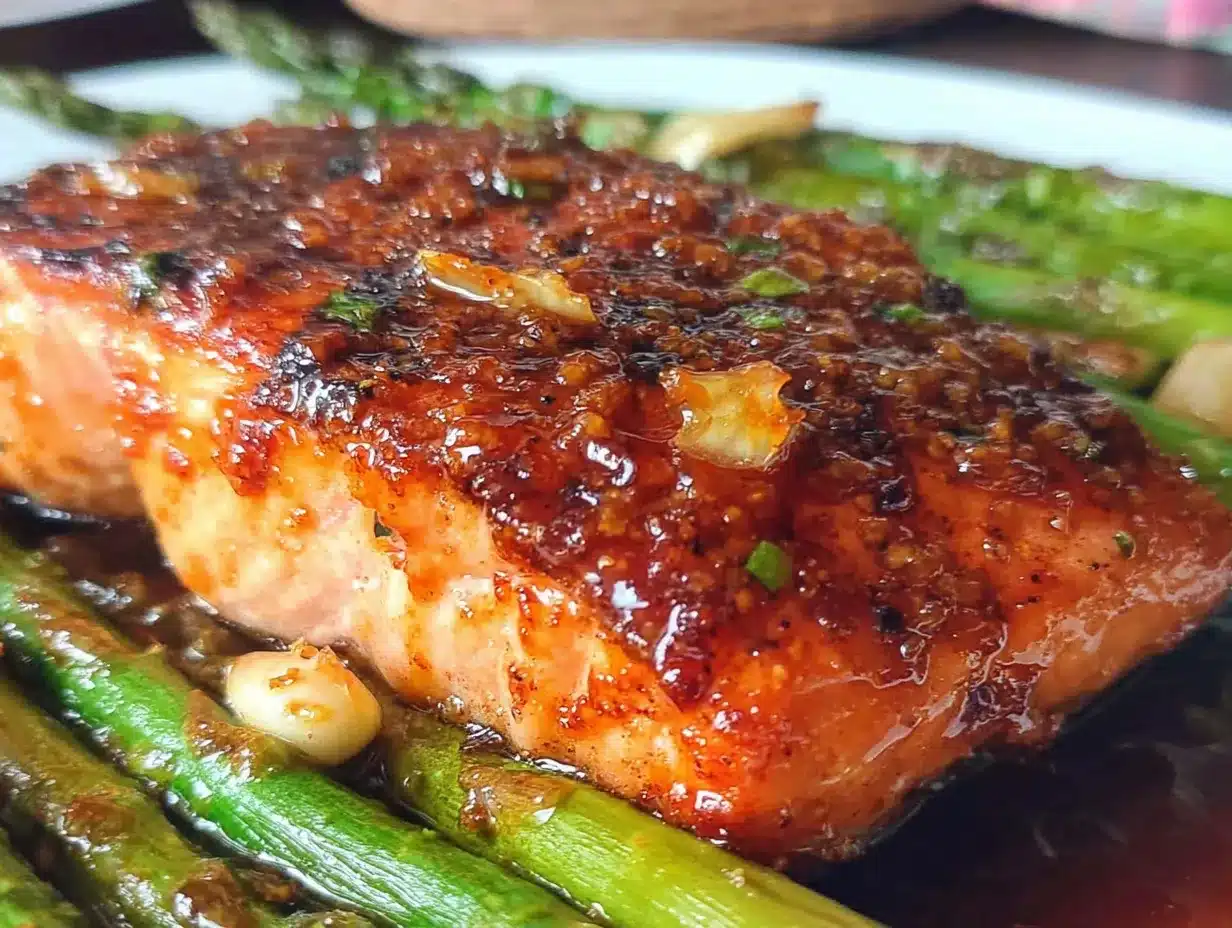
- 3 tablespoons honey: Local honey is my go-to, but any liquid honey works. If your honey has crystallized, warm it gently in the microwave for about 10 seconds — just don’t let it boil.
- 2 tablespoons Dijon mustard: I recommend Grey Poupon for its smooth, creamy texture and balanced heat. It’s not too sharp, not too mild — it’s just right.
- 1 tablespoon whole grain mustard: This is the secret to texture. Those little mustard seeds pop in your mouth and add this wonderful rustic feel. If you don’t have whole grain mustard, you can use all Dijon — the recipe will still be delicious, just a little less interesting.
- 1 tablespoon olive oil: This helps the glaze spread evenly and keeps it from burning in the oven. It also adds a bit of richness that balances the acidity of the mustard.
- 2 cloves garlic, minced: Fresh garlic is non-negotiable here. The jarred stuff has a different flavor profile — it’s sharper and less sweet. Take the extra 30 seconds to mince a fresh clove. Your taste buds will thank you.
- ½ teaspoon smoked paprika (optional but recommended): This adds a subtle smokiness that makes the whole dish feel more complex. It’s not traditional, but it works so well with the honey and mustard that I never skip it.
Equipment Needed
You don’t need a fully stocked kitchen to pull this off. Here’s what you’ll actually use:
- Large rimmed baking sheet: A half-sheet pan (about 18×13 inches) is ideal. The rim is important — it catches any glaze that drips off and prevents a mess in your oven. If you don’t have one, any oven-safe dish with sides will work.
- Parchment paper or aluminum foil: Line your baking sheet for easy cleanup. I prefer parchment paper because nothing sticks to it, but foil works fine if you give it a quick spray of cooking oil.
- Small mixing bowl: For whisking together the honey mustard glaze. Any small bowl will do — even a cereal bowl works.
- Whisk or fork: You need something to combine the glaze ingredients. A fork works in a pinch, but a small whisk gets you a smoother result.
- Chef’s knife and cutting board: For mincing the garlic and trimming the asparagus. Nothing fancy needed.
- Measuring spoons: Accuracy matters with the glaze. Eyeballing it can throw off the balance of sweet and tangy.
- Instant-read thermometer (optional but helpful): Salmon is perfectly cooked at 125°F to 130°F for medium. If you cook salmon often, this little tool pays for itself in perfectly cooked fish every time.
Preparation Method
This is where the magic happens. Follow these steps, and you’ll have dinner on the table in about half an hour. I’ve included visual cues and little tips I’ve learned from making this probably two dozen times.
- Preheat your oven to 400°F (200°C). This is important — you want a hot oven that will sear the glaze quickly without drying out the fish. While it’s heating up, line your baking sheet with parchment paper or foil. Trust me on the lining. You’ll thank yourself during cleanup.
- Make the honey mustard glaze. In your small bowl, combine 3 tablespoons honey, 2 tablespoons Dijon mustard, 1 tablespoon whole grain mustard, 1 tablespoon olive oil, 2 minced garlic cloves, and ½ teaspoon smoked paprika if you’re using it. Whisk until everything is smooth and well combined. Taste it. It should be sweet with a sharp mustard kick and a tiny bit of heat from the garlic. If it tastes too sharp, add another teaspoon of honey. If it’s too sweet, a tiny splash of lemon juice will balance it out.
- Prep the asparagus. Rinse your asparagus and pat it dry. Grab each spear near the bottom and bend gently — it will naturally snap where the woody part ends. Discard the tough ends. Arrange the asparagus on one half of your prepared baking sheet. Drizzle with 2 tablespoons olive oil, then season generously with salt and pepper. Toss everything with your hands to coat evenly, then spread the spears in a single layer. Crowding them will make them steam instead of roast, so give them some space.
- Prep the salmon. Pat your salmon fillets dry with paper towels. This step matters more than you think — wet salmon won’t hold the glaze properly and will steam instead of roasting. Place the fillets skin-side down on the other half of the baking sheet, nestled among the asparagus. Season the tops with a pinch of salt and pepper.
- Apply the glaze. Spoon the honey mustard glaze over each salmon fillet. Use the back of your spoon to spread it evenly, covering the top and letting a little drizzle down the sides. Don’t worry about being perfect — a little imperfection adds character. Reserve about a tablespoon of the glaze for brushing on after baking.
- Bake for 12 to 15 minutes. The exact time depends on the thickness of your fillets. At 12 minutes, start checking. The salmon should be opaque and flake easily with a fork, but still look moist in the center. If you’re using a thermometer, look for 125°F to 130°F. The asparagus should be bright green and tender when pierced with a fork. If your asparagus is still too firm, you can leave it in for another 2 to 3 minutes while the salmon rests.
- Rest and finish. Remove the baking sheet from the oven. Brush the reserved glaze over the salmon while it’s still hot — this gives you that extra layer of glossy, sticky goodness. Let everything rest for 2 to 3 minutes. This rest period is crucial — it lets the juices redistribute so your salmon stays moist instead of drying out when you cut into it.
- Serve immediately. Transfer the salmon and asparagus to plates. Spoon any extra glaze from the pan over the top. A final sprinkle of flaky sea salt and a crack of black pepper right before serving makes everything pop.
Cooking Tips & Techniques
I’ve made this recipe enough times to know exactly where things can go wrong. Let me save you the trouble.
Don’t overcook the salmon. This is the number one mistake I see. Salmon continues cooking even after you take it out of the oven, so pull it when it’s just barely done in the center. If you wait until it flakes perfectly in the oven, it’ll be dry by the time you sit down. I learned this the hard way when I made it for a dinner party and ended up with dry, chalky fish. Never again.
Space out your asparagus. If the spears are touching or overlapping, they’ll steam instead of roast. You want them to caramelize and get those lovely brown spots. That’s where the flavor lives. If your baking sheet is too small, use two sheets or cook the asparagus on a separate pan.
Room temperature salmon cooks more evenly. Take your fillets out of the fridge about 15 minutes before you start cooking. This takes the chill off so the center cooks at the same rate as the edges. Cold salmon straight from the fridge will be overcooked on the outside and raw in the middle.
Watch your glaze consistency. If your honey is too thick, it won’t spread evenly. Warm it slightly — just 10 seconds in the microwave — to make it more fluid. Also, don’t drown the salmon in glaze. A thin, even layer is all you need. Too much glaze can burn before the fish is cooked through.
Use the broiler for extra caramelization. If you want that restaurant-style glossy finish, switch your oven to broil for the last 1 to 2 minutes of cooking. Watch it like a hawk — broilers vary wildly, and you don’t want to go from perfect to burnt in 30 seconds. I’ve done that. It’s heartbreaking.
Variations & Adaptations
This recipe is incredibly forgiving. Here are some ways to make it your own:
Dietary Adaptations: For a dairy-free version, you’re already there — this recipe has no dairy. For a low-carb or keto-friendly option, swap the honey for a sugar-free honey substitute or use a monk fruit sweetener. The texture will be slightly different, but the flavor profile still works beautifully. For a gluten-free version, double-check your Dijon mustard — most brands are gluten-free, but some contain malt vinegar. I use Maille or Grey Poupon and have never had an issue.
Vegetable Swaps: Not an asparagus fan? No problem. Broccolini, green beans, or even thick slices of zucchini work perfectly. Just adjust the roasting time based on what you choose. Broccolini takes about the same time as asparagus. Green beans need a few minutes less. Zucchini slices need a few minutes more. The key is to cut everything to a similar thickness so it all finishes at once.
Flavor Twists: I once made this with a tablespoon of sriracha mixed into the glaze, and it was incredible — sweet, tangy, and spicy all at once. You can also add a teaspoon of fresh grated ginger for an Asian-inspired version, or swap the Dijon for spicy brown mustard if you want more heat. My personal favorite variation? A squeeze of fresh lemon juice over everything right before serving. That little hit of acidity cuts through the richness and makes every bite feel brighter.
Different Cooking Methods: This glaze works on the grill too. Preheat your grill to medium-high, oil the grates, and cook the salmon skin-side down for about 6 to 8 minutes. Flip carefully and cook for another 3 to 4 minutes. The asparagus can go in a grill basket or wrapped in foil with a little olive oil and salt. Honestly, the grill version might be even better — you get that subtle smoky char that pairs perfectly with the honey mustard.
Serving & Storage Suggestions
This dish is best served fresh from the oven, but that doesn’t mean you can’t plan ahead or enjoy leftovers.
Serving Temperature: Serve the salmon warm, right after its 2-minute rest. The glaze is at its stickiest and most flavorful when it’s fresh. If you’re serving a crowd, you can keep everything warm on a low-temperature oven (about 200°F) for up to 20 minutes, but the asparagus will start to soften.
What to Serve With It: This salmon pairs beautifully with simple sides. A bed of fluffy rice or quinoa soaks up any extra glaze. Mashed potatoes are always a hit — the creamy texture contrasts nicely with the flaky fish. For something lighter, a simple green salad with a lemon vinaigrette works wonders. I’ve also served it with crusty bread to mop up the pan juices, and honestly, that might be my favorite way to eat it.
Storage Instructions: Leftovers keep well in an airtight container in the refrigerator for up to 3 days. The asparagus will soften over time, but the flavor stays great. I don’t recommend freezing this dish — the texture of both the salmon and asparagus suffers after thawing.
Reheating Tips: The best way to reheat is in a low oven (300°F) for about 10 minutes. This warms everything through without drying out the fish. The microwave works in a pinch, but it will continue cooking the salmon and make it tougher. If you must use the microwave, do it in 30-second bursts on 50% power. I’ve also been known to flake cold leftover salmon over a salad for lunch the next day — it’s honestly fantastic that way.
Flavor Development: Here’s something interesting — the flavors actually meld and deepen overnight. The honey mustard soaks into the salmon, making every bite more flavorful. If you’re meal prepping, this is actually a great candidate. Make the full recipe on Sunday, and you’ve got easy lunches or quick dinners for the next few days.
Nutritional Information & Benefits
This recipe isn’t just delicious — it’s genuinely good for you. Here’s the breakdown per serving (one salmon fillet with asparagus):
- Calories: Approximately 420
- Protein: 38g
- Fat: 22g (mostly healthy unsaturated fats from the salmon and olive oil)
- Carbohydrates: 18g
- Fiber: 3g
- Sugar: 14g (from honey and natural sugars)
Health Benefits: Salmon is one of the best sources of omega-3 fatty acids, which support heart health, brain function, and reduce inflammation. It’s also packed with high-quality protein and B vitamins. Asparagus is a nutritional powerhouse in its own right — it’s rich in fiber, folate, and vitamins A, C, and K. The olive oil adds heart-healthy monounsaturated fats. Even the garlic has benefits — it’s known for its immune-supporting properties.
Dietary Considerations: This recipe is naturally gluten-free and dairy-free. It’s also low-carb friendly if you swap the honey for a sugar-free alternative. The main allergens to note are fish and mustard. If you’re cooking for someone with a mustard allergy, you can try a honey-soy glaze instead — just mix honey, soy sauce, and a little ginger for a completely different but equally delicious dish.
Conclusion
This quick honey mustard baked salmon with asparagus is the kind of recipe that earns a permanent spot in your weeknight rotation. It’s fast enough for a Tuesday when you’re exhausted, impressive enough for guests, and simple enough that you don’t need to think twice about it. The glaze caramelizes into something that tastes like you spent way more effort than you actually did. The asparagus roasts to perfection alongside it. And the whole thing comes together on one sheet pan — minimal dishes, maximum flavor.
I love this recipe because it proves that you don’t need complicated techniques or exotic ingredients to eat well. Sometimes the best meals are the simplest ones — the ones that let good ingredients shine without getting in their way. Whether you’re a salmon lover or a skeptic like my sister, I think you’ll find something to love here.
Try it this week. Make it your own — add a little spice, swap in your favorite vegetables, serve it over rice or with a salad. And when you do, come back and let me know how it turned out in the comments. I’d love to hear about your version. Happy cooking!
Frequently Asked Questions
Can I use frozen salmon for this recipe?
Yes, but you need to thaw it completely first. The best way is to transfer it from the freezer to the refrigerator the night before. If you’re in a hurry, place the sealed salmon in a bowl of cold water for about 30 minutes. Pat it very dry before applying the glaze — frozen fish releases more moisture as it thaws, and you don’t want watery glaze.
How do I know when the salmon is fully cooked?
The easiest test is the fork test. Gently press a fork into the thickest part of the fillet. If it flakes easily and looks opaque all the way through, it’s done. For the most accurate results, use an instant-read thermometer — 125°F to 130°F for medium, which is the ideal texture for most people.
Can I make the honey mustard glaze ahead of time?
Absolutely. You can make the glaze up to 3 days in advance and store it in an airtight container in the refrigerator. Give it a good stir before using, as the ingredients may separate slightly. Let it come to room temperature for about 15 minutes before brushing it on the salmon — cold glaze doesn’t spread as easily.
What if I don’t have whole grain mustard?
No problem at all. Just use 3 tablespoons of Dijon mustard instead of the 2 tablespoons Dijon plus 1 tablespoon whole grain. The texture will be slightly smoother, but the flavor will still be delicious. You can also add a pinch of mustard powder to mimic some of that whole grain heat.
Can I double this recipe for a crowd?
Yes, but you’ll need to use two baking sheets. Crowding the pan will cause everything to steam instead of roast, and you’ll lose that beautiful caramelization. Rotate the pans halfway through baking — switch the top rack pan to the bottom and vice versa — to ensure even cooking. The total baking time might increase by 2 to 3 minutes with two pans in the oven.
Pin This Recipe!
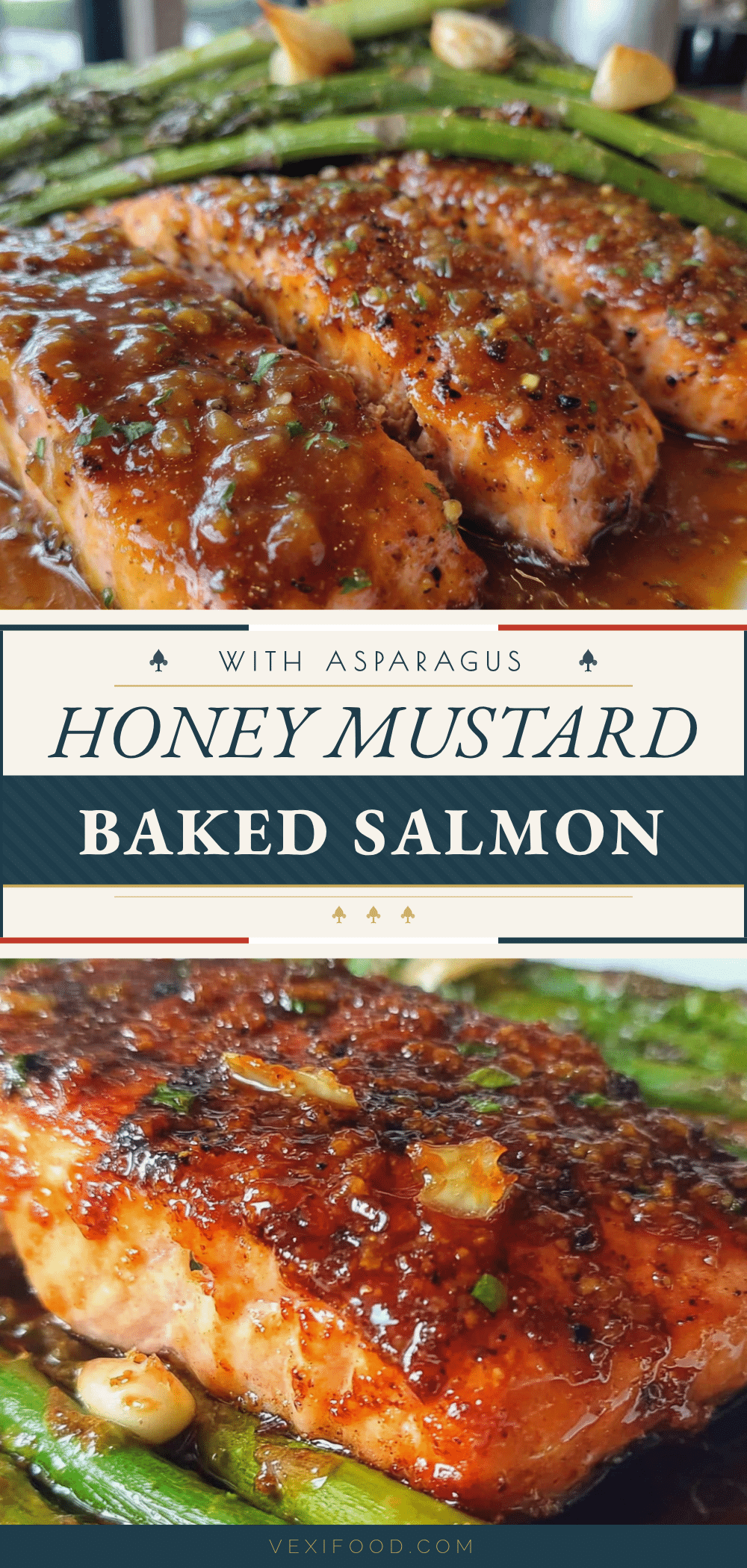
Quick Honey Mustard Baked Salmon with Asparagus (Easy 30-Minute Recipe)
This quick honey mustard baked salmon with asparagus is a simple, one-pan meal that comes together in under 30 minutes. The caramelized glaze is perfectly balanced between sweet and tangy, making it a weeknight winner that even salmon skeptics will love.
- Prep Time: 10 minutes
- Cook Time: 15 minutes
- Total Time: 25 minutes
- Yield: 4 servings 1x
- Category: Main Course
- Cuisine: American
Ingredients
- 4 salmon fillets (6 ounces each)
- 1 bunch fresh asparagus (about 1 pound)
- 2 tablespoons olive oil
- Salt and black pepper to taste
- 3 tablespoons honey
- 2 tablespoons Dijon mustard
- 1 tablespoon whole grain mustard
- 1 tablespoon olive oil
- 2 cloves garlic, minced
- ½ teaspoon smoked paprika (optional)
Instructions
- Preheat your oven to 400°F (200°C). Line a large rimmed baking sheet with parchment paper or aluminum foil.
- Make the honey mustard glaze: In a small bowl, combine 3 tablespoons honey, 2 tablespoons Dijon mustard, 1 tablespoon whole grain mustard, 1 tablespoon olive oil, 2 minced garlic cloves, and ½ teaspoon smoked paprika (if using). Whisk until smooth.
- Prep the asparagus: Rinse and pat dry. Snap off the woody ends. Arrange on one half of the prepared baking sheet. Drizzle with 2 tablespoons olive oil, season with salt and pepper, and toss to coat. Spread in a single layer.
- Prep the salmon: Pat the fillets dry with paper towels. Place skin-side down on the other half of the baking sheet, nestled among the asparagus. Season tops with salt and pepper.
- Apply the glaze: Spoon the honey mustard glaze over each salmon fillet, spreading evenly. Reserve about 1 tablespoon for later.
- Bake for 12 to 15 minutes, until the salmon is opaque and flakes easily with a fork (internal temperature of 125°F to 130°F for medium). The asparagus should be bright green and tender.
- Remove from oven. Brush the reserved glaze over the salmon. Let rest for 2 to 3 minutes.
- Serve immediately. Transfer salmon and asparagus to plates. Spoon any extra glaze from the pan over the top. Sprinkle with flaky sea salt and black pepper if desired.
Notes
Don’t overcook the salmon; it continues cooking after removal from the oven. Space out asparagus to avoid steaming. Let salmon come to room temperature for 15 minutes before cooking for even cooking. For extra caramelization, broil for the last 1-2 minutes. Leftovers keep in the refrigerator for up to 3 days; reheat in a low oven (300°F) for about 10 minutes.
Nutrition
- Serving Size: 1 salmon fillet with
- Calories: 420
- Sugar: 14
- Sodium: 450
- Fat: 22
- Saturated Fat: 4
- Carbohydrates: 18
- Fiber: 3
- Protein: 38
Keywords: honey mustard salmon, baked salmon, sheet pan salmon, quick salmon recipe, easy weeknight dinner, salmon with asparagus, one pan meal