Love this? Save it for later!
Share the inspiration with your friends
My father-in-law had refused to touch dressing for thirty-seven years. Not a bite, not a taste, not even a “just a spoonful to be polite.” Every Thanksgiving, his plate was a clean, dry landscape of turkey and mashed potatoes with a moat of gravy around the edges. The dressing sat untouched on the serving platter like some kind of culinary pariah. Then last November, I made this version “just for the rest of us” and found him standing at the counter at ten o’clock that night, eating it cold out of the baking dish with a soup spoon. He didn’t even bother to heat it up.
Honestly, I wasn’t trying to convert anyone. I was just tired of dry, crumbly dressing that tasted more like sawdust than sage. You know that feeling when you spend hours in the kitchen and the one dish everyone claims to love is actually the one you’re least proud of? That was me. So I started messing around with my grandma’s old cornbread recipe, adding things that made sense to me—sweet Italian sausage for richness, fresh sage because dried just doesn’t hit the same, and way more butter than any nutritionist would recommend. I messed up the first batch, honestly. Forgot the eggs entirely and ended up with something closer to stuffing-flavored crumbles. But my husband ate it anyway, which told me I was onto something.
What I love about this cornbread sausage dressing is that it solved a problem I didn’t even know I had. It’s the dish that finally got my father-in-law to the table without that tight-lipped expression he wore for decades. And now? He asks for it in July. Not for Thanksgiving—just regular Tuesday nights when he’s craving something that feels like home. That’s the kind of recipe that stays with you, you know? The one that proves you don’t have to convince anyone of anything. You just put good food on the table and let it do the talking.
Why You’ll Love This Recipe
This isn’t just another dressing recipe that leaves you disappointed. I’ve tested this version at least seven times across three different ovens, and it delivers every single time. Here’s what makes it stand out:
- Quick & Easy: From start to table in about an hour, with most of that time being hands-off baking. Perfect for busy holiday mornings or when you need one less thing to stress about.
- Simple Ingredients: Nothing fancy here. You probably already have sage, butter, and onions in your kitchen right now. The sausage is the only “special” ingredient, and it’s available at any grocery store.
- Perfect for Family Gatherings: This dressing disappears fast at Thanksgiving, Christmas, Easter, or just a regular Sunday supper. It’s the side dish that steals the show.
- Crowd-Pleaser: My father-in-law’s thirty-seven-year boycott ended with this recipe. Kids love the savory-sweet combo, and adults appreciate the depth of flavor from the sage and sausage.
- Unbelievably Delicious: The texture is what gets people—moist but not soggy, with crispy edges and a tender center. The sage and sausage create this savory aroma that fills your whole house.
What makes this recipe different from every other dressing you’ve tried is the technique. Most recipes use dry bread cubes that soak up liquid unevenly. I use homemade cornbread that’s slightly underbaked, so it stays tender even after absorbing all that buttery, sausage-flavored broth. It’s not just another version—it’s the version that finally works for everyone at the table, from picky kids to skeptical in-laws.
This recipe is the kind that makes you close your eyes after the first bite. It’s comfort food reimagined—richer, more flavorful, but with the same soul-soothing satisfaction that dressing should always have. Perfect for impressing guests without any stress, or turning a simple family dinner into something memorable.
What Ingredients You Will Need
This recipe uses simple, wholesome ingredients that come together to create something truly special. Most of these are pantry staples you probably already have on hand, especially during the holiday season.
For the Cornbread Base
- 1 cup yellow cornmeal (I prefer Bob’s Red Mill for consistent texture)
- 1 cup all-purpose flour (unbleached works best)
- 1 tablespoon baking powder
- 1 teaspoon salt
- 1/4 cup granulated sugar (adds just enough sweetness to balance the savory sausage)
- 1 cup buttermilk (or 1 cup milk mixed with 1 tablespoon lemon juice, let sit 5 minutes)
- 1/3 cup unsalted butter, melted (plus extra for greasing the pan)
- 2 large eggs (room temperature for best results)
For the Sausage and Sage Mixture

- 1 pound sweet Italian sausage (casings removed, or use bulk sausage—I like Johnsonville for consistent flavor)
- 4 tablespoons unsalted butter (divided use)
- 1 large yellow onion, diced (about 1 1/2 cups)
- 3 celery stalks, diced (about 1 cup)
- 3 cloves garlic, minced
- 2 tablespoons fresh sage, chopped (or 2 teaspoons dried sage—fresh really makes a difference here)
- 1 teaspoon dried thyme
- 1/2 teaspoon black pepper
- 1/2 teaspoon salt (adjust based on sausage saltiness)
For the Broth and Assembly
- 1 1/2 cups low-sodium chicken broth (adds moisture without making it soggy)
- 1/4 cup heavy cream (optional, but adds incredible richness—use it if you have it)
- 2 large eggs, beaten (helps bind everything together)
- Fresh sage leaves for garnish (optional, but pretty)
Ingredient Selection Tips: Look for sage with bright green leaves and no wilting—it should smell fragrant and earthy. For the sausage, I recommend sweet Italian over hot unless you want extra heat. The sweetness balances beautifully with the cornbread. If you’re using dried sage instead of fresh, reduce the amount by half and crumble it between your palms before adding to release the oils.
Substitution Guidance: For a gluten-free version, use a 1:1 gluten-free flour blend in place of all-purpose flour. The texture will be slightly more crumbly, but still delicious. You can swap the heavy cream for additional chicken broth if you’re watching calories, though the richness won’t be quite the same. For a dairy-free option, use plant-based butter and oat milk in the cornbread, and skip the heavy cream.
Equipment Needed
You don’t need a fancy kitchen to make this dressing. Here’s what you’ll need:
- 9×13-inch baking dish (glass or ceramic works best for even heat distribution)
- Large skillet or frying pan (for cooking the sausage and vegetables)
- Medium mixing bowl (for the cornbread batter)
- Large mixing bowl (for combining everything)
- Whisk (for smoothing out the cornbread batter)
- Wooden spoon or spatula (for stirring the sausage mixture)
- Sharp knife and cutting board (for dicing onion and celery)
- Measuring cups and spoons
Budget-Friendly Options: If you don’t have a 9×13 dish, you can use a 10-inch cast-iron skillet or even a disposable aluminum pan—just adjust baking time slightly. No whisk? A fork works fine for the cornbread batter. I’ve made this in a friend’s vacation rental with mismatched bowls and a dull knife, and it still turned out great. The recipe is forgiving that way.
Personal Note: I’ve tried making this in a glass dish versus metal, and glass gives you those perfect golden-brown edges without the bottom burning. Worth the investment if you bake a lot of casseroles.
Preparation Method
- Make the cornbread first. Preheat your oven to 400°F (200°C). Grease a 9×13-inch baking dish with butter or cooking spray. In a medium bowl, whisk together the cornmeal, flour, baking powder, salt, and sugar. In a separate small bowl, whisk the buttermilk, melted butter, and eggs until smooth. Pour the wet ingredients into the dry and stir just until combined—lumps are fine, don’t overmix. Pour the batter into the prepared dish and spread evenly. Bake for 18-20 minutes, until golden and a toothpick inserted in the center comes out clean. Let it cool completely—this is important! Warm cornbread will turn to mush when you add the broth later. (I once rushed this step and ended up with dressing that looked like porridge. Learn from my mistake.)
- Cook the sausage and vegetables. While the cornbread cools, heat a large skillet over medium-high heat. Add the sausage, breaking it up with a wooden spoon as it cooks. Cook for 6-8 minutes until browned and cooked through. Use a slotted spoon to transfer the sausage to a plate, leaving the rendered fat in the pan. Reduce heat to medium and add 2 tablespoons of butter to the pan. Once melted, add the diced onion and celery. Cook for 6-8 minutes, stirring occasionally, until the vegetables are soft and translucent. The onions should be golden at the edges but not browned. Add the minced garlic, chopped sage, thyme, salt, and pepper. Cook for 1 more minute until fragrant. Remove from heat.
- Crumble the cornbread. Once the cornbread is completely cool, crumble it into a large mixing bowl. You want a mix of coarse crumbs and some slightly larger chunks—this gives the dressing texture. Aim for pieces ranging from pea-sized to about the size of a quarter. Don’t pulverize it into dust, or you’ll end up with dense, heavy dressing.
- Combine everything. Add the cooked sausage and the vegetable mixture to the bowl with the crumbled cornbread. Toss gently with your hands or a spatula to distribute everything evenly. In a small bowl or measuring cup, whisk together the chicken broth, heavy cream (if using), and the 2 beaten eggs. Pour this over the cornbread mixture and fold gently until everything is evenly moistened. The mixture should look wet but not swimming—if it seems dry, add an extra 1/4 cup of broth. If it looks soupy, add a handful more crumbled cornbread.
- Bake the dressing. Preheat your oven to 375°F (190°C). Transfer the dressing mixture back into the same 9×13 baking dish (give it a quick wipe if needed) or a fresh greased dish. Dot the top with the remaining 2 tablespoons of butter, cut into small pieces. This creates those gorgeous golden-brown spots on top. Bake for 30-35 minutes, until the top is golden and crispy and the edges are bubbling. The center should be set but still slightly jiggly—it will continue to set as it cools. Let it rest for 5-10 minutes before serving. This resting time lets the flavors meld and the texture settle.
- Check for doneness. The dressing is done when a knife inserted in the center comes out hot to the touch. The internal temperature should reach 165°F (74°C) if you’re using a meat thermometer. The top should be beautifully browned with crispy edges that everyone will fight over.
Cooking Tips & Techniques
Don’t Overmix the Cornbread Batter: This is the most common mistake I see. Overmixing develops gluten, which makes cornbread tough and dense. Stir just until the dry ingredients are moistened—lumps are your friend here. The batter should look slightly bumpy, not smooth like cake batter.
Let the Cornbread Cool Completely: I cannot stress this enough. Warm cornbread absorbs liquid unevenly, leaving you with pockets of mush and dry spots. I’ve made this mistake twice (yes, twice—I’m a slow learner). The second time, I was in a rush for a potluck and thought I could get away with it. I could not. Give it at least 30 minutes to cool, or make it the night before.
Toast the Cornbread for Extra Flavor: Here’s a pro tip I picked up from a Southern cookbook: after the cornbread cools, spread the crumbles on a baking sheet and toast them at 350°F for 10 minutes. This dries them out slightly and adds a nutty flavor that takes the dressing to another level. I do this every time now, even when I’m short on time.
Use Fresh Sage: Dried sage works in a pinch, but fresh sage brings a brightness and complexity that dried just can’t match. The flavor is more floral and less musty. If you’re using dried, crumble it between your palms before adding to release the oils, and use half the amount.
Don’t Skip the Resting Time: After baking, let the dressing rest for at least 5-10 minutes. This allows the liquid to redistribute and the texture to set properly. Cutting into it too early will give you a loose, soupy mess. I know it’s hard to wait when your kitchen smells like heaven, but trust me on this.
Timing Strategy: Here’s how I manage this dish on a busy holiday: Make the cornbread the day before and store it covered at room temperature. The morning of, crumble it and toast it if you have time. Cook the sausage and vegetables, then refrigerate. About an hour before serving, combine everything and bake. This breaks the work into manageable chunks and reduces stress significantly.
Variations & Adaptations
Spicy Sausage Version: Swap the sweet Italian sausage for hot Italian sausage or chorizo. Add a diced jalapeño along with the onion and celery for extra heat. My brother-in-law requests this version every year, and it’s become a tradition at our Christmas dinner. The heat cuts through the richness beautifully.
Vegetarian Adaptation: Replace the sausage with 8 ounces of cremini mushrooms, diced and sautéed until golden. Add an extra tablespoon of butter and a teaspoon of smoked paprika to replicate the savory depth that sausage provides. Use vegetable broth instead of chicken broth. I tested this version for a vegetarian friend, and she said it was the best dressing she’d ever had—meat-free or otherwise.
Apple and Sage Variation: Add 1 diced Granny Smith apple along with the onion and celery. The tartness of the apple cuts through the richness of the sausage and adds a subtle sweetness that pairs perfectly with the sage. This is my personal favorite variation—I make it for our Friendsgiving every year, and it always gets rave reviews.
Gluten-Free Option: Use a 1:1 gluten-free flour blend in the cornbread. The texture will be slightly more crumbly, but the flavor is still fantastic. Make sure your sausage is gluten-free (most are, but check the label). I’ve made this for multiple gluten-intolerant guests, and they’ve never complained.
Make-Ahead Instructions: Assemble the dressing completely (through step 4) and refrigerate, covered, for up to 24 hours. When ready to bake, add 10-15 minutes to the baking time, or let it sit at room temperature for 30 minutes before baking. The flavors actually deepen overnight—this is my preferred method for Thanksgiving.
Serving & Storage Suggestions
Serving Temperature: Serve this dressing warm, straight from the oven. The contrast between the crispy top and the tender, moist interior is at its peak within the first 15 minutes. If you’re serving it as part of a larger meal, time it so it comes out of the oven just as everyone sits down.
Presentation Ideas: Spoon the dressing into a warm serving bowl and garnish with a few fresh sage leaves. For a rustic look, serve it straight from the baking dish—it’s a family-style dish that feels more welcoming that way. I always set out a bowl of extra gravy on the side, because some people (like my husband) want to drown everything in it.
Complementary Dishes: This dressing pairs beautifully with roasted turkey or chicken, mashed potatoes, green bean casserole, and cranberry sauce. For a non-holiday meal, serve it alongside roasted pork chops or a simple roast chicken. A crisp green salad with a tangy vinaigrette cuts through the richness nicely.
Storage Instructions: Store leftover dressing in an airtight container in the refrigerator for up to 4 days. The flavors actually continue to develop as it sits—I think it’s even better the next day. To freeze, cool completely, wrap tightly in plastic wrap and then foil, and freeze for up to 3 months. Thaw overnight in the refrigerator before reheating.
Reheating Methods: For best results, reheat in a 350°F oven for 15-20 minutes, covered with foil to prevent drying. Remove the foil for the last 5 minutes to re-crisp the top. The microwave works in a pinch, but the texture will be softer and less appealing. If you’re reheating a single serving, add a splash of chicken broth before microwaving to restore moisture.
How Flavors Develop: The sage and sausage flavors deepen overnight, becoming more complex and integrated. The cornbread continues to absorb the broth, resulting in a more uniform texture. This is one of those rare dishes that actually improves with time—another reason to make it ahead if you can.
Nutritional Information & Benefits
Here’s the honest truth: this is not a health food. It’s a celebration dish, meant to be enjoyed in moderation alongside lighter options. That said, there are some nutritional bright spots worth mentioning.
| Nutrient | Per Serving (1/8 of recipe) |
|---|---|
| Calories | 385 |
| Total Fat | 22g |
| Saturated Fat | 10g |
| Cholesterol | 95mg |
| Sodium | 720mg |
| Total Carbohydrates | 32g |
| Dietary Fiber | 2g |
| Sugars | 6g |
| Protein | 14g |
Health Benefits: Sage is packed with antioxidants and has anti-inflammatory properties. It’s also been traditionally used to support digestion—which is handy after a heavy holiday meal. The celery provides a small amount of vitamin K and fiber. The sausage adds protein, which helps keep you full and satisfied. The cornmeal offers complex carbohydrates for sustained energy.
Dietary Considerations: This recipe contains gluten, dairy, and eggs. For a gluten-free version, see the variations section. For a dairy-free version, use plant-based butter and oat milk in the cornbread, and skip the heavy cream. The recipe is naturally nut-free and soy-free (check your sausage label to be sure).
My Personal Take: I believe in balance. This dressing is rich and indulgent, and that’s exactly what makes it special. I serve it alongside a big green salad and roasted vegetables, so everyone can fill their plates with lighter options too. One serving of this dressing is plenty—you’ll feel satisfied without feeling stuffed.
Conclusion
This cornbread sausage dressing is the recipe that changed my father-in-law’s mind after thirty-seven years of stubborn refusal. It’s the dish that gets requested in July, that disappears at every holiday gathering, that makes people close their eyes and sigh with that first bite. And honestly? It’s not complicated. It’s just good ingredients, treated with care, and baked until golden and fragrant.
I hope you make this your own. Add more sage if you love it. Swap in spicy sausage if that’s your thing. Throw in some diced apple or dried cranberries if you’re feeling adventurous. The beauty of this recipe is that it’s forgiving—it wants to be customized, to become part of your family’s traditions. That’s what makes it special.
I’d love to hear how it turns out for you. Did you make any changes? Did your picky eater surprise you? Drop a comment below and let me know—I read every single one, and I’m always looking for new ideas to try. Happy cooking, and here’s to the recipes that bring us together around the table.
Frequently Asked Questions
Can I use boxed cornbread mix instead of making it from scratch?
Absolutely. I’ve used Jiffy cornbread mix in a pinch, and it works fine. Just bake it according to the package directions and let it cool completely before crumbling. The flavor won’t be quite as rich as homemade, but it’s a perfectly acceptable shortcut when you’re short on time.
Can I make this dressing without eggs?
Yes, you can substitute the eggs with a flax egg (1 tablespoon ground flaxseed mixed with 3 tablespoons water per egg, let sit for 5 minutes). The texture will be slightly less firm, but the dressing will still hold together well. I’ve tested this for an egg-allergic friend, and it worked beautifully.
Why is my dressing dry?
There are a few possible reasons: the cornbread was too dry to begin with (try toasting it less next time), you didn’t use enough broth (add an extra 1/4 cup), or you overbaked it (check it 5 minutes earlier next time). The good news is that dry dressing can be salvaged by adding a splash of warm broth and stirring gently before serving.
Can I double this recipe for a crowd?
Yes! Double all ingredients and bake in two 9×13 dishes. You may need to increase the baking time by 5-10 minutes since the dishes will be more crowded in the oven. I’ve made a triple batch for our extended family Thanksgiving, and it turned out perfectly.
How do I know when the dressing is done baking?
The top should be golden brown and crispy, the edges should be bubbling, and the center should be set but still slightly jiggly. If you insert a knife in the center, it should come out hot to the touch. For food safety, the internal temperature should reach 165°F (74°C).
Pin This Recipe!
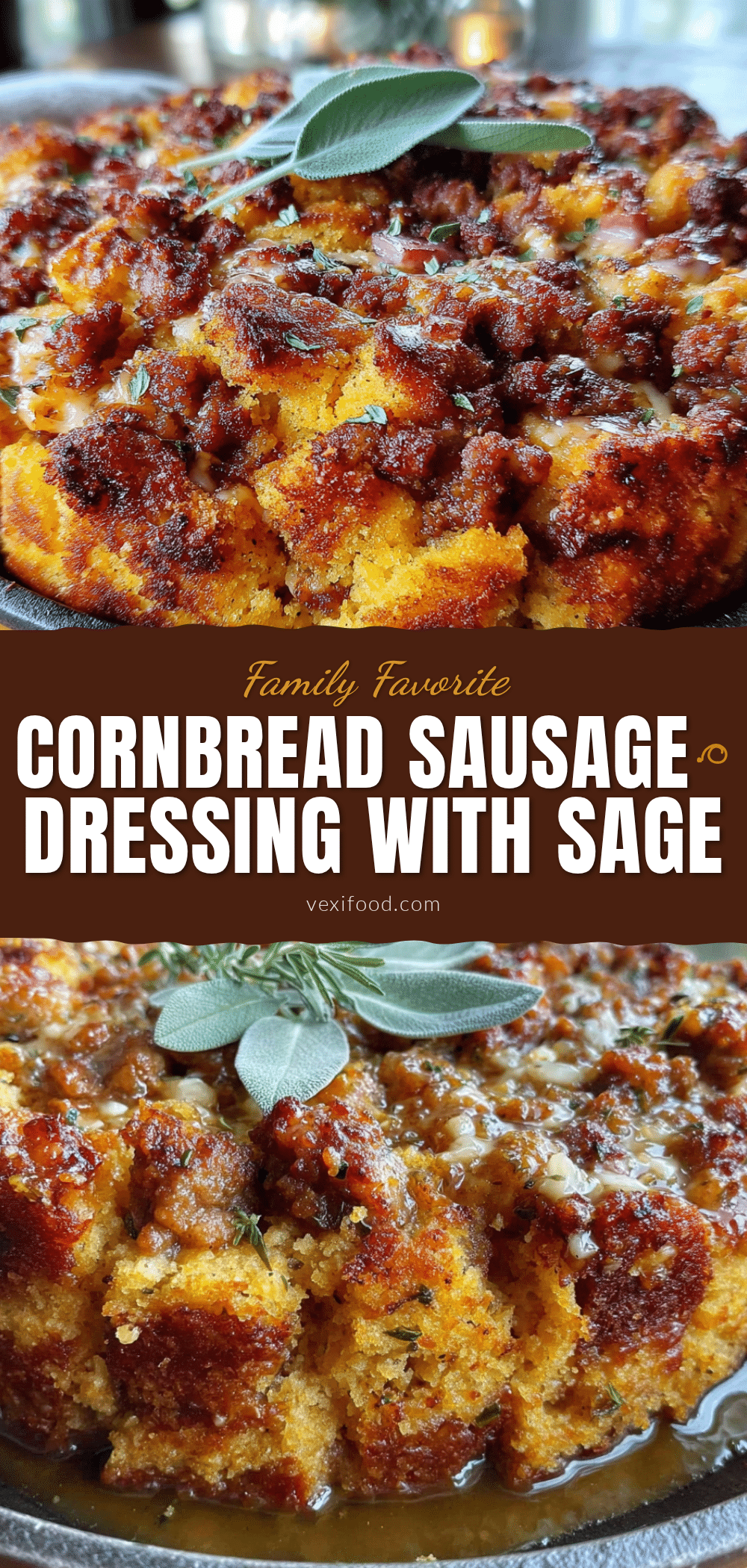
Family-Favorite Cornbread Sausage Dressing: Easy Best Recipe

This cornbread sausage dressing is the recipe that changed my father-in-law’s mind after thirty-seven years of stubborn refusal. It’s the dish that gets requested in July, that disappears at every holiday gathering, that makes people close their eyes and sigh with that first bite.
- Prep Time: 30 minutes
- Cook Time: 35 minutes
- Total Time: 1 hour 5 minutes
- Yield: 8 servings 1x
- Category: Side Dish
- Cuisine: American
Ingredients
- 1 cup yellow cornmeal
- 1 cup all-purpose flour
- 1 tablespoon baking powder
- 1 teaspoon salt
- 1/4 cup granulated sugar
- 1 cup buttermilk
- 1/3 cup unsalted butter, melted
- 2 large eggs
- 1 pound sweet Italian sausage, casings removed
- 4 tablespoons unsalted butter, divided
- 1 large yellow onion, diced
- 3 celery stalks, diced
- 3 cloves garlic, minced
- 2 tablespoons fresh sage, chopped
- 1 teaspoon dried thyme
- 1/2 teaspoon black pepper
- 1/2 teaspoon salt
- 1 1/2 cups low-sodium chicken broth
- 1/4 cup heavy cream (optional)
- 2 large eggs, beaten
- Fresh sage leaves for garnish (optional)
Instructions
- Make the cornbread first. Preheat your oven to 400°F (200°C). Grease a 9×13-inch baking dish with butter or cooking spray. In a medium bowl, whisk together the cornmeal, flour, baking powder, salt, and sugar. In a separate small bowl, whisk the buttermilk, melted butter, and eggs until smooth. Pour the wet ingredients into the dry and stir just until combined—lumps are fine, don’t overmix. Pour the batter into the prepared dish and spread evenly. Bake for 18-20 minutes, until golden and a toothp…
- Cook the sausage and vegetables. While the cornbread cools, heat a large skillet over medium-high heat. Add the sausage, breaking it up with a wooden spoon as it cooks. Cook for 6-8 minutes until browned and cooked through. Use a slotted spoon to transfer the sausage to a plate, leaving the rendered fat in the pan. Reduce heat to medium and add 2 tablespoons of butter to the pan. Once melted, add the diced onion and celery. Cook for 6-8 minutes, stirring occasionally, until the vegetables are so…
- Crumble the cornbread. Once the cornbread is completely cool, crumble it into a large mixing bowl. You want a mix of coarse crumbs and some slightly larger chunks—this gives the dressing texture. Aim for pieces ranging from pea-sized to about the size of a quarter.
- Combine everything. Add the cooked sausage and the vegetable mixture to the bowl with the crumbled cornbread. Toss gently with your hands or a spatula to distribute everything evenly. In a small bowl or measuring cup, whisk together the chicken broth, heavy cream (if using), and the 2 beaten eggs. Pour this over the cornbread mixture and fold gently until everything is evenly moistened. The mixture should look wet but not swimming—if it seems dry, add an extra 1/4 cup of broth. If it looks soupy…
- Bake the dressing. Preheat your oven to 375°F (190°C). Transfer the dressing mixture back into the same 9×13 baking dish (give it a quick wipe if needed) or a fresh greased dish. Dot the top with the remaining 2 tablespoons of butter, cut into small pieces. Bake for 30-35 minutes, until the top is golden and crispy and the edges are bubbling. The center should be set but still slightly jiggly—it will continue to set as it cools. Let it rest for 5-10 minutes before serving.
- Check for doneness. The dressing is done when a knife inserted in the center comes out hot to the touch. The internal temperature should reach 165°F (74°C) if you’re using a meat thermometer. The top should be beautifully browned with crispy edges.
Notes
Let the cornbread cool completely before crumbling to avoid mush. For extra flavor, toast the crumbled cornbread at 350°F for 10 minutes. Use fresh sage for best results. Let the dressing rest for 5-10 minutes after baking. Make the cornbread a day ahead to save time.
Nutrition
- Serving Size: 1/8 of recipe
- Calories: 385
- Sugar: 6
- Sodium: 720
- Fat: 22
- Saturated Fat: 10
- Carbohydrates: 32
- Fiber: 2
- Protein: 14
Keywords: cornbread dressing, sausage dressing, Thanksgiving dressing, holiday side dish, cornbread sausage dressing, easy dressing recipe