Love this? Save it for later!
Share the inspiration with your friends
This was supposed to be a classic twice-baked potato situation. You know the kind—the boat-shaped shells filled with cheesy mashed potato, topped with bacon and chives, served steaming hot from the oven. I had it all planned out. A dozen russets, scrubbed clean, ready for their double bake. But then the power flickered. And flickered again. And then just… stopped. At 4 PM on a Sunday, with a house full of people arriving for dinner in two hours, I stood there staring at a cold oven full of half-baked potatoes. Honestly, I almost cried. I mean, I’d prepped the filling already—sour cream, sharp cheddar, butter, the works. And there I was, no oven, no plan, and a counter full of sad, lukewarm spuds.
So I did what any reasonable person would do. I panicked for about five minutes, then I grabbed the biggest baking dish I owned and started scooping. Every potato got gutted right into that dish. I mixed in all the filling ingredients by hand—messy, but therapeutic—and then I just stared at this mountain of potato mash, wondering what on earth I was going to do with it. My neighbor Karen texted asking if the power was out on our street too, and I remember texting back, “Yes, and I just made the world’s ugliest casserole.” She laughed. I didn’t. But then I covered the dish, shoved it in the fridge out of pure frustration, and ordered pizza. The next day, with the power back on, I pulled that dish out, baked it until it was golden and bubbling, and took one bite. And let me tell you—I nearly dropped my fork. It was better than the original. So much better. The edges had gotten crispy, the center was creamy, and every single bite had that perfect twice-baked flavor without the fuss of individual potatoes. That ugly casserole became my secret weapon. And now, years later, I’ve refined it into this lighter version that you can make ahead, freeze, and pull out when you need comfort food that doesn’t weigh you down. Maybe you’ve been there—staring at a kitchen disaster, wondering if dinner is doomed. Trust me, this recipe is proof that sometimes the best things come from the worst plans.
Why You’ll Love This Recipe
Let me be honest with you—I’ve tested this casserole at least a dozen times to get it right. And by “right,” I mean creamy, cheesy, satisfying, but somehow lighter than the original. This isn’t one of those recipes that sacrifices flavor for health. It’s the real deal.
- Quick & Easy : Comes together in about 30 minutes of active prep, then the oven does the rest. Perfect for busy weeknights or when you need to feed a crowd without stress.
- Simple Ingredients : You likely have most of these in your kitchen right now. No fancy grocery trips required—just potatoes, dairy, and a few pantry staples.
- Perfect for Meal Prep : This is the ultimate make-ahead dish. Assemble it on Sunday, bake it on Wednesday. Or freeze it for a rainy day. It’s like having a comfort-food insurance policy.
- Crowd-Pleaser : Every time I bring this to a potluck or family dinner, it disappears first. Kids love it, adults love it, even picky eaters go back for seconds.
- Unbelievably Delicious : The texture is everything—crispy golden top, creamy center, with little pockets of melted cheese throughout. It’s next-level comfort food.
What makes this version different from all the others? Two things. First, I swap half the sour cream for Greek yogurt—you get all the tang and creaminess with way less fat and more protein. Second, I add a secret ingredient: a little bit of cottage cheese blended into the mix. It sounds weird, I know, but it adds an incredible creaminess without making the casserole heavy. Plus, it bumps up the protein content so this dish actually keeps you full. I’ve had nutritionist friends try it and they couldn’t tell the difference. That’s the kind of win I live for.
This recipe isn’t just good—it’s the kind that makes you close your eyes after the first bite. It’s comfort food reimagined: healthier, faster, but with the same soul-soothing satisfaction. Perfect for impressing guests without stress, or turning a simple Tuesday dinner into something memorable.
What Ingredients You Will Need
This recipe uses simple, wholesome ingredients to deliver bold flavor and satisfying texture without the fuss. Most of these are pantry staples, and I’ve included easy swaps for dietary needs.
For the Potato Base
- 3 pounds russet potatoes (about 6 medium potatoes) — Russets are ideal for their starchy, fluffy texture when baked. Yukon Golds work too, but the texture will be slightly denser.
- 1 tablespoon olive oil — For rubbing the potatoes before baking. Helps the skins get crispy.
- 1 teaspoon salt — I prefer kosher salt for its clean flavor.
- ½ teaspoon black pepper — Freshly ground is best.
For the Creamy Filling

- ½ cup plain Greek yogurt (full-fat or 2%) — This replaces half the sour cream for a lighter, protein-rich base. I recommend Fage or Chobani for thickness.
- ½ cup sour cream — Regular or light both work. The combo of yogurt and sour cream gives the perfect tangy creaminess.
- ½ cup cottage cheese (small-curd) — Blend this until smooth before adding. Trust me on this one—it disappears into the casserole and adds incredible creaminess without extra fat. Good Culture or Daisy are my go-to brands.
- 4 tablespoons unsalted butter — Melted. Use plant-based butter for a dairy-free option.
- 1 cup shredded sharp cheddar cheese — Divided. Use ¾ cup in the filling and reserve ¼ cup for the top. Sharp cheddar gives the most flavor per ounce. Cabot or Tillamook are excellent choices.
- ¼ cup milk (any kind) — Adds moisture. Use whole milk for richness or unsweetened almond milk for a lighter option.
- ½ teaspoon garlic powder — Don’t skip this. It adds a subtle savory depth.
- ¼ teaspoon smoked paprika — Optional but recommended. Adds a hint of smokiness that pairs beautifully with the potatoes.
For the Topping
- ¼ cup shredded sharp cheddar cheese — The reserved portion from above.
- 4 slices turkey bacon (or regular bacon) — Cooked and crumbled. Turkey bacon keeps it lighter, but regular bacon adds more smoky flavor.
- 2 green onions — Thinly sliced for garnish.
- Optional: 2 tablespoons panko breadcrumbs — Mix with 1 teaspoon melted butter for an extra-crunchy topping. I add this when I’m feeling extra.
Equipment Needed
You don’t need a fancy kitchen for this recipe. Here’s what you’ll need:
- Large baking sheet — For baking the potatoes. A rimmed sheet works best to catch any drips.
- 9×13-inch baking dish — Glass or ceramic works well. I use a Pyrex dish and it’s perfect.
- Fork or potato masher — For mashing the potatoes. A hand masher gives you a chunkier texture, while a potato ricer makes it silky smooth.
- Large mixing bowl — For combining all the filling ingredients.
- Small blender or food processor — For blending the cottage cheese until smooth. A regular blender works too. If you don’t have one, just mash the cottage cheese with a fork—it won’t be as smooth but it still works.
- Measuring cups and spoons — For accuracy. I learned the hard way that eyeballing ingredients in a casserole can lead to disaster.
- Aluminum foil — For covering the casserole if it browns too quickly.
Budget-friendly tip: If you don’t have a 9×13 dish, use a 10-inch cast iron skillet or even two 8×8 dishes. Adjust baking time slightly if using smaller dishes.
Preparation Method
Alright, let’s get cooking. This recipe has two main phases: baking the potatoes and assembling the casserole. I’ll walk you through every step so you feel confident.
Step 1: Bake the Potatoes
- Preheat your oven to 400°F (200°C). Line a baking sheet with foil for easy cleanup.
- Scrub the potatoes clean and pat them dry. Prick each potato 6-8 times with a fork—this lets steam escape and prevents explosions. I learned this the hard way when one potato burst in my oven and I spent an hour cleaning baked potato guts off the bottom.
- Rub each potato with olive oil and sprinkle with a little salt. Place them on the baking sheet.
- Bake for 50-60 minutes, until a fork slides easily into the center. The skins should look slightly wrinkled and feel tender when squeezed (use an oven mitt!).
- Let the potatoes cool for 10 minutes—just until they’re cool enough to handle. Don’t let them cool completely, or the filling won’t come together as smoothly.
Step 2: Prepare the Filling
- While the potatoes bake, blend the cottage cheese in a small blender or food processor until completely smooth. This takes about 30 seconds. Set aside.
- Cook the turkey bacon (or regular bacon) in a skillet over medium heat until crispy, about 4-5 minutes per side. Transfer to a paper towel-lined plate to drain. Once cool, crumble into small pieces.
- Slice the green onions thinly and set aside.
Step 3: Assemble the Casserole
- When the potatoes are cool enough to handle, cut each one in half lengthwise. Use a spoon to scoop the flesh into a large mixing bowl. Leave a thin layer of potato attached to the skin—this keeps the skins intact if you want to snack on them later (I always do).
- Add the Greek yogurt, sour cream, blended cottage cheese, melted butter, ¾ cup shredded cheddar, milk, garlic powder, smoked paprika, salt, and pepper to the bowl with the potato flesh.
- Mash everything together with a fork or potato masher until mostly smooth. I like to leave a few small chunks for texture—it makes the casserole feel more rustic and satisfying. Taste and adjust seasoning if needed.
- Fold in half the crumbled bacon and half the green onions. Reserve the rest for topping.
- Transfer the mixture to a greased 9×13-inch baking dish. Spread it into an even layer with a spatula.
- Sprinkle the reserved ¼ cup cheddar cheese over the top. Add the remaining bacon and green onions.
- If using panko breadcrumbs, mix them with melted butter and sprinkle over the cheese.
Step 4: Bake or Make Ahead
- To bake immediately: Bake at 375°F (190°C) for 20-25 minutes, until the top is golden and bubbly. Let rest for 5 minutes before serving.
- To make ahead: Cover the assembled casserole tightly with foil or plastic wrap and refrigerate for up to 2 days. When ready to bake, remove from the fridge and let sit at room temperature for 20 minutes. Bake at 375°F for 30-35 minutes (add 5-10 minutes since it’s starting cold). Remove foil for the last 10 minutes to crisp the top.
- To freeze: Assemble the casserole completely but don’t bake. Wrap tightly with plastic wrap, then foil. Freeze for up to 3 months. To bake from frozen, remove wrapping and bake at 375°F for 45-50 minutes, covered with foil for the first 30 minutes. Uncover for the last 15-20 minutes.
Cooking Tips & Techniques
I’ve made this casserole more times than I can count, and I’ve learned a few things along the way. Here are my best tips for getting it perfect every time.
Don’t overmix the potatoes. I know it’s tempting to keep mashing until it’s silky smooth, but overmixing releases too much starch and makes the casserole gummy. Stop when it’s mostly combined with a few small lumps remaining. Trust me on this—I once used a hand mixer and ended up with potato glue. Not my finest moment.
Let the potatoes cool slightly before mixing. If you add the dairy ingredients to piping-hot potatoes, the Greek yogurt and sour cream can separate, leaving you with a greasy casserole. Wait 10 minutes after baking, and you’re golden.
Blend that cottage cheese. I know it seems like an extra step, but it makes a huge difference. Unblended cottage cheese leaves little curds in the casserole that can taste sour and look unappealing. Blended, it becomes a velvety cream that melts into the potatoes. I once skipped this step when I was in a hurry, and my husband asked, “Did you put something weird in this?” Never again.
Toast the panko for extra crunch. If you’re using the panko topping, toast it in a dry skillet for 2-3 minutes before sprinkling over the casserole. It adds a nutty flavor and ensures it stays crispy even after baking. I learned this trick from my friend Maria, who runs a small catering business. She never skips this step.
Watch the edges. The edges of the casserole will brown faster than the center. If they start looking too dark before the center is bubbly, cover the dish loosely with foil for the last 10 minutes of baking. This happened to me the first time I made it for a dinner party—the edges were nearly burnt while the center was still cold. Foil saved the day.
Variations & Adaptations
One of the best things about this casserole is how adaptable it is. Here are some of my favorite variations.
Vegetarian Version: Skip the bacon entirely and add ½ cup sautéed mushrooms and ¼ cup chopped sun-dried tomatoes. The umami from the mushrooms replaces the smoky bacon flavor beautifully. I tried this for a vegetarian friend and now I make it for myself sometimes too.
Loaded Baked Potato Style: Add ½ cup cooked broccoli florets (finely chopped) and ¼ cup chopped chives to the filling. Top with extra cheddar and a dollop of Greek yogurt instead of sour cream. It’s like a loaded baked potato bowl without the guilt.
Spicy Southwest Version: Mix in ½ cup canned black beans (rinsed and drained), ¼ cup diced pickled jalapeños, and ½ teaspoon cumin into the filling. Top with pepper jack cheese instead of cheddar and garnish with fresh cilantro. This is my go-to when I’m craving something with a kick. My husband calls it “potato nachos” and means it as a compliment.
Dairy-Free Adaptation: Use plant-based butter, dairy-free yogurt, and vegan sour cream. Omit the cottage cheese and increase the dairy-free yogurt to 1 cup total. Use vegan cheddar shreds on top. I’ve tested this with Violife and Miyoko’s brands, and both worked well. The texture is slightly less creamy but still delicious.
Low-Carb Twist: Swap the russet potatoes for cauliflower. Roast 1 large head of cauliflower (cut into florets) at 400°F for 25 minutes until tender. Mash it the same way you would potatoes. The texture is lighter and the flavor is milder, but it still satisfies that creamy, cheesy craving. My friend Jen, who’s on a keto diet, requests this version every time I host game night.
Serving & Storage Suggestions
This casserole is incredibly versatile when it comes to serving and storing. Here’s how to get the most out of it.
Serving Temperature: Serve hot, straight from the oven. Let it rest for 5 minutes after baking so the filling sets slightly. This makes it easier to scoop and prevents it from being too runny. I like to serve it in the baking dish family-style, with a big spoon for scooping.
What to Serve With It: This casserole pairs beautifully with a simple green salad dressed with lemon vinaigrette—the acidity cuts through the richness. It’s also fantastic alongside grilled chicken, roasted salmon, or a simple steak. For a vegetarian meal, serve it with roasted vegetables like asparagus or Brussels sprouts. I often make it as a side dish for holiday dinners, and it disappears faster than the turkey.
Storage Instructions: Leftovers keep in the refrigerator for up to 4 days in an airtight container. The texture holds up surprisingly well—the flavors actually meld together and get even better on day two. I’ve been known to eat it cold straight from the fridge for breakfast. No judgment, please.
Freezer Instructions: This casserole freezes beautifully. Assemble it completely but don’t bake. Wrap tightly with plastic wrap, then a layer of foil. Freeze for up to 3 months. To reheat, thaw overnight in the fridge, then bake as directed. You can also bake from frozen—just add 15-20 minutes to the baking time and cover with foil for the first 30 minutes.
Reheating Tips: For best results, reheat individual portions in the microwave for 1-2 minutes, or in a 350°F oven for 10-15 minutes. The oven method keeps the top crispy. If reheating from the fridge, add a splash of milk or water to the casserole before reheating to restore moisture. I learned this after reheating a portion that came out dry and crumbly—a little liquid makes all the difference.
Nutritional Information & Benefits
Here’s the nutritional breakdown for one serving (about 1 cup), based on the recipe as written with turkey bacon and using 2% Greek yogurt and light sour cream:
| Nutrient | Amount per Serving |
|---|---|
| Calories | 285 |
| Total Fat | 12g |
| Saturated Fat | 6g |
| Cholesterol | 35mg |
| Sodium | 520mg |
| Total Carbohydrates | 32g |
| Dietary Fiber | 3g |
| Sugars | 3g |
| Protein | 14g |
| Calcium | 180mg |
| Potassium | 780mg |
This casserole has some surprising health benefits. The Greek yogurt and cottage cheese add a solid amount of protein—14 grams per serving—which helps keep you full and satisfied. Potatoes often get a bad reputation, but they’re actually a great source of potassium (more than a banana!) and vitamin C, especially when you eat the skins. I leave a bit of skin in the casserole for extra fiber and nutrients. The turkey bacon keeps the saturated fat lower than traditional bacon while still adding that smoky flavor. And because this recipe uses less butter and sour cream than traditional twice-baked potatoes, you’re saving about 100 calories per serving without sacrificing taste. It’s the kind of comfort food you can feel good about eating regularly.
Dietary considerations: This recipe contains dairy and gluten (from the panko). For a gluten-free version, use gluten-free panko or omit the topping entirely. For a dairy-free version, follow the adaptation notes above. Always check labels on bacon and sour cream for additives if you have specific dietary needs.
Conclusion
Look, I know this recipe started with a power outage and a near-meltdown. But honestly, that disaster taught me something important: sometimes the best recipes come from the most unexpected places. This make-ahead twice baked potato casserole is proof that you don’t need fancy techniques or perfect execution to create something truly delicious. It’s forgiving, adaptable, and always satisfying. Whether you’re feeding a crowd, meal-prepping for the week, or just craving something warm and comforting on a cold night, this casserole delivers.
I’d love to hear how it turns out for you. Did you try any of the variations? Did your family ask for seconds? Drop a comment below and let me know—I read every single one and I love hearing about your kitchen adventures. And if you snap a photo, tag me on Pinterest so I can see your beautiful creation. Happy cooking, friend. You’ve got this.
Frequently Asked Questions
Can I use sweet potatoes instead of russet potatoes?
Absolutely! Sweet potatoes work well in this recipe, though the texture will be slightly denser and the flavor sweeter. Peel them before baking, and reduce the milk by 2 tablespoons since sweet potatoes are more moist. I’ve made this with half sweet and half russet for a beautiful orange-and-white marbled effect.
Can I make this casserole vegan?
Yes, with a few swaps. Use plant-based butter, dairy-free yogurt and sour cream, and vegan cheddar shreds. Omit the cottage cheese and increase the dairy-free yogurt to 1 cup. For the bacon topping, use coconut bacon or smoked paprika-coated chickpeas. I’ve tested this with several vegan brands and it works best with Forager Project yogurt and Violife cheese.
How do I prevent the casserole from being too dry?
Dry casserole usually means one of two things: you overbaked it, or you didn’t add enough liquid. Make sure you’re using the full amount of milk and butter called for. If your potatoes are particularly large or starchy, add an extra tablespoon of milk. Also, cover the dish with foil if the top is browning before the center is heated through.
Can I add meat to this casserole?
Definitely! Cooked, crumbled sausage, diced ham, or shredded rotisserie chicken all work beautifully. Add about 1 cup of cooked meat to the filling before transferring to the baking dish. I love using leftover holiday ham in this recipe—it adds a salty, smoky depth that’s incredible.
How far ahead can I make this casserole?
You can assemble the casserole up to 2 days ahead and keep it covered in the refrigerator. You can also freeze it for up to 3 months. The texture is best when baked within 2 days of assembling, but frozen casseroles still turn out great. Just make sure to thaw overnight in the fridge before baking for even cooking.
Pin This Recipe!
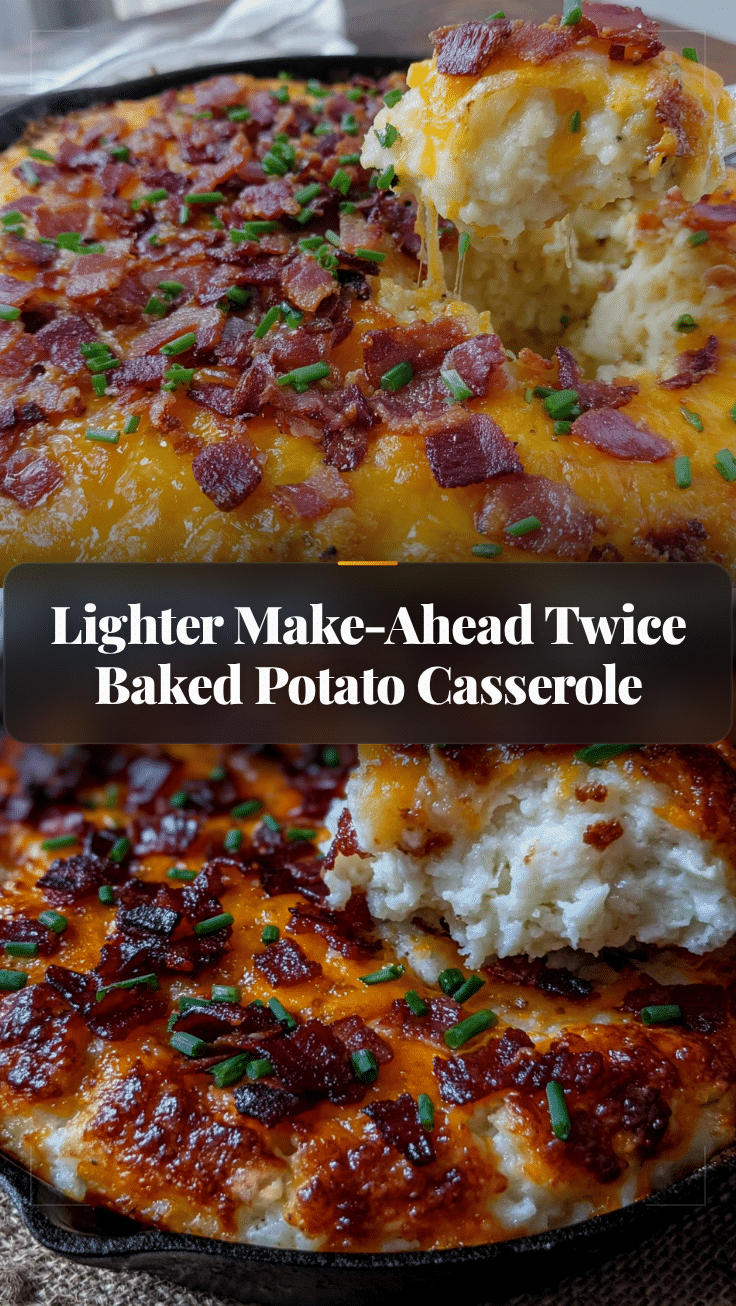
Best Make-Ahead Twice Baked Potato Casserole (Easy)

A creamy, cheesy, and lighter version of classic twice-baked potatoes, made in a casserole dish for easy serving. Perfect for make-ahead meals, potlucks, or weeknight dinners.
- Prep Time: 30 minutes
- Cook Time: 50-60 minutes (potatoes) + 20-25 minutes (casserole)
- Total Time: 1 hour 50 minutes
- Yield: 8 servings 1x
- Category: Main Course
- Cuisine: American
Ingredients
- 3 pounds russet potatoes (about 6 medium)
- 1 tablespoon olive oil
- 1 teaspoon salt
- ½ teaspoon black pepper
- ½ cup plain Greek yogurt (full-fat or 2%)
- ½ cup sour cream
- ½ cup cottage cheese (small-curd), blended smooth
- 4 tablespoons unsalted butter, melted
- 1 cup shredded sharp cheddar cheese, divided
- ¼ cup milk (any kind)
- ½ teaspoon garlic powder
- ¼ teaspoon smoked paprika (optional)
- 4 slices turkey bacon (or regular bacon), cooked and crumbled
- 2 green onions, thinly sliced
- 2 tablespoons panko breadcrumbs (optional), mixed with 1 teaspoon melted butter
Instructions
- Preheat oven to 400°F (200°C). Line a baking sheet with foil.
- Scrub potatoes, pat dry, and prick each 6-8 times with a fork. Rub with olive oil and sprinkle with salt. Place on baking sheet.
- Bake for 50-60 minutes until fork-tender. Let cool for 10 minutes.
- While potatoes bake, blend cottage cheese until smooth. Cook bacon until crispy, then crumble. Slice green onions.
- Cut potatoes in half lengthwise and scoop flesh into a large bowl. Leave a thin layer on skins.
- Add Greek yogurt, sour cream, blended cottage cheese, melted butter, ¾ cup cheddar, milk, garlic powder, smoked paprika, salt, and pepper to the bowl. Mash until mostly smooth with a few chunks.
- Fold in half the crumbled bacon and half the green onions.
- Transfer mixture to a greased 9×13-inch baking dish and spread evenly.
- Top with remaining ¼ cup cheddar, remaining bacon, and green onions. If using, sprinkle panko mixture on top.
- To bake immediately: Bake at 375°F (190°C) for 20-25 minutes until golden and bubbly. Let rest 5 minutes before serving.
- To make ahead: Cover and refrigerate for up to 2 days. Let sit at room temperature 20 minutes, then bake at 375°F for 30-35 minutes (uncover last 10 minutes).
- To freeze: Assemble completely, wrap tightly, and freeze up to 3 months. Bake from frozen at 375°F for 45-50 minutes (cover first 30 minutes).
Notes
Don’t overmix potatoes to avoid gummy texture. Let potatoes cool slightly before adding dairy to prevent separation. Blend cottage cheese for smoothness. Toast panko for extra crunch. Watch edges and cover with foil if browning too fast.
Nutrition
- Serving Size: 1 cup
- Calories: 285
- Sugar: 3
- Sodium: 520
- Fat: 12
- Saturated Fat: 6
- Carbohydrates: 32
- Fiber: 3
- Protein: 14
Keywords: twice baked potato casserole, make ahead, easy, cheesy, comfort food, lighter, meal prep