Love this? Save it for later!
Share the inspiration with your friends
I was hauling a bag of birdseed out of the back of my car in the grocery store parking lot when the plumber—the one who fixed my kitchen sink last spring—pulled up in his truck. He rolled down the window and said, “That’s a good sign. You’re feeding the birds. Means you’re planning to stay put for the winter.” I laughed and told him I was actually stocking up for Thanksgiving, which was only three weeks away. He nodded, slow and thoughtful, then said something I didn’t expect. “You know what my mama always made that nobody could replicate? Her cornbread dressing. And the secret wasn’t the cornbread. It was the sage.”
So there I was, standing next to a pickup truck with a bag of sunflower seeds at my feet, getting a recipe lecture from a man named Earl who had once told me my garbage disposal would “last another ten years if you stop putting potato peels down it.” He described the whole process with his hands—chopping the onion fine, crumbling the cornbread until it looked like coarse sand, and the way the sage had to be rubbed between your palms to wake it up. “You gotta bruise it,” he said. “Otherwise it’s just a flavor that sits on top. You want it to sink in.” I wrote everything down on the back of a receipt as soon as I got in the car. Honest to goodness, I didn’t even know he could cook.
That was three years ago, and I have not made dressing any other way since. This Classic Southern Cornbread Dressing with Sage is the kind of dish that makes people close their eyes after the first bite. It’s sturdy enough to hold its own next to a pile of mashed potatoes and gravy, but tender enough that it almost melts on your tongue. The sage is the backbone here—earthy, slightly peppery, and exactly what you want on a cold November afternoon. Maybe you’ve been looking for that one dressing recipe that actually tastes like something, not just bread soaked in broth. I promise you, this is it.
Why You’ll Love This Recipe
I have tested this Classic Southern Cornbread Dressing with Sage more times than I care to admit. I’ve made it with homemade cornbread and boxed mix. I’ve swapped chicken broth for turkey stock and used dried sage when fresh was nowhere to be found. Let me tell you, this version is the one that works every single time. It’s the recipe I bring to Friendsgiving, the one my neighbor asks for every year, and the one that disappeared fastest at my own table last Thanksgiving.
- Quick & Easy: This comes together in one pot and about 45 minutes of hands-on time. The oven does the rest of the work while you focus on the rest of the meal.
- Simple Ingredients: You likely already have onions, celery, eggs, butter, and chicken broth in your kitchen. The only special trip might be for fresh sage, and honestly, dried works beautifully too.
- Perfect for Thanksgiving or Christmas: This dressing fits right in at any holiday table. It’s also fantastic alongside roasted chicken on a random Sunday night.
- Crowd-Pleaser: I have watched picky eaters go back for seconds. Kids, adults, in-laws—everyone seems to love this one.
- Unbelievably Delicious: The texture is what gets people. It’s moist but not soggy, with crispy golden edges where it meets the baking dish. The sage and onion melt together in a way that just tastes like home.
What makes this dressing different from the rest is the technique. Most recipes tell you to just mix everything together and bake it. But Earl’s method of rubbing the sage between your palms before adding it—that small step changes everything. It releases the essential oils and makes the flavor bloom. I’ve never seen another recipe that does that. And the ratio of broth to cornbread is dialed in so you get that perfect custard-like center without it turning into a brick. This isn’t just another version. It’s the best version.
Honestly, this recipe is the kind that makes you feel like you actually know what you’re doing in the kitchen. It’s comfort food at its finest—simple, honest, and absolutely packed with flavor.
What Ingredients You Will Need
This recipe uses simple, wholesome ingredients to deliver bold flavor and satisfying texture without any fuss. Most of these are pantry staples or easy to find at any grocery store. Here is what you need and why each one matters.
- 6 cups crumbled day-old cornbread (homemade or store-bought, slightly stale works best for texture)
- 1 cup finely chopped yellow onion (about 1 medium onion, adds sweetness and depth)
- 1 cup finely chopped celery (about 3-4 stalks, gives that classic savory crunch)
- 4 tablespoons unsalted butter (I use Land O’Lakes for consistent richness)
- 2 large eggs, lightly beaten (room temperature helps them incorporate smoothly)
- 2 ½ cups low-sodium chicken broth (or turkey stock if you have it; low-sodium lets you control the salt)
- 2 tablespoons fresh sage, finely chopped (or 1 tablespoon dried sage, rubbed between your palms)
- 1 teaspoon dried thyme
- ½ teaspoon poultry seasoning (optional but adds a lovely background note)
- 1 teaspoon salt (plus more to taste)
- ½ teaspoon black pepper
- ¼ cup chopped fresh parsley (for garnish, optional)
For the cornbread, I recommend using a slightly sweet recipe—something with a touch of sugar or honey. It balances the savory sage and onion beautifully. If you are using a boxed mix, the Jiffy brand works great in a pinch. Just bake it a day ahead and let it sit out overnight to dry out. That stale texture is key because it absorbs the broth without turning into mush.
When it comes to sage, fresh is wonderful if you can find it. Look for leaves that are bright green and not wilted. But dried sage is absolutely acceptable and honestly more convenient. Just make sure it’s not ancient—sage that has been sitting in your spice cabinet for three years will be dusty and flat. Give it a sniff. If it doesn’t smell like much, it won’t taste like much either.
If you need to make this dairy-free, substitute the butter with a good vegan butter stick. I have used Miyoko’s with excellent results. For a gluten-free version, use gluten-free cornbread. The rest of the ingredients are naturally gluten-free, so that swap is easy.
Equipment Needed
You do not need a lot of fancy tools for this recipe, which is part of why I love it. Here is what you will need:
- Large skillet or sauté pan (for cooking the onions and celery in butter)
- Large mixing bowl (big enough to hold all the crumbled cornbread and broth)
- 9×13-inch baking dish (or a similar 3-quart casserole dish)
- Wooden spoon or spatula (for stirring the dressing mixture)
- Measuring cups and spoons
- Chef’s knife and cutting board
- Whisk (for beating the eggs)
If you don’t have a 9×13 dish, you can use a 10-inch cast iron skillet instead. It actually gives you even crispier edges, which I personally love. Just make sure the skillet is well-seasoned so nothing sticks. I have also used a deep-dish pie plate in a pinch—it works fine, you just might need to reduce the baking time by 5-10 minutes.
One tip from experience: use a metal baking dish if you have one. Glass dishes retain heat differently and can sometimes make the bottom of the dressing a little soggy. Metal gives you that even golden crust all around.
Preparation Method

Follow these steps carefully, and you will have a perfect Classic Southern Cornbread Dressing with Sage every single time. I have numbered everything so you can work through it without missing a beat.
- Preheat your oven to 375°F (190°C). Grease your 9×13-inch baking dish with butter or nonstick spray. Set it aside.
- Cook the aromatics. In a large skillet over medium heat, melt the 4 tablespoons of butter. Add the chopped onion and celery. Cook, stirring occasionally, for about 8-10 minutes until the onions are translucent and the celery has softened. You want them tender but not browned. If they start to brown, turn the heat down slightly. This step builds the flavor base.
- Prepare the sage. While the onions cook, take your fresh or dried sage and rub it between your palms for about 15-20 seconds. You should smell it immediately—that earthy, slightly piney aroma. This is the step Earl taught me, and it makes all the difference. If you are using dried sage, rub it gently so you don’t turn it into dust.
- Crumble the cornbread. In your large mixing bowl, crumble the day-old cornbread into pieces about the size of a pea or smaller. You want some variation in texture—a few smaller crumbs and a few slightly larger ones. Do not pulverize it into powder. Use your hands for this; it is faster and gives you better control.
- Combine the base. Add the cooked onions and celery (with all the butter from the pan) to the crumbled cornbread. Add the rubbed sage, dried thyme, poultry seasoning if using, salt, and pepper. Toss everything together with a wooden spoon until the herbs are evenly distributed.
- Add the broth and eggs. In a separate small bowl, whisk the two eggs. Pour the chicken broth and the beaten eggs over the cornbread mixture. Stir gently until everything is well combined. The mixture should look very wet—almost like a thick porridge. Do not be alarmed. It will look too loose, but that is exactly what you want. The cornbread will absorb the liquid as it bakes.
- Let it rest. This is a step a lot of recipes skip, but do not skip it. Let the mixture sit for 10-15 minutes at room temperature. This allows the cornbread to start absorbing the broth, which ensures even cooking. If you bake it immediately, the liquid can pool at the bottom.
- Transfer to the baking dish. Pour the dressing mixture into your prepared 9×13 dish. Spread it into an even layer with a spatula. Do not press it down. You want it fluffy so it bakes up light and tender.
- Bake. Place the dish in the preheated oven and bake for 35-45 minutes. The top should be golden brown and slightly crisp around the edges. The center should be set but still slightly jiggly—it will continue to set as it cools. If you insert a knife into the center, it should come out clean.
- Rest before serving. Let the dressing sit on the counter for 10 minutes before serving. This helps it firm up so you can scoop it neatly. Garnish with fresh parsley if you like.
Visual cue: At step 6, the mixture should look like very thick oatmeal. It should not be soupy, but it should definitely be wet. If it looks dry, add another ¼ cup of broth. At step 9, the finished dressing should be golden brown on top with darker, slightly crispy edges. The center should feel firm but spring back when you touch it gently.
Troubleshooting: If your dressing comes out too dry, you probably overbaked it or used too little broth. Next time, check it at 30 minutes. If it is too wet, you may have used too much broth or your cornbread was too fresh. Let it bake an extra 5-10 minutes and it should tighten up.
Cooking Tips & Techniques
I have made this Classic Southern Cornbread Dressing with Sage at least a dozen times, and I have learned a few things the hard way. Here are my best tips so you do not have to repeat my mistakes.
Use day-old cornbread. Fresh cornbread is too tender and will fall apart when you mix it. It also absorbs liquid unevenly. Bake your cornbread a day ahead and leave it uncovered on the counter overnight. If you are in a hurry, you can spread the cubes on a baking sheet and toast them at 300°F for 10-15 minutes. That dries them out quickly.
Do not overmix. Once you add the broth and eggs, stir just until combined. Overmixing breaks down the cornbread too much and gives you a dense, gluey texture. You want some structure left. Think of it like muffin batter—gentle folds, not aggressive stirring.
Season in layers. I add salt at two points: once when cooking the onions and celery, and again when mixing the dressing. This builds flavor depth. But remember, chicken broth already has salt, so go easy. Taste the mixture before baking—it should taste well-seasoned but not salty.
Rub the sage. I know I keep saying this, but it really matters. The heat from your hands releases the volatile oils in the sage. It makes the flavor more aromatic and less flat. I forgot to do this once, and the dressing tasted noticeably blander. It is a tiny step with big payoff.
Let it rest before baking. That 10-15 minute rest is non-negotiable. I learned this after rushing through the process one year and ending up with a dressing that had a pool of broth at the bottom and dry cornbread on top. The rest allows the liquid to hydrate the cornbread evenly.
Watch your oven. Every oven runs slightly different. My old oven baked this in 35 minutes. My new one takes 45. Start checking at 30 minutes. The top should be golden and the edges should look crispy. If the top is browning too fast but the center is still loose, cover it loosely with foil for the last 10 minutes.
Variations & Adaptations
This recipe is forgiving, and I have played around with it quite a bit. Here are some variations you can try depending on what you have on hand or what your crowd needs.
- Add sausage: Brown 1 pound of breakfast sausage (mild or hot) in the skillet before cooking the onions. Remove the sausage, cook the veggies in the rendered fat, then add the sausage back into the dressing mixture. This makes it a heartier, main-dish-style dressing. I did this for a Friendsgiving potluck and it disappeared first.
- Make it vegetarian: Swap the chicken broth for a good vegetable broth. Use vegan butter instead of regular. The flavor will be slightly different—less savory depth—but still really good. Add a teaspoon of nutritional yeast for a little umami boost.
- Add mushrooms: Sauté 8 ounces of chopped cremini mushrooms along with the onions and celery. They add an earthy, meaty flavor that pairs beautifully with the sage. My mushroom-hating husband actually liked this version, which tells you something.
- Go gluten-free: Use gluten-free cornbread. All the other ingredients are naturally gluten-free, so this is an easy swap. Just check your broth label to make sure it is certified gluten-free.
- Add a little heat: Stir in ½ teaspoon of red pepper flakes or a diced jalapeño (seeds removed) when cooking the onions. It adds a subtle warmth that cuts through the richness. I tried this on a whim and now I make it that way half the time.
- Use a different herb: If you do not have sage, you can use fresh rosemary or thyme. The flavor profile changes, but it is still delicious. Rosemary gives it a more piney, almost Mediterranean vibe. Thyme makes it more delicate.
Serving & Storage Suggestions
This Classic Southern Cornbread Dressing with Sage is best served warm, straight from the oven. Let it rest for 10 minutes so it holds its shape when you scoop it. I like to serve it in the baking dish with a big spoon so everyone can help themselves. It pairs beautifully with roast turkey, mashed potatoes, cranberry sauce, and green bean casserole. Honestly, it goes with just about any holiday spread.
For a non-holiday meal, try serving it alongside roasted chicken, pork chops, or even a simple fried egg for breakfast. Leftover dressing makes an incredible breakfast hash—just crumble it into a hot skillet with a little butter and cook until crispy. Top with a fried egg and you have a meal that feels like a warm hug.
Storage: Leftover dressing keeps well in the refrigerator for up to 4 days. Store it in an airtight container. The flavors actually meld and deepen overnight, so it tastes even better the next day. I have been known to make it a day ahead on purpose.
Freezing: You can freeze this dressing for up to 3 months. Bake it completely, let it cool, then wrap it tightly in plastic wrap and foil. To reheat, thaw it in the refrigerator overnight, then warm it in a 350°F oven for 20-25 minutes, covered with foil. Add a splash of broth if it seems dry.
Reheating: The best way to reheat individual portions is in a skillet over medium heat with a little butter. This gives you crispy edges again. The microwave works in a pinch, but it will be softer. If you are reheating a whole dish, cover it with foil and warm it in a 325°F oven until heated through.
Nutritional Information & Benefits
Here is an approximate nutritional breakdown for one serving of this Classic Southern Cornbread Dressing with Sage (based on 8 servings):
| Nutrient | Amount Per Serving |
|---|---|
| Calories | 285 |
| Total Fat | 12g |
| Saturated Fat | 6g |
| Cholesterol | 75mg |
| Sodium | 520mg |
| Total Carbohydrates | 34g |
| Dietary Fiber | 2g |
| Sugars | 6g |
| Protein | 8g |
Sage is more than just a flavor—it has a long history of being used for its digestive and anti-inflammatory properties. It is rich in antioxidants and has a compound called thujone that may support brain health. The onions and celery add fiber and vitamin K, while the eggs provide high-quality protein. This dressing is not exactly health food, but it is made with real, whole ingredients that bring some nutritional value to the table. If you are watching your sodium, use low-sodium broth and go easy on the added salt. For a lighter version, you can reduce the butter to 2 tablespoons and use half the eggs, but honestly, this is a holiday dish. A little indulgence is part of the joy.
Potential allergens: This recipe contains dairy (butter), eggs, and gluten (cornbread, depending on the brand). For dairy-free, use vegan butter. For gluten-free, use gluten-free cornbread. The eggs are harder to replace—flax eggs work but will change the texture slightly.
Conclusion
This Classic Southern Cornbread Dressing with Sage is the recipe I turn to year after year, and it never lets me down. It is simple enough for a beginner but impressive enough for a holiday table. The sage gives it that unmistakable warmth, the cornbread keeps it tender, and the whole thing comes together in one dish with hardly any fuss. I love that I can make it ahead, freeze it, or double it for a crowd. It is forgiving, flexible, and absolutely delicious.
I hope you give this recipe a try. Maybe you will tweak it with sausage or mushrooms or a little extra sage. Maybe you will serve it alongside your grandmother’s turkey or just with a simple roasted chicken on a quiet Sunday. However you make it, I think you will find yourself coming back to it the way I do. It is the kind of dish that feels like a tradition, even the first time you make it.
If you try this recipe, I would love to hear how it turned out. Leave a comment below and let me know your favorite way to serve it. Did you add something unexpected? Did your family fight over the crispy edges? Share your story—I read every single comment. And if you loved it, please share this post with someone who needs a great dressing recipe in their life. Happy cooking!
Frequently Asked Questions
Can I make this dressing ahead of time?
Absolutely. You can assemble the dressing completely (up to step 8) and refrigerate it, unbaked, for up to 24 hours. When you are ready to bake, let it sit at room temperature for 20 minutes while the oven preheats, then bake as directed. You may need to add 5-10 minutes to the baking time since it starts cold.
Can I use boxed cornbread mix?
Yes, and I do it all the time. Jiffy cornbread mix works great. Bake it according to the package directions, let it cool, and crumble it up. Just keep in mind that boxed mixes tend to be sweeter, which gives the dressing a slightly different flavor. If you prefer a less sweet dressing, use a homemade cornbread recipe with minimal sugar.
What is the difference between dressing and stuffing?
This is a classic Southern debate. Technically, stuffing is cooked inside the turkey, and dressing is baked in a dish. This recipe is for dressing. It is cooked separately, which means it stays moist and you can control the texture more easily. Plus, you do not have to worry about undercooked poultry. Both are delicious, but dressing is simpler and safer.
Can I add other herbs to this dressing?
Definitely. Thyme, rosemary, and marjoram all work well with sage. Start with small amounts—about 1 teaspoon of dried herbs—and taste as you go. Parsley adds a fresh note at the end. Just do not go overboard. Sage is the star here, and you want it to shine.
How do I keep my dressing from being too dry or too soggy?
The key is the liquid-to-cornbread ratio and the resting time. Use exactly 2 ½ cups of broth for 6 cups of crumbled cornbread. Let the mixture rest for 10-15 minutes before baking so the cornbread absorbs the liquid evenly. If you are using very dry, stale cornbread, you might need an extra ¼ cup of broth. If your cornbread is still slightly fresh, use a little less. Trust your eyes—the mixture should look like thick oatmeal.
Pin This Recipe!
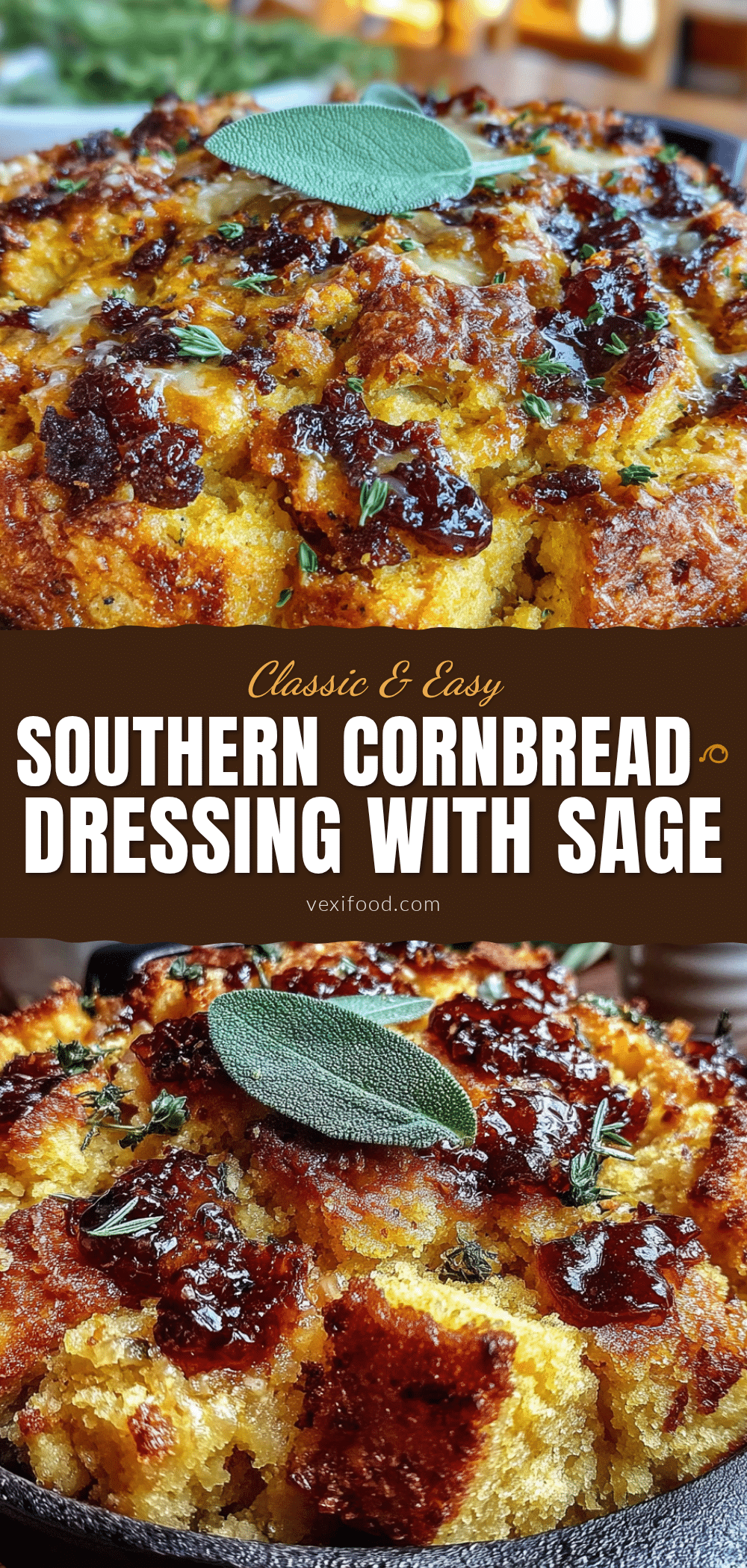
Classic Southern Cornbread Dressing with Sage

This Classic Southern Cornbread Dressing with Sage is a moist, tender, and flavorful side dish perfect for Thanksgiving or Christmas. Made with day-old cornbread, fresh sage, and a simple one-pot method, it delivers crispy golden edges and a custard-like center that will have everyone coming back for seconds.
- Prep Time: 15 minutes
- Cook Time: 45 minutes
- Total Time: 1 hour
- Yield: 8 servings 1x
- Category: Side Dish
- Cuisine: Southern
Ingredients
- 6 cups crumbled day-old cornbread (homemade or store-bought, slightly stale works best for texture)
- 1 cup finely chopped yellow onion (about 1 medium onion)
- 1 cup finely chopped celery (about 3–4 stalks)
- 4 tablespoons unsalted butter
- 2 large eggs, lightly beaten (room temperature)
- 2 ½ cups low-sodium chicken broth (or turkey stock)
- 2 tablespoons fresh sage, finely chopped (or 1 tablespoon dried sage, rubbed between your palms)
- 1 teaspoon dried thyme
- ½ teaspoon poultry seasoning (optional)
- 1 teaspoon salt (plus more to taste)
- ½ teaspoon black pepper
- ¼ cup chopped fresh parsley (for garnish, optional)
Instructions
- Preheat your oven to 375°F (190°C). Grease your 9×13-inch baking dish with butter or nonstick spray. Set it aside.
- Cook the aromatics. In a large skillet over medium heat, melt the 4 tablespoons of butter. Add the chopped onion and celery. Cook, stirring occasionally, for about 8-10 minutes until the onions are translucent and the celery has softened. You want them tender but not browned.
- Prepare the sage. While the onions cook, take your fresh or dried sage and rub it between your palms for about 15-20 seconds until fragrant.
- Crumble the cornbread. In your large mixing bowl, crumble the day-old cornbread into pieces about the size of a pea or smaller, using your hands for best control.
- Combine the base. Add the cooked onions and celery (with all the butter from the pan) to the crumbled cornbread. Add the rubbed sage, dried thyme, poultry seasoning if using, salt, and pepper. Toss everything together with a wooden spoon until the herbs are evenly distributed.
- Add the broth and eggs. In a separate small bowl, whisk the two eggs. Pour the chicken broth and the beaten eggs over the cornbread mixture. Stir gently until everything is well combined. The mixture should look very wet—almost like a thick porridge.
- Let it rest. Let the mixture sit for 10-15 minutes at room temperature to allow the cornbread to start absorbing the broth.
- Transfer to the baking dish. Pour the dressing mixture into your prepared 9×13 dish. Spread it into an even layer with a spatula. Do not press it down.
- Bake. Place the dish in the preheated oven and bake for 35-45 minutes. The top should be golden brown and slightly crisp around the edges. The center should be set but still slightly jiggly—it will continue to set as it cools.
- Rest before serving. Let the dressing sit on the counter for 10 minutes before serving. Garnish with fresh parsley if you like.
Notes
Use day-old cornbread for best texture. Rub the sage between your palms to release its oils. Let the mixture rest for 10-15 minutes before baking to ensure even hydration. For a dairy-free version, substitute butter with vegan butter. For gluten-free, use gluten-free cornbread. To make ahead, assemble the dressing (up to step 8) and refrigerate unbaked for up to 24 hours; add 5-10 minutes to baking time.
Nutrition
- Serving Size: 1 serving (about 1 c
- Calories: 285
- Sugar: 6
- Sodium: 520
- Fat: 12
- Saturated Fat: 6
- Carbohydrates: 34
- Fiber: 2
- Protein: 8
Keywords: cornbread dressing, sage dressing, southern dressing, thanksgiving side, holiday side dish, cornbread stuffing, sage cornbread dressing