Love this? Save it for later!
Share the inspiration with your friends
It was 10:47 PM on a Tuesday in late October, and I was wide awake with a very specific, very inconvenient craving for something warm, spiced, and bread-like. I didn’t have the energy for a yeast-risen project or the eggs for a proper cake, but I had two very soft Fuyu persimmons sitting on the counter that were begging to be used. And I had this vague, half-baked memory of a persimmon bread my aunt used to make—the kind that filled her whole house with that cozy, can’t-quite-place-it smell. So, I grabbed a fork, mashed those persimmons right there in the bowl, and started throwing things together based on a feeling. Let me tell you, I was not expecting the result to be this good. Honestly, it was a little bit of a mess—I forgot to grease the pan properly and had to coax it out with a butter knife—but the smell that filled my kitchen at midnight? Pure magic.
That first bite had this unexpected, jammy sweetness from the persimmons, and the walnuts added this perfect, toasty crunch. It was like autumn in a slice. I ate a piece standing over the counter, still warm, and just nodded to myself. This was it. This was the recipe I didn’t know I needed. Maybe you’ve been there—staring at a bunch of persimmons at the store, wondering what on earth to do with them besides eat them out of hand. Or maybe you’re just looking for a new quick bread to add to your fall rotation that doesn’t rely on the same old pumpkin or banana. This cozy persimmon walnut bread is the answer. It’s the kind of recipe that feels special without being fussy, and it uses ingredients you probably already have in your pantry. I’ve been making it every week since that late-night experiment, and it’s become a staple in our house. The kids love it for breakfast, I love it with my afternoon coffee, and it freezes beautifully for those days when you need a little comfort in a hurry.
Why You’ll Love This Recipe
This isn’t just another quick bread recipe. I’ve tested this one at least a dozen times, tweaking the sugar, adjusting the spice blend, and figuring out the perfect persimmon-to-walnut ratio. It’s been family-approved, neighbor-approved, and even survived a school bake sale without a single slice coming home. Here is why this cozy persimmon walnut bread deserves a permanent spot in your recipe box:
- Budget-Friendly Ingredients : No fancy extracts or hard-to-find flours here. You probably have most of these items in your kitchen right now. Persimmons are often on sale in the fall, and walnuts are a pantry staple that keep for ages in the freezer.
- Quick & Easy : This comes together in about 15 minutes of active prep time. No stand mixer needed, no complicated techniques. Just a bowl, a whisk, and a spatula. Perfect for a busy weeknight when you want a homemade treat without the cleanup hassle.
- Perfect for Fall Baking : This bread captures the essence of autumn—warm spices, sweet fruit, and nutty crunch. It’s great for holiday brunches, Thanksgiving morning, or just a cozy Sunday afternoon.
- Crowd-Pleaser : I’ve served this to picky kids, skeptical in-laws, and friends who swore they didn’t like persimmons. Every single person has asked for the recipe. It’s that good.
- Unbelievably Delicious : The persimmon puree makes the bread incredibly moist without being dense. The texture is tender and almost pudding-like in the center, with a slightly crisp crust. The walnuts add a savory counterpoint that keeps you coming back for another slice.
What makes this recipe different from all the other persimmon breads out there? It’s the balance. I use a combination of brown sugar and a touch of molasses to deepen the flavor, and I toast the walnuts before folding them into the batter. That little extra step makes a world of difference. The spice blend is warm but not overpowering—cinnamon, ginger, and a whisper of nutmeg that lets the persimmon flavor shine. This isn’t just good for a persimmon bread. It’s good, period. It’s the kind of bread that makes you close your eyes after the first bite and forget about everything else for a minute. It’s comfort food reimagined—healthier than a coffee cake, faster than a yeast bread, but with the same soul-soothing satisfaction. Perfect for impressing guests without stress, or turning a simple Tuesday into something memorable.
What Ingredients You Will Need
This recipe uses simple, wholesome ingredients that work together to create something truly special. The persimmons are the star, but every component plays a role in building that cozy, comforting flavor. Most of these are pantry staples, and I’ve included some substitution notes to make this work for your kitchen.
- Persimmons: You need about 1 cup of persimmon puree, which usually takes 2 to 3 very ripe Fuyu persimmons. Fuyu persimmons are the squat, tomato-shaped ones that are sweet even when firm. They are perfect for baking because they don’t have the astringency of Hachiya persimmons. Look for fruit that is soft to the touch, almost like a ripe tomato. If they are still firm, let them sit on the counter for a few days. I’ve also used frozen persimmon puree (thawed and drained) with great results.
- All-Purpose Flour: 2 cups. This gives the bread structure without making it tough. For a whole wheat version, substitute up to half the flour with whole wheat pastry flour. I don’t recommend using all whole wheat, as it can make the bread dense.
- Brown Sugar: 1 cup, packed. I use light brown sugar for a milder molasses flavor, but dark brown sugar works beautifully too and adds a deeper, almost caramel-like sweetness. You can reduce this to 3/4 cup if your persimmons are exceptionally sweet.
- Molasses: 1 tablespoon. This is my secret ingredient. It adds a subtle richness that you can’t quite identify, but you’d miss it if it were gone. Blackstrap molasses is too bitter here—use regular or mild molasses. If you don’t have it, you can substitute with honey or maple syrup, but the flavor will be slightly different.
- Vegetable Oil: 1/2 cup. A neutral oil like canola or grapeseed keeps the bread moist. You can substitute with melted coconut oil or unsalted butter (cooled slightly). If using butter, the bread will have a slightly firmer crumb.
- Eggs: 2 large, at room temperature. They help bind the batter and add richness. For an egg-free version, use 2 flax eggs (2 tablespoons ground flaxseed mixed with 6 tablespoons water, let sit for 5 minutes).
- Vanilla Extract: 1 teaspoon. Pure vanilla is best, but imitation works in a pinch. It rounds out the flavors and makes everything taste more “baked.”
- Walnuts: 1 cup, chopped and toasted. Toasting is non-negotiable here. It brings out the oils and makes the walnuts nuttier and crunchier. Toast them in a dry skillet over medium heat for 3-4 minutes, stirring frequently, until they smell fragrant. Let them cool completely before adding to the batter. Pecans or chopped almonds would also work well.
- Baking Soda: 1 teaspoon. This is the primary leavener. Make sure it’s fresh—test it by dropping a little into vinegar; it should fizz vigorously.
- Baking Powder: 1/2 teaspoon. Adds a little extra lift. Check the expiration date on your can.
- Salt: 1/2 teaspoon. Don’t skip it. Salt enhances all the other flavors and balances the sweetness.
- Spices: 1 teaspoon ground cinnamon, 1/2 teaspoon ground ginger, and 1/4 teaspoon ground nutmeg. I grate my nutmeg fresh from a whole nutmeg—it makes a noticeable difference. You can also use a pumpkin pie spice blend (about 1 3/4 teaspoons) if that’s what you have.
- Buttermilk: 1/2 cup. This reacts with the baking soda to create a tender crumb. If you don’t have buttermilk, make a quick substitute: add 1/2 tablespoon of lemon juice or white vinegar to 1/2 cup of milk, stir, and let it sit for 5 minutes until it thickens slightly.
Equipment Needed
You don’t need a fully stocked bakery kitchen to make this bread. Here is what you will need, along with some alternatives if you’re working with limited tools.
- 9×5-inch Loaf Pan: This is the standard size. If you only have an 8×4-inch pan, the bread will take a bit longer to bake (add 5-10 minutes) and will have a higher dome. You can also use a 9-inch round cake pan, but adjust the baking time to about 35-40 minutes.
- Mixing Bowls: One large bowl for the dry ingredients and one medium bowl for the wet ingredients. Any size will work.
- Whisk: For combining the dry ingredients and for mixing the wet ingredients. A fork works in a pinch, but a whisk is better for aerating the flour.
- Rubber Spatula: Essential for folding the wet ingredients into the dry without overmixing. A wooden spoon works too, but a spatula is gentler.
- Parchment Paper: I highly recommend lining your loaf pan with a parchment sling. It makes lifting the bread out so much easier, and cleanup is a breeze. If you don’t have parchment, grease the pan thoroughly with butter or non-stick spray and dust with flour.
- Cooling Rack: A wire rack allows air to circulate around the bread, preventing the bottom from getting soggy. If you don’t have one, you can use the inverted loaf pan or even a clean dish towel laid flat.
- Fork or Potato Masher: For mashing the persimmons. A food processor or blender works too, but I prefer a fork because it leaves a little texture.
Preparation Method
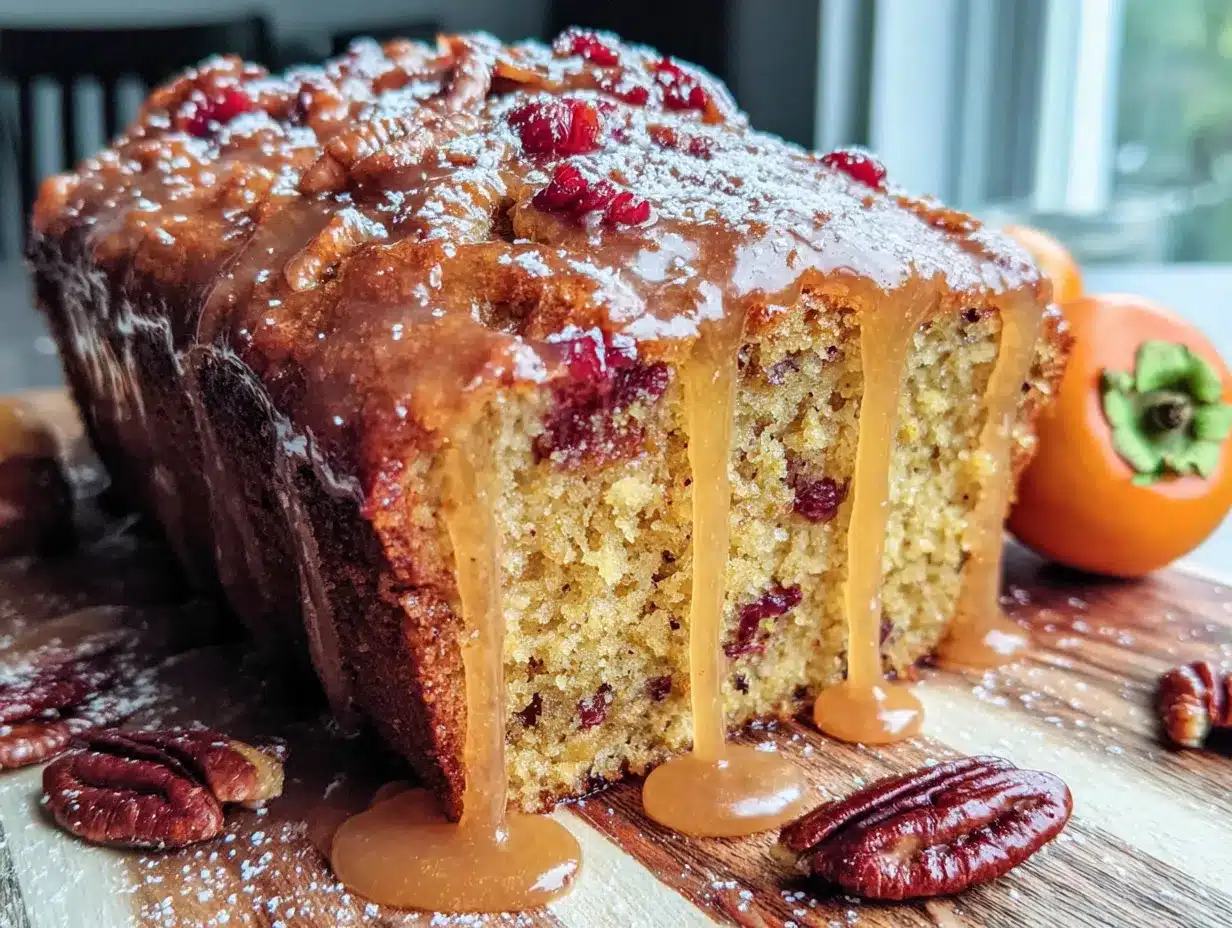
Let’s get baking. This recipe is straightforward, but I’ve included all the little details that make the difference between a good bread and a great one. Take your time, read through the steps once, and then dive in.
- Preheat and Prep: Preheat your oven to 350°F (175°C). Position a rack in the center of the oven. Grease a 9×5-inch loaf pan with butter or non-stick spray, then line it with a strip of parchment paper, leaving an overhang on the two long sides. This will be your handle for lifting the bread out later. Set the pan aside.
- Prep the Persimmons: Wash your persimmons and remove the green tops. Cut them into quarters. Using a fork or a potato masher, mash the persimmon flesh in a bowl until you have a chunky puree. You want some small pieces remaining for texture. Measure out 1 cup (about 240 ml) of this puree. If you have extra, save it for smoothies or eat it with yogurt.
- Toast the Walnuts: Spread the chopped walnuts on a baking sheet in a single layer. Toast them in the preheated oven for 5-7 minutes, until they are fragrant and slightly darkened. Keep a close eye on them—they can burn quickly. Remove from the oven and let them cool completely. Turn the oven off while you prepare the batter, then turn it back on when you’re ready to bake.
- Mix the Dry Ingredients: In a large mixing bowl, whisk together the 2 cups (250 g) all-purpose flour, 1 teaspoon baking soda, 1/2 teaspoon baking powder, 1/2 teaspoon salt, 1 teaspoon cinnamon, 1/2 teaspoon ginger, and 1/4 teaspoon nutmeg. Whisk for about 20 seconds to aerate the flour and distribute the leaveners and spices evenly. Set aside.
- Mix the Wet Ingredients: In a separate medium bowl, combine the 1 cup (200 g) packed brown sugar, 1/2 cup (120 ml) vegetable oil, and 1 tablespoon molasses. Whisk until smooth and well combined. Add the 2 large eggs, one at a time, whisking well after each addition. Add 1 teaspoon vanilla extract and whisk again. The mixture should be smooth and slightly thick.
- Add the Persimmon Puree: Add the 1 cup of persimmon puree to the wet ingredients and whisk until fully incorporated. The mixture will look a little curdled at this point—that’s normal. Don’t panic.
- Alternate Adding Dry Ingredients and Buttermilk: Add about one-third of the dry ingredients to the wet mixture and stir gently with a rubber spatula until just combined. Add half of the 1/2 cup (120 ml) buttermilk and stir. Repeat with another third of the dry ingredients, the remaining buttermilk, and finally the last of the dry ingredients. Stir just until you no longer see streaks of flour. A few small lumps are perfectly fine. Overmixing will make the bread tough.
- Fold in the Walnuts: Add the cooled, toasted walnuts to the batter. Use the spatula to fold them in with just a few strokes. Don’t overdo it—you want the nuts distributed evenly, but you don’t want to deflate the batter.
- Fill the Pan: Pour the batter into the prepared loaf pan. Spread it into an even layer with the spatula. The batter will be thick and slightly sticky. Tap the pan on the counter a few times to release any air bubbles.
- Bake: Place the pan in the preheated oven and bake for 50-60 minutes. Start checking at the 50-minute mark. The bread is done when a wooden skewer or toothpick inserted into the center comes out clean or with just a few moist crumbs attached. If the top is browning too quickly (after about 40 minutes), tent the pan loosely with aluminum foil.
- Cool: Remove the pan from the oven and place it on a wire cooling rack. Let the bread cool in the pan for 15 minutes. Then, using the parchment sling, lift the bread out of the pan and transfer it directly to the cooling rack. Let it cool completely before slicing—this is important. If you slice it while it’s still warm, it will be too tender and may crumble. Patience pays off here.
Cooking Tips & Techniques
I’ve made this bread enough times to learn a few things the hard way. Here are my best tips for ensuring success every time.
Don’t Overmix the Batter: This is the number one mistake people make with quick breads. Once you add the flour, mix only until the ingredients are combined. Overmixing develops the gluten, which will make your bread tough and dense instead of tender and light. A few streaks of flour are okay. I promise they will disappear as you fold in the walnuts.
Check Your Persimmons: Fuyu persimmons are the only variety I recommend for this recipe. Hachiya persimmons are acorn-shaped and extremely astringent until they are fully, almost jelly-soft ripe. If you use an underripe Hachiya, your bread will be unpleasantly bitter. Stick with Fuyu, and make sure they are soft. I once tried to rush the process with slightly firm persimmons, and the bread was not nearly as moist. Let them ripen fully on the counter, even if it takes a few extra days.
Toast Your Walnuts: I cannot stress this enough. Toasting walnuts transforms them from bland and slightly bitter to rich, buttery, and crunchy. It takes five minutes and makes a huge difference in the final flavor of the bread. You can toast them in the oven while it preheats, or in a dry skillet on the stovetop. Just watch them closely—they burn in an instant.
Room Temperature Ingredients: For the best texture, make sure your eggs and buttermilk are at room temperature. Cold ingredients will seize the batter and make it harder to mix, leading to a denser bread. Take them out of the fridge about 30 minutes before you start baking. If you forget, you can warm the buttermilk gently in the microwave (about 10 seconds) and place the eggs in a bowl of warm water for 5 minutes.
Use a Kitchen Scale: If you have one, weighing your flour is the most accurate way to measure. One cup of all-purpose flour should weigh about 125 grams. Scooping directly from the bag can pack the flour and give you too much, resulting in a dry bread. If you don’t have a scale, spoon the flour into your measuring cup and level it off with a knife.
Variations & Adaptations
This recipe is a great base for experimentation. Here are some variations I’ve tried and loved.
Spiced Persimmon Walnut Bread with a Streusel Topping: For an extra-special treat, add a streusel topping. Mix together 1/4 cup brown sugar, 1/4 cup all-purpose flour, 2 tablespoons cold butter (cut into small pieces), and 1/2 teaspoon cinnamon. Use your fingers to work the butter into the dry ingredients until it resembles coarse crumbs. Sprinkle the streusel evenly over the batter before baking. It adds a lovely crunchy, buttery layer on top.
Vegan and Dairy-Free Version: I’ve made this for a friend with dietary restrictions, and it turned out beautifully. Use 2 flax eggs (2 tablespoons ground flaxseed mixed with 6 tablespoons water) in place of the chicken eggs. Substitute the buttermilk with 1/2 cup of unsweetened almond milk mixed with 1/2 tablespoon of lemon juice. Use coconut oil or a neutral vegetable oil. The texture is slightly denser but still incredibly moist and delicious.
Gluten-Free Adaptation: I tested this with a 1:1 gluten-free baking flour blend (the kind with xanthan gum already added), and it worked well. The bread is a bit more crumbly, so let it cool completely before slicing. I recommend using a blend that contains rice flour, tapioca starch, and potato starch for the best texture. Do not substitute with almond flour or coconut flour without adjusting the liquid ratios.
Add Dried Fruit: Fold in 1/2 cup of dried cranberries, chopped dried apricots, or golden raisins along with the walnuts. The chewy fruit adds another layer of texture and sweetness. I particularly love dried cranberries in this bread—they add a tart pop that balances the sweetness.
Make it a Loaf Cake: For a more decadent version, top the cooled bread with a simple glaze. Whisk together 1 cup of powdered sugar with 2-3 tablespoons of fresh orange juice (or milk) until smooth. Drizzle it over the top and let it set before slicing. The orange flavor pairs beautifully with the persimmons and spices.
Serving & Storage Suggestions
This bread is incredibly versatile. Here is how I like to serve it and how to keep it fresh.
Serving: This bread is delicious at room temperature, but I love it slightly warm. Pop a slice in the microwave for about 10 seconds, or toast it lightly in a toaster oven. Spread a little butter or cream cheese on top for extra richness. It’s wonderful with a cup of coffee in the morning, as an afternoon snack with tea, or even as a simple dessert with a scoop of vanilla ice cream. For a holiday brunch, I cut it into thick slices and arrange them on a platter with a bowl of honey butter on the side.
Storage: Store the completely cooled bread in an airtight container at room temperature for up to 4 days. The moisture from the persimmons actually helps keep it soft. I wrap the loaf tightly in plastic wrap and then place it in a resealable bag. If you live in a humid climate, you might want to store it in the refrigerator after day 2 to prevent mold.
Freezing: This bread freezes beautifully. I often make two loaves at once—one for now and one for later. To freeze, let the bread cool completely. Wrap it tightly in a layer of plastic wrap, then a layer of aluminum foil. Place it in a freezer-safe bag. It will keep for up to 3 months. To thaw, let it sit on the counter overnight (still wrapped) or pop individual slices in the microwave for 30 seconds. The flavor actually improves after freezing—the spices seem to meld together even more.
Reheating: For a just-baked experience, reheat slices in a 300°F (150°C) oven for about 5-7 minutes. This is perfect if you’re serving a crowd and want the bread to be warm. For a quick fix, a toaster or toaster oven works great. Just be careful not to over-toast, as the sugar in the bread can burn.
Flavor Development: Honestly, this bread tastes even better the day after it’s baked. The flavors have time to settle and meld together. If you can resist the urge to slice into it immediately, wrap it tightly and let it sit overnight. You’ll be rewarded with an even more aromatic and flavorful loaf.
Nutritional Information & Benefits
Please note that these values are estimates and will vary based on specific ingredients and any substitutions you make. This information is provided for general guidance only.
Based on 12 servings, one slice of this persimmon walnut bread contains approximately:
- Calories: 320
- Fat: 16g
- Saturated Fat: 2g
- Carbohydrates: 42g
- Fiber: 3g
- Sugar: 22g
- Protein: 5g
Health Benefits: Persimmons are an excellent source of vitamin A and vitamin C, both important for immune health and vision. They also contain fiber, which aids digestion. Walnuts are packed with omega-3 fatty acids, which are great for heart and brain health. While this is a treat, it does offer some nutritional benefits beyond a typical sugary snack. I feel good about giving this to my family for breakfast because it has real fruit, nuts, and whole ingredients.
Dietary Considerations: This recipe can be made dairy-free (use buttermilk substitute) and vegan (use flax eggs). For a lower-sugar option, you can reduce the brown sugar to 3/4 cup. The bread is not gluten-free in its standard form, but the gluten-free adaptation works well. It contains nuts and gluten. If you have allergies, please check all your ingredient labels carefully.
Conclusion
This cozy persimmon walnut bread is more than just a recipe—it’s a little slice of autumn that you can make any time the craving hits. It started as a late-night experiment born from a random craving and two sad-looking persimmons, and it quickly became a beloved staple in our home. The combination of sweet, jammy persimmon, warm spices, and crunchy walnuts is genuinely special. It’s the kind of bread that makes your kitchen smell like a hug, and it’s simple enough for a beginner baker to tackle with confidence.
I encourage you to make this recipe your own. Add the streusel topping if you’re feeling fancy. Throw in some dried cranberries. Swap the walnuts for pecans. Baking is about making something that brings you joy, and this bread is a perfect canvas for your creativity. I’d love to hear how it turns out for you. Did you make any changes? Did your family love it as much as mine does? Drop a comment below and let me know. And if you snap a photo, tag me on social media—I love seeing your baking adventures. Happy baking, friends. You’ve got this.
Frequently Asked Questions
Can I use Hachiya persimmons instead of Fuyu?
I don’t recommend it. Hachiya persimmons are very astringent unless they are fully, completely ripe—almost to the point of being mushy. Even then, they can be tricky to work with in baking. Fuyu persimmons are much more reliable and forgiving. They are sweet even when slightly firm, and they have a lovely dense texture that works perfectly in this bread.
My persimmons aren’t ripe yet. Can I still make this bread?
You can, but the bread won’t be as sweet or as moist. Unripe persimmons are firm and have a slightly chalky texture. If you’re in a hurry, you can try to ripen them faster by placing them in a paper bag with a banana or an apple. The ethylene gas from the other fruit will speed up the process. It usually takes 1-2 days.
Can I use frozen persimmon puree?
Yes, absolutely. If you have frozen persimmon puree from last season, let it thaw in the refrigerator overnight. Drain off any excess liquid before measuring it for the recipe. You want a thick puree, not a watery one. Frozen puree works just as well as fresh, and it’s a great way to use up a bumper crop of persimmons.
Why did my bread sink in the middle?
A sunken middle usually means the bread was underbaked or the oven temperature was too low. Make sure your oven is properly preheated to 350°F (175°C). Use an oven thermometer to check, as many ovens run hot or cold. Also, don’t open the oven door during the first 30 minutes of baking, as the sudden rush of cold air can cause the bread to collapse. Finally, make sure your baking soda and baking powder are fresh.
Can I make this into muffins instead of a loaf?
Yes! This batter makes excellent muffins. Grease a 12-cup muffin tin or line it with paper liners. Fill each cup about 3/4 full. Bake at 350°F (175°C) for 18-22 minutes, or until a toothpick inserted into the center of a muffin comes out clean. Let them cool in the pan for 5 minutes, then transfer to a wire rack. Muffins are great for freezing and packing in lunchboxes.
Pin This Recipe!
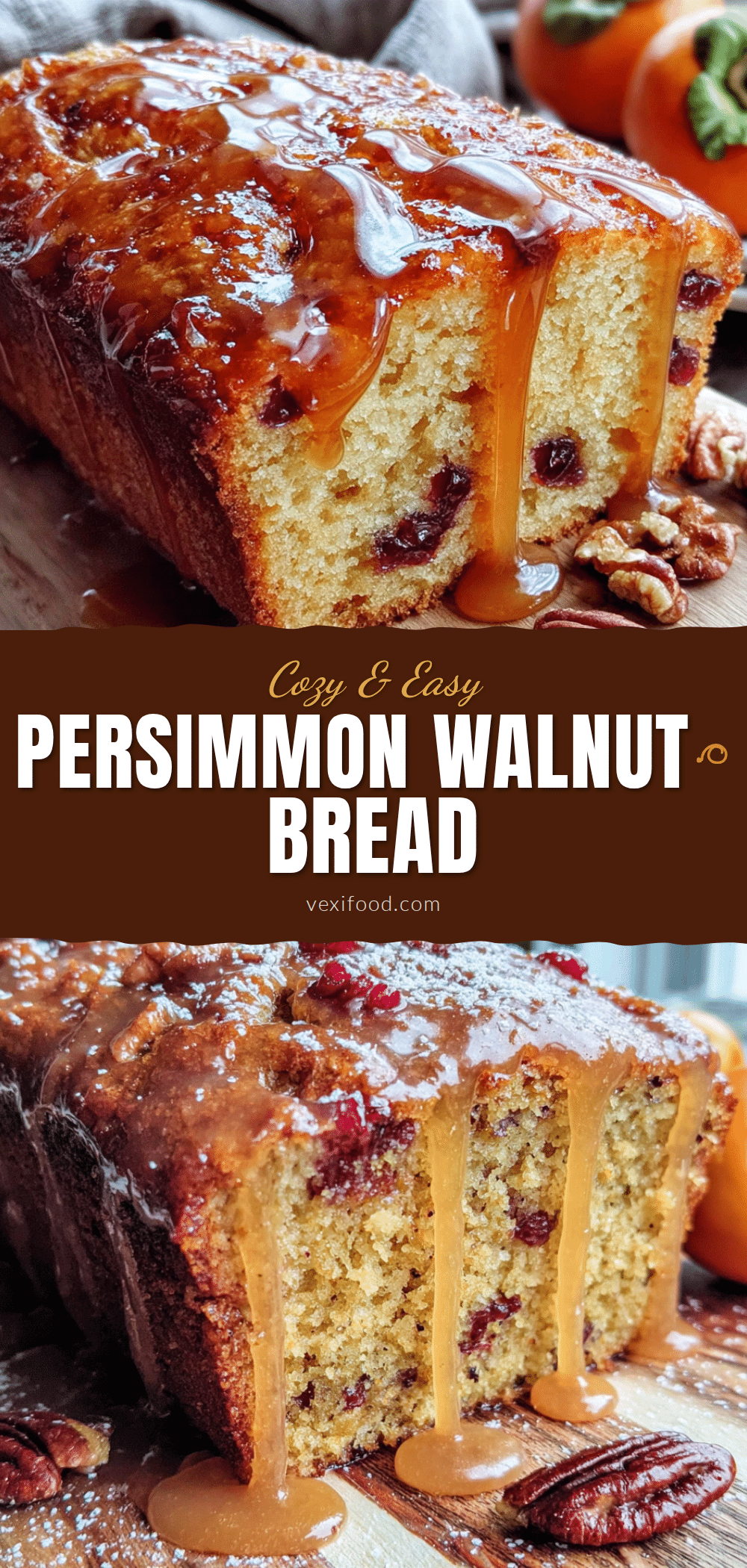
Cozy Persimmon Walnut Bread: Easy Homemade Recipe

This cozy persimmon walnut bread is a moist, spiced quick bread made with ripe Fuyu persimmons and toasted walnuts. It’s perfect for fall baking, easy to make, and uses simple pantry ingredients.
- Prep Time: 15 minutes
- Cook Time: 50-60 minutes
- Total Time: 1 hour 15 minutes
- Yield: 12 servings 1x
- Category: Quick Bread
- Cuisine: American
Ingredients
- 2 to 3 very ripe Fuyu persimmons (to yield 1 cup puree)
- 2 cups all-purpose flour
- 1 cup packed brown sugar
- 1 tablespoon molasses
- 1/2 cup vegetable oil
- 2 large eggs, at room temperature
- 1 teaspoon vanilla extract
- 1 cup walnuts, chopped and toasted
- 1 teaspoon baking soda
- 1/2 teaspoon baking powder
- 1/2 teaspoon salt
- 1 teaspoon ground cinnamon
- 1/2 teaspoon ground ginger
- 1/4 teaspoon ground nutmeg
- 1/2 cup buttermilk
Instructions
- Preheat your oven to 350°F (175°C). Position a rack in the center of the oven. Grease a 9×5-inch loaf pan with butter or non-stick spray, then line it with a strip of parchment paper, leaving an overhang on the two long sides. Set aside.
- Wash the persimmons and remove the green tops. Cut them into quarters. Using a fork or potato masher, mash the persimmon flesh in a bowl until you have a chunky puree. Measure out 1 cup (about 240 ml) of this puree.
- Spread the chopped walnuts on a baking sheet in a single layer. Toast them in the preheated oven for 5-7 minutes, until fragrant and slightly darkened. Remove from the oven and let them cool completely. Turn the oven off while you prepare the batter, then turn it back on when ready to bake.
- In a large mixing bowl, whisk together the all-purpose flour, baking soda, baking powder, salt, cinnamon, ginger, and nutmeg. Whisk for about 20 seconds to aerate the flour and distribute the leaveners and spices evenly. Set aside.
- In a separate medium bowl, combine the packed brown sugar, vegetable oil, and molasses. Whisk until smooth and well combined. Add the eggs, one at a time, whisking well after each addition. Add the vanilla extract and whisk again.
- Add the persimmon puree to the wet ingredients and whisk until fully incorporated. The mixture may look a little curdled—that’s normal.
- Add about one-third of the dry ingredients to the wet mixture and stir gently with a rubber spatula until just combined. Add half of the buttermilk and stir. Repeat with another third of the dry ingredients, the remaining buttermilk, and finally the last of the dry ingredients. Stir just until no streaks of flour remain. A few small lumps are fine.
- Add the cooled, toasted walnuts to the batter. Fold them in with just a few strokes until evenly distributed.
- Pour the batter into the prepared loaf pan. Spread it into an even layer with the spatula. Tap the pan on the counter a few times to release any air bubbles.
- Bake for 50-60 minutes. Start checking at the 50-minute mark. The bread is done when a wooden skewer or toothpick inserted into the center comes out clean or with just a few moist crumbs attached. If the top is browning too quickly (after about 40 minutes), tent the pan loosely with aluminum foil.
- Remove the pan from the oven and place it on a wire cooling rack. Let the bread cool in the pan for 15 minutes. Then, using the parchment sling, lift the bread out of the pan and transfer it directly to the cooling rack. Let it cool completely before slicing.
Notes
For best results, use very ripe Fuyu persimmons. Toast the walnuts to enhance their flavor. Do not overmix the batter. Let the bread cool completely before slicing to prevent crumbling. The bread tastes even better the day after baking.
Nutrition
- Serving Size: 1 slice
- Calories: 320
- Sugar: 22
- Sodium: 220
- Fat: 16
- Saturated Fat: 2
- Carbohydrates: 42
- Fiber: 3
- Protein: 5
Keywords: persimmon bread, walnut bread, fall baking, quick bread, easy recipe, homemade, Fuyu persimmons