Love this? Save it for later!
Share the inspiration with your friends
I was standing in the checkout line at the hardware store last October, holding a bag of lightbulbs and a new garden trowel, when the cashier—a woman named Margo with a name tag that said “Ask me about my sourdough”—started talking about soup. Not just any soup, but a slow cooker minestrone she made every single Sunday from the first week of October until the snow melted. She described it with such detail, such genuine affection, that I forgot to put my wallet away. “The secret,” she said, leaning over the register, “is roasting the vegetables first. I know it’s an extra step, but it changes everything.” I nodded like I understood, but honestly? I was just imagining how good my kitchen would smell for eight hours straight. I bought a butternut squash that very afternoon and a bag of kale I wasn’t entirely sure what to do with. That was two years ago, and I haven’t made fall soup any other way since.
There’s something about a slow cooker minestrone that feels like a warm hug on a chilly afternoon. Maybe it’s the way the broth gets all rich and savory, or how the vegetables break down just enough to thicken things up without turning to mush. This Cozy Slow Cooker Fall Vegetable Minestrone Soup has become my go-to for busy weeks when I want something hearty but don’t have the energy to stand over a stove. You know that feeling when you come home after a long day and dinner is basically ready? That’s what this recipe delivers.
I’ll be honest—I messed it up the first time. I dumped everything in raw and ended up with a watery, bland soup that tasted more like vegetable water than minestrone. But after a few tweaks and some advice from Margo (yes, I went back to thank her), I figured out the rhythm. A little roasting, a little patience, and a lot of beans. This recipe has earned a permanent spot in my fall rotation, and I think it’ll earn one in yours too.
Why You’ll Love This Recipe
This isn’t just another vegetable soup recipe. I’ve tested this minestrone at least a dozen times, tweaking the ratios, swapping vegetables, and even trying different slow cooker brands to make sure it works every single time. Here’s why I think you’ll fall for it too:
- Comfort in a Bowl: The broth gets deeply flavorful after hours of slow cooking, especially when you take the extra ten minutes to roast the vegetables first. It’s the kind of soup that makes you close your eyes after the first spoonful.
- Incredibly Easy: Once the vegetables are roasted (which takes minimal effort), everything goes into the slow cooker. Set it and forget it for 6 to 8 hours. Dinner practically makes itself.
- Budget-Friendly: This soup relies on pantry staples like canned tomatoes, beans, and vegetable broth. The fresh vegetables are seasonal and affordable in the fall. No fancy ingredients required.
- Perfect for Meal Prep: This soup tastes even better the next day. Make a big batch on Sunday and enjoy it for lunches all week. It also freezes beautifully.
- Crowd-Pleasing: I’ve served this to vegetarians, meat-eaters, picky kids, and even my uncle who claims he doesn’t like vegetables. Everyone goes back for seconds. The secret is in the balance of flavors and textures.
- Naturally Healthy: Packed with fiber-rich beans, seasonal vegetables, and a tomato-based broth, this soup is filling without being heavy. It’s the kind of meal that makes you feel good from the inside out.
What Ingredients You Will Need
This recipe uses simple, wholesome ingredients that come together to create something truly special. Most of these are fall staples you might already have on hand.
For the Roasted Vegetables
- 1 medium butternut squash, peeled and diced into ½-inch cubes (about 3 cups) – Look for one that feels heavy for its size with a firm, tan skin. I prefer smaller squash as they tend to be sweeter.
- 2 medium carrots, peeled and diced (about 1 cup)
- 2 celery stalks, diced (about ¾ cup)
- 1 medium yellow onion, diced (about 1 ½ cups)
- 3 cloves garlic, minced (or 1 tablespoon pre-minced)
- 2 tablespoons olive oil – I use extra virgin for roasting, but regular olive oil works fine too.
- 1 teaspoon dried rosemary
- ½ teaspoon dried thyme
- ½ teaspoon salt
- ¼ teaspoon black pepper
For the Soup Base
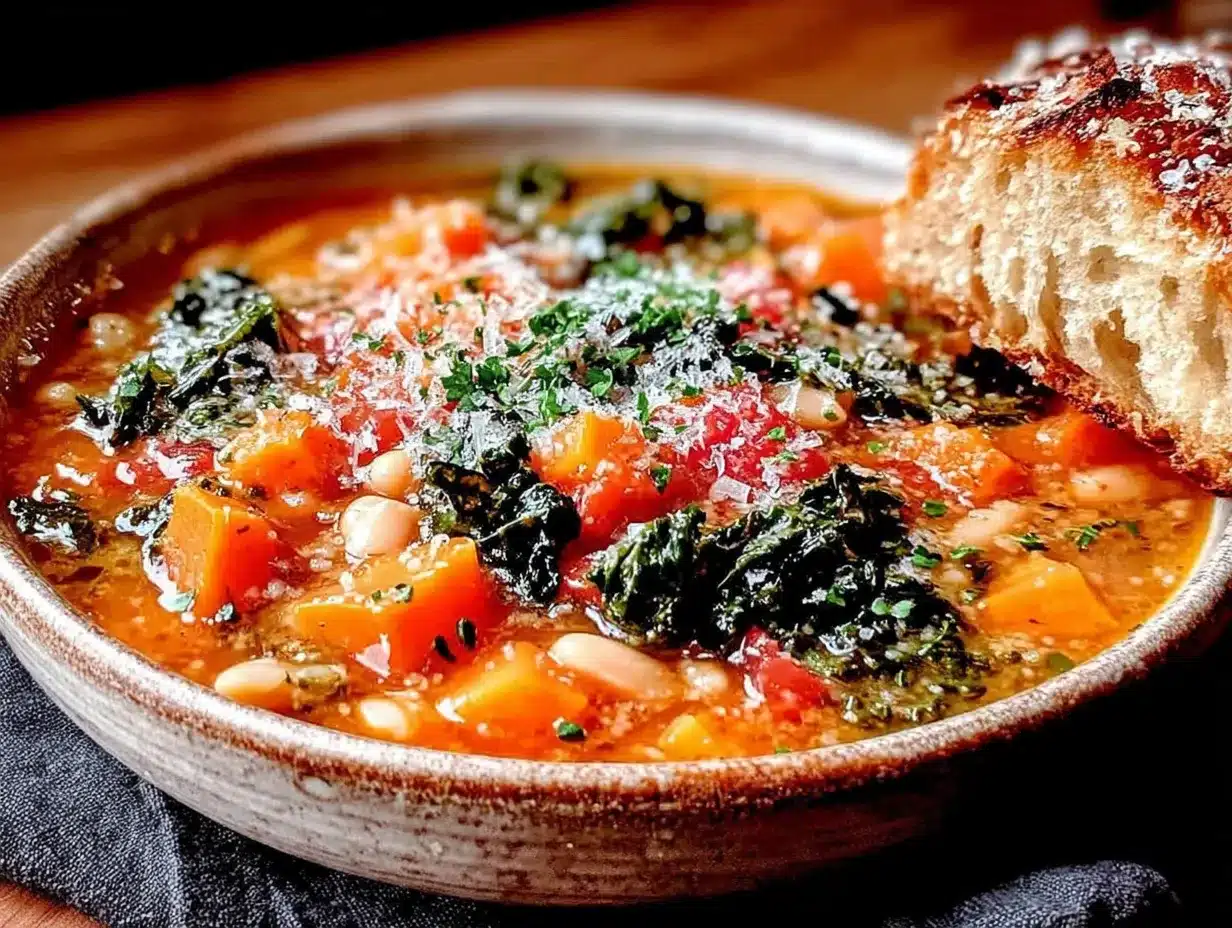
- 6 cups vegetable broth – I recommend using a low-sodium brand so you can control the salt level. Swanson and Pacific Foods both work well.
- 1 can (15 ounces) diced tomatoes, with their juices – Fire-roasted tomatoes add a lovely smoky depth if you can find them.
- 1 can (15 ounces) cannellini beans, drained and rinsed – Great Northern beans or chickpeas also work here.
- 1 can (15 ounces) kidney beans, drained and rinsed – Red or light kidney beans both work.
- 1 medium zucchini, diced (about 1 ½ cups) – Adds a nice pop of green and a tender texture.
- 2 cups chopped kale, stems removed – Curly kale holds up better than lacinato in the slow cooker, but either works.
- 1 cup small pasta (like ditalini, elbow, or orzo) – I add this at the end so it doesn’t turn to mush. Gluten-free pasta works well too.
- 1 tablespoon tomato paste – This deepens the tomato flavor and adds richness to the broth.
- 1 bay leaf – Remember to remove it before serving!
- Salt and pepper, to taste
For Serving (Optional but Recommended)
- Freshly grated Parmesan cheese – Adds a salty, umami finish.
- Fresh basil or parsley, chopped – A bright, fresh contrast to the rich broth.
- A drizzle of good olive oil – Just a touch for a silky finish.
- Crusty bread – For dipping, obviously.
Ingredient Tips: If you can’t find butternut squash, peeled and cubed sweet potato or pumpkin works beautifully. For the beans, feel free to use whatever you have in your pantry. I’ve used chickpeas and black beans before, and while the flavor profile shifts slightly, it’s always delicious. If you’re avoiding pasta, add an extra cup of diced potatoes or a handful of quinoa for the last 30 minutes of cooking.
Equipment Needed
You don’t need a fancy kitchen to make this soup, but having the right tools makes the process smoother. Here’s what I use:
- Slow Cooker – A 6-quart or larger model is ideal for this recipe. I use a Crock-Pot brand slow cooker, but any brand works. If yours runs hot, check the soup earlier than the recipe suggests.
- Baking Sheet – A rimmed baking sheet for roasting the vegetables. I line mine with parchment paper for easy cleanup.
- Large Skillet or Sauté Pan – For sautéing the onion and garlic before they go into the slow cooker. This step is optional but adds depth.
- Chef’s Knife – A sharp knife makes dicing butternut squash much less intimidating. Trust me on this one.
- Cutting Board – A large, sturdy board gives you room to work.
- Measuring Cups and Spoons – For accuracy, especially with the broth and seasonings.
- Wooden Spoon or Spatula – For stirring.
- Vegetable Peeler – For the carrots and butternut squash.
Budget-Friendly Tip: Don’t have a slow cooker? You can make this soup in a large Dutch oven on the stovetop. Sauté the vegetables, add the broth and remaining ingredients (except the pasta and kale), and simmer for about 45 minutes to an hour. Add the pasta and kale for the last 10 minutes. It’s not quite the same “set it and forget it” experience, but the flavor is just as good.
Preparation Method
Let me walk you through this step by step. I’ve included time estimates and sensory cues so you know exactly what to look for at each stage.
- Preheat your oven to 425°F (220°C). Line a rimmed baking sheet with parchment paper for easy cleanup.
- Prep the vegetables. Peel and dice the butternut squash into ½-inch cubes. Don’t stress about perfection—they’ll soften in the slow cooker. Dice the carrots, celery, and onion into similar-sized pieces. The more uniform the pieces, the more evenly they’ll roast.
- Toss and roast. Spread the diced squash, carrots, celery, and onion on the prepared baking sheet. Drizzle with 2 tablespoons olive oil, then sprinkle with the dried rosemary, thyme, salt, and pepper. Toss everything with your hands until evenly coated. Roast for 20 to 25 minutes, stirring halfway through, until the vegetables are tender and starting to brown at the edges. Your kitchen should smell amazing at this point—like a cozy fall evening.
- While the vegetables roast, sauté the aromatics. In a large skillet over medium heat, add a splash of olive oil. Add the minced garlic and cook for about 30 seconds, just until fragrant. (Don’t let it burn—it turns bitter quickly.) Add this to the slow cooker once the vegetables are done.
- Build the soup base. To your slow cooker, add the roasted vegetables, sautéed garlic, vegetable broth, diced tomatoes (with their juices), drained and rinsed beans, tomato paste, and bay leaf. Stir everything together until the tomato paste dissolves into the broth. The color should be a rich, rusty red.
- Slow cook. Cover and cook on LOW for 6 to 8 hours or on HIGH for 3 to 4 hours. The longer it cooks, the more the flavors meld together. About 30 minutes before serving, taste the broth and adjust salt and pepper as needed.
- Add the pasta and zucchini. Stir in the diced zucchini and the small pasta. If the soup seems too thick, add up to 1 cup of water or additional broth. Cover and cook on HIGH for 10 to 15 minutes, or until the pasta is tender but still has a slight bite (al dente).
- Stir in the kale. Add the chopped kale and stir until it wilts into the hot broth, about 2 to 3 minutes. The kale should be bright green and tender.
- Final adjustments. Remove the bay leaf. Taste the soup one last time and adjust seasoning. If it needs a little brightness, add a squeeze of fresh lemon juice or a splash of red wine vinegar.
- Serve. Ladle the soup into bowls and top with freshly grated Parmesan cheese, a sprinkle of fresh herbs, and a drizzle of olive oil if you’re feeling fancy. Serve with crusty bread for dipping.
Pro Tip: If you’re planning to have leftovers, consider cooking the pasta separately and adding it to individual bowls before serving. This prevents the pasta from absorbing too much broth and becoming mushy when reheated.
Cooking Tips & Techniques
I’ve learned a few things the hard way so you don’t have to. Here are my best tips for slow cooker minestrone success:
- Don’t skip the roasting step. I know it’s tempting to throw everything in raw, especially when you’re tired. But roasting the vegetables caramelizes their natural sugars and adds a depth of flavor that you simply can’t get from the slow cooker alone. It takes 20 minutes and makes a world of difference.
- Layer your flavors. Sautéing the garlic before adding it to the slow cooker might seem fussy, but it releases oils that make the garlic taste sweeter and more mellow. Raw garlic in a slow cooker can sometimes taste harsh or bitter.
- Add pasta at the end. This is the most common mistake I see. If you add pasta at the beginning, it will absorb all the broth and turn into a mushy, starchy mess. Adding it during the last 10 to 15 minutes ensures it stays tender and the broth remains brothy.
- Watch your liquid levels. Slow cookers don’t let steam escape the way a stovetop pot does, so soups can end up more watery. That’s why I recommend roasting the vegetables first (it removes some moisture) and adding pasta at the end (it absorbs excess liquid). If your soup still seems thin, remove the lid for the last 30 minutes to let some liquid evaporate.
- Season in layers. Add salt at the beginning (it helps vegetables release their flavors), but go easy. Taste and adjust at the end. Beans and broth can vary widely in saltiness, so it’s better to under-salt early and add more later.
- Use the right size slow cooker. A 6-quart slow cooker is ideal for this recipe. If yours is smaller, reduce the broth by 1 cup. If it’s larger, the soup might cook faster, so check it an hour earlier than the recipe suggests.
Variations & Adaptations
One of the things I love about this soup is how flexible it is. Here are some of my favorite variations:
- Make it vegan. This recipe is already vegetarian, but to make it fully vegan, simply skip the Parmesan cheese or use a vegan alternative. The soup itself is naturally dairy-free.
- Add protein. If you want a heartier soup, add 1 pound of cooked Italian sausage (turkey or chicken works great) during the last hour of cooking. Or stir in a cup of cooked shredded chicken at the end. I’ve also added a can of drained chickpeas for extra plant-based protein.
- Switch up the vegetables. This soup is a great way to use up whatever fall vegetables you have. Try swapping the butternut squash for diced sweet potato, pumpkin, or even parsnips. Add a cup of frozen green beans or peas during the last 30 minutes for a pop of green.
- Make it gluten-free. Use gluten-free pasta (like brown rice pasta or chickpea pasta) and check that your vegetable broth is certified gluten-free. The rest of the ingredients are naturally gluten-free.
- Try a different grain. Instead of pasta, add ½ cup of quinoa, farro, or barley during the last 30 minutes of cooking. Each grain will give the soup a different texture and nutritional profile.
- Add a spicy kick. Stir in ½ teaspoon of red pepper flakes along with the garlic for a subtle heat. Or add a diced jalapeño (seeds removed) with the roasted vegetables.
My personal favorite variation: I once added a parmesan rind to the slow cooker along with the broth. It simmered for the whole cooking time and infused the soup with an incredible savory depth. Just remember to remove it before serving. It’s a game-changer.
Serving & Storage Suggestions
This soup is wonderful right away, but like most soups, it gets even better after a day or two in the fridge.
Serving: Ladle the soup into warm bowls and top with a generous sprinkle of freshly grated Parmesan cheese. A drizzle of good olive oil and a few fresh basil leaves add a lovely finishing touch. Serve with thick slices of crusty bread, toasted and rubbed with a cut garlic clove for extra flavor. For a complete meal, pair it with a simple green salad dressed with lemon vinaigrette.
Storage: Let the soup cool completely before transferring it to an airtight container. It will keep in the refrigerator for up to 5 days. The flavors continue to meld, so leftovers often taste better than the first serving. If you cooked the pasta separately, add it to individual bowls before reheating to keep it from getting mushy.
Freezing: This soup freezes beautifully for up to 3 months. For best results, freeze the soup without the pasta. Let it cool completely, then transfer to freezer-safe containers or zip-top bags. Leave about an inch of headspace for expansion. To thaw, place the container in the refrigerator overnight. Reheat gently on the stovetop or in the microwave, then add freshly cooked pasta and kale.
Reheating: Reheat individual portions in the microwave for 2 to 3 minutes, stirring halfway through. For larger batches, warm the soup in a pot over medium-low heat, stirring occasionally. If the soup has thickened too much, add a splash of broth or water to thin it out.
Flavor development: The soup’s flavor deepens and becomes more complex after a day or two in the fridge. The beans and vegetables continue to absorb the broth, creating a richer, more cohesive taste. This is one of those rare recipes where leftovers are actually a gift.
Nutritional Information & Benefits
This soup is as nourishing as it is delicious. Here’s an approximate nutritional breakdown per serving (based on 8 servings):
- Calories: 285
- Total Fat: 6g
- Saturated Fat: 1g
- Cholesterol: 0mg
- Sodium: 680mg (varies based on broth and added salt)
- Total Carbohydrates: 48g
- Dietary Fiber: 12g
- Sugars: 10g
- Protein: 12g
Health Benefits: This soup is packed with fiber from the beans, butternut squash, and kale, which supports healthy digestion and keeps you feeling full. The butternut squash is rich in vitamin A (important for eye health) and vitamin C (for immune support). Kale adds iron, calcium, and antioxidants. The beans provide plant-based protein and help stabilize blood sugar levels. Plus, the slow cooking process helps preserve the nutrients in the vegetables better than high-heat cooking methods.
Dietary Considerations: This recipe is naturally vegetarian, dairy-free (if you skip the Parmesan), and can easily be made gluten-free and vegan. It’s also nut-free and egg-free, making it suitable for a wide range of dietary needs.
Allergen Note: The pasta contains gluten. Use gluten-free pasta if needed. The Parmesan cheese contains dairy, but it’s optional and can be omitted or replaced with a vegan alternative.
Conclusion
This Cozy Slow Cooker Fall Vegetable Minestrone Soup is everything I want in a fall recipe—warming, nourishing, and forgiving. It’s the kind of meal that fills your kitchen with the smell of comfort and your belly with something deeply satisfying. Whether you’re making it for a busy weeknight dinner, a weekend meal prep session, or a cozy gathering with friends, this soup delivers every single time.
I love that this recipe lets me use up whatever vegetables I have on hand, and that it tastes even better the next day. It’s become my fall ritual, the soup I turn to when the air turns crisp and the leaves start to change. I hope it becomes one of yours too.
Have you tried this recipe? I’d love to hear how it turned out! Leave a comment below and let me know what variations you tried. Did you add sausage? Swap the butternut squash for sweet potato? Or maybe you discovered a new favorite way to serve it? Share your experience—your idea might inspire someone else’s dinner tonight.
Happy cooking, and here’s to a cozy, soup-filled fall!
Frequently Asked Questions
Can I make this soup in an Instant Pot or pressure cooker?
Yes! To make this in an Instant Pot, use the sauté function to cook the garlic and onion. Add the roasted vegetables, broth, tomatoes, beans, and tomato paste. Pressure cook on HIGH for 5 minutes, then quick release. Stir in the pasta and zucchini, then pressure cook for another 3 minutes. Quick release again, then stir in the kale until wilted.
Why did my soup turn out watery?
This usually happens if you skip the roasting step or add too much broth. Roasting the vegetables removes excess moisture and concentrates their flavor. If your soup is still watery after cooking, remove the lid for the last 30 minutes to let some liquid evaporate. You can also mash some of the beans against the side of the slow cooker to thicken the broth.
Can I use frozen vegetables instead of fresh?
You can, but I recommend thawing and draining them first to avoid adding extra water to the soup. Frozen vegetables won’t have the same caramelized flavor from roasting, so the soup will be milder. If you’re in a pinch, go ahead and use them—it will still be a tasty soup, just with a slightly different flavor profile.
How do I prevent the pasta from getting mushy in leftovers?
The best method is to cook the pasta separately and add it to individual bowls when serving. Store the leftover soup and pasta separately in the fridge. When reheating, add the pasta to the hot soup and let it warm through for a minute or two. This keeps the pasta perfectly al dente even days later.
Can I add meat to this soup?
Absolutely! Cooked Italian sausage (sweet or spicy), shredded chicken, or even crumbled ground beef work wonderfully. Add the meat during the last hour of cooking so it has time to heat through without overcooking. For sausage, brown it in a skillet first to render some fat and develop flavor before adding it to the slow cooker.
Pin This Recipe!
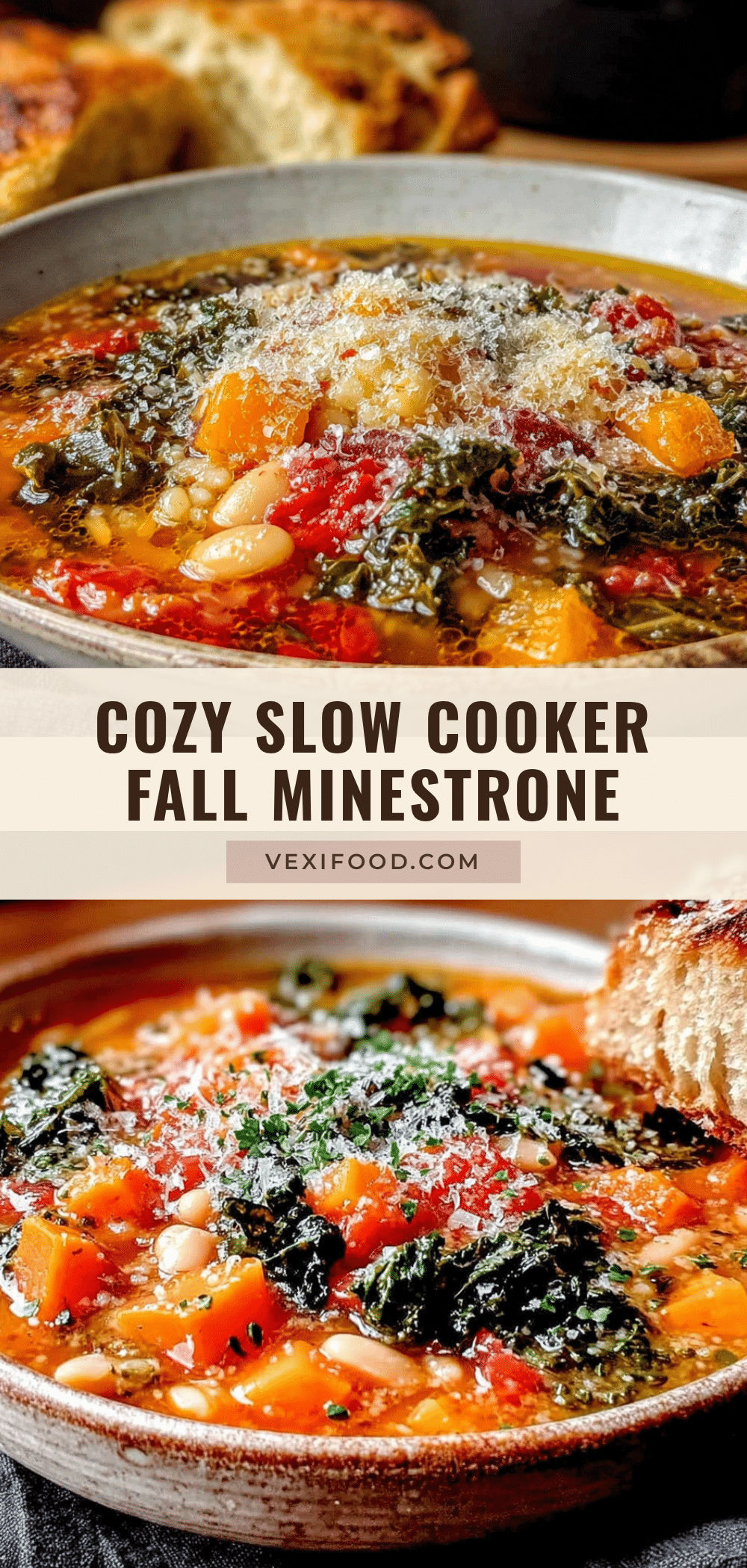
Cozy Slow Cooker Fall Vegetable Minestrone Soup
A hearty and comforting slow cooker minestrone soup packed with roasted fall vegetables, beans, and pasta. Perfect for busy weeknights, this soup delivers deep flavor with minimal effort.
- Prep Time: 20 minutes
- Cook Time: 6 hours 30 minutes
- Total Time: 6 hours 50 minutes
- Yield: 8 servings 1x
- Category: Soup
- Cuisine: Italian
Ingredients
- 1 medium butternut squash, peeled and diced into ½-inch cubes (about 3 cups)
- 2 medium carrots, peeled and diced (about 1 cup)
- 2 celery stalks, diced (about ¾ cup)
- 1 medium yellow onion, diced (about 1 ½ cups)
- 3 cloves garlic, minced (or 1 tablespoon pre-minced)
- 2 tablespoons olive oil
- 1 teaspoon dried rosemary
- ½ teaspoon dried thyme
- ½ teaspoon salt
- ¼ teaspoon black pepper
- 6 cups vegetable broth, low-sodium recommended
- 1 can (15 ounces) diced tomatoes, with their juices
- 1 can (15 ounces) cannellini beans, drained and rinsed
- 1 can (15 ounces) kidney beans, drained and rinsed
- 1 medium zucchini, diced (about 1 ½ cups)
- 2 cups chopped kale, stems removed
- 1 cup small pasta (like ditalini, elbow, or orzo)
- 1 tablespoon tomato paste
- 1 bay leaf
- Salt and pepper, to taste
- Freshly grated Parmesan cheese, for serving (optional)
- Fresh basil or parsley, chopped, for serving (optional)
- Good olive oil, for drizzling (optional)
- Crusty bread, for serving (optional)
Instructions
- Preheat your oven to 425°F (220°C). Line a rimmed baking sheet with parchment paper.
- Prep the vegetables: Peel and dice the butternut squash into ½-inch cubes. Dice the carrots, celery, and onion into similar-sized pieces.
- Toss and roast: Spread the diced squash, carrots, celery, and onion on the prepared baking sheet. Drizzle with 2 tablespoons olive oil, then sprinkle with dried rosemary, thyme, salt, and pepper. Toss to coat. Roast for 20 to 25 minutes, stirring halfway through, until tender and starting to brown.
- While the vegetables roast, sauté the aromatics: In a large skillet over medium heat, add a splash of olive oil. Add the minced garlic and cook for about 30 seconds, until fragrant. Add to the slow cooker once the vegetables are done.
- Build the soup base: To your slow cooker, add the roasted vegetables, sautéed garlic, vegetable broth, diced tomatoes (with juices), drained and rinsed beans, tomato paste, and bay leaf. Stir until the tomato paste dissolves.
- Slow cook: Cover and cook on LOW for 6 to 8 hours or on HIGH for 3 to 4 hours. About 30 minutes before serving, taste and adjust salt and pepper.
- Add the pasta and zucchini: Stir in the diced zucchini and small pasta. If the soup seems too thick, add up to 1 cup of water or additional broth. Cover and cook on HIGH for 10 to 15 minutes, until the pasta is tender but still al dente.
- Stir in the kale: Add the chopped kale and stir until wilted, about 2 to 3 minutes.
- Final adjustments: Remove the bay leaf. Taste and adjust seasoning. If needed, add a squeeze of fresh lemon juice or a splash of red wine vinegar for brightness.
- Serve: Ladle into bowls and top with freshly grated Parmesan cheese, fresh herbs, and a drizzle of olive oil if desired. Serve with crusty bread.
Notes
For best results, do not skip roasting the vegetables—it adds depth of flavor. Add pasta at the end to prevent mushiness. For leftovers, cook pasta separately and add when reheating. Soup freezes well for up to 3 months (without pasta).
Nutrition
- Serving Size: 1 serving (about 1.5
- Calories: 285
- Sugar: 10
- Sodium: 680
- Fat: 6
- Saturated Fat: 1
- Carbohydrates: 48
- Fiber: 12
- Protein: 12
Keywords: slow cooker minestrone, fall vegetable soup, vegetarian minestrone, hearty soup, butternut squash soup, kale soup, easy minestrone