Love this? Save it for later!
Share the inspiration with your friends
My neighbor, a retired librarian named Eleanor, wasn’t trying to impress anyone that Tuesday. I’d stopped by to return her garden shears, and a smell hit me before I even knocked—nutty, warm, almost like toasted hazelnuts mixed with something herbaceous. She opened the door with a wooden spoon in her hand, completely nonchalant, like she wasn’t standing in a kitchen that smelled like heaven.
“Oh, that’s just dinner,” she said when I asked. “Nothing fancy.”
Nothing fancy. She said that while stirring a pot of creamy brown butter sage butternut squash risotto like it was canned soup. I stood there for a solid ten minutes, watching her work, trying to memorize every move. She didn’t measure anything. She just knew when the rice needed more broth, when the squash was tender enough, when the butter had darkened to that perfect amber color. Honestly, I was a little jealous of how effortless she made it look.
I went home that night and tried to recreate it from memory. First attempt? Disaster. The rice was crunchy, the squash was mushy, and I burned the butter so badly it tasted like regret. But I kept at it, calling Eleanor with questions, tweaking things each time. Maybe you’ve been there—obsessed with a dish you tasted somewhere and couldn’t get out of your head. That’s what this risotto did to me.
Now, after countless batches, I’ve got it down. This creamy brown butter sage butternut squash risotto is the kind of meal that makes you slow down and actually taste what you’re eating. It’s rich without being heavy, comforting without being boring, and it tastes like something you’d order at a fancy restaurant—but you can make it in your own kitchen on a random Tuesday night.
Why You’ll Love This Recipe
Let me tell you why this recipe has earned a permanent spot in my cooking rotation. It’s not just good—it’s the kind of risotto that makes people close their eyes after the first bite. I’ve tested this version more times than I can count, tweaking the ratio of broth to rice, perfecting the brown butter technique, and figuring out exactly when to add the squash for the best texture.
- Restaurant-Quality at Home : This creamy brown butter sage butternut squash risotto tastes like it came from a cozy Italian trattoria, but you don’t need professional training to pull it off. The brown butter adds this nutty, caramelized depth that elevates the whole dish.
- Simple Ingredients : No weird specialty items here. Arborio rice, butternut squash, butter, sage, broth, onion, garlic, and Parmesan. That’s it. You probably already have most of these in your kitchen.
- Perfect for Fall and Winter : When the weather turns chilly and you want something warm and satisfying, this risotto delivers. It’s the ultimate comfort food for cozy nights in.
- Impressive Enough for Guests : I’ve served this at dinner parties and watched people go back for thirds. It looks fancy, but the technique is totally doable for home cooks.
- Make-Ahead Friendly : You can prep the squash and sage ahead of time, which makes the actual cooking process much smoother. Perfect for busy weeknights when you still want something special.
What makes this version different from all the other risotto recipes out there? It’s the brown butter. Most recipes skip this step or rush through it, but taking the time to brown the butter properly transforms the entire dish. The nutty aroma infuses every grain of rice, and when you add fresh sage leaves that crisp up in that same butter—honestly, it’s magic. Plus, I’ve figured out the trick to keeping the squash intact instead of letting it dissolve into the risotto. You roast it separately first, then fold it in at the end. Game changer.
What Ingredients You Will Need
This recipe uses simple, wholesome ingredients to deliver bold flavor and satisfying texture without the fuss. Most of these are pantry staples or easy to find at any grocery store. Here’s everything you need:
For the Roasted Butternut Squash
- 3 cups butternut squash, peeled and diced into ½-inch cubes (about 1 medium squash)
- 2 tablespoons olive oil
- ½ teaspoon salt
- ¼ teaspoon black pepper
- ¼ teaspoon smoked paprika (optional, adds a subtle warmth)
For the Brown Butter Sage

- 6 tablespoons unsalted butter (I prefer Kerrygold for its rich flavor)
- 10-12 fresh sage leaves (plus extra for garnish)
For the Risotto
- 1½ cups Arborio rice (do not substitute with regular rice—it won’t work)
- 1 small yellow onion, finely diced (about ¾ cup)
- 3 cloves garlic, minced
- ½ cup dry white wine (like Pinot Grigio or Sauvignon Blanc)
- 5-6 cups low-sodium vegetable or chicken broth, warmed
- ½ cup freshly grated Parmesan cheese (plus more for serving)
- Salt and pepper to taste
Ingredient Tips: Look for butternut squash that feels heavy for its size with firm, unblemished skin. If you’re short on time, pre-cut squash from the produce section works fine—just make sure the pieces are uniform in size. For the rice, Arborio is non-negotiable here. Its high starch content creates that signature creamy texture. I’ve tried using carnaroli rice too, which is slightly more forgiving, but Arborio is more widely available and works beautifully.
Substitutions: For a dairy-free version, use a high-quality vegan butter for browning and nutritional yeast instead of Parmesan. For gluten-free, this recipe is naturally gluten-free as long as you use certified gluten-free broth. If you don’t drink wine, you can skip it and add an extra ½ cup of broth with a squeeze of lemon juice for acidity.
Equipment Needed
You don’t need a lot of fancy equipment to make this creamy brown butter sage butternut squash risotto, but a few key tools will make the process much smoother:
- Large, heavy-bottomed pot or Dutch oven : This is your most important tool. A heavy pot distributes heat evenly and prevents the rice from scorching. I use a 5.5-quart Le Creuset Dutch oven, but any heavy pot with a thick bottom will work.
- Baking sheet : For roasting the butternut squash. A rimmed baking sheet is ideal to catch any juices.
- Wooden spoon or silicone spatula : You’ll be stirring constantly, so use something comfortable to hold. Wooden spoons are traditional and won’t scratch your pot.
- Ladle : For adding broth to the risotto one scoop at a time. A ½-cup ladle is perfect.
- Chef’s knife and cutting board : For dicing the squash and onion. A sharp knife makes the squash prep much easier.
- Microplane or fine grater : For grating Parmesan. Pre-shredded cheese won’t melt as smoothly.
- Small skillet : For browning the butter and crisping the sage leaves.
If you don’t have a Dutch oven, a large stainless steel pot works fine. Just keep an eye on the heat and stir more frequently to prevent sticking. And please don’t use nonstick for risotto—you won’t get the same texture because the rice needs something to grab onto as it releases its starch.
Preparation Method
Let me walk you through this step by step. I’ve organized it so you can multitask efficiently without feeling overwhelmed. Total active cooking time is about 45 minutes, plus 25 minutes for roasting the squash.
Step 1: Roast the Butternut Squash
Preheat your oven to 400°F (200°C). Toss the diced butternut squash with olive oil, salt, pepper, and smoked paprika if using. Spread it in a single layer on a baking sheet. Roast for 20-25 minutes, flipping halfway through, until the squash is tender and lightly caramelized around the edges. The squash should be fork-tender but still hold its shape. Set aside while you start the risotto.
Pro tip: Don’t overcrowd the pan. If the squash pieces are touching too much, they’ll steam instead of roast. Use two baking sheets if needed.
Step 2: Make the Brown Butter and Crispy Sage
While the squash roasts, melt 6 tablespoons of butter in a small skillet over medium heat. Swirl the pan occasionally. After about 3-4 minutes, the butter will start to foam and turn golden. Watch closely—it can go from perfect to burnt in seconds. When you see amber-colored specks forming at the bottom and it smells nutty and toasty, add the sage leaves. They’ll sizzle and crisp up in about 30 seconds. Remove the sage leaves with a fork and set them on a paper towel. Pour the brown butter into a small bowl, leaving about 1 tablespoon in the skillet for later.
My first attempt: I walked away from the butter for “just a second” to answer my phone. Big mistake. The butter went from golden to black in what felt like 10 seconds. Don’t be like me. Stay at the stove.
Step 3: Start the Risotto Base
In your large pot or Dutch oven, heat the reserved 1 tablespoon of brown butter over medium heat. Add the diced onion and cook for 4-5 minutes until translucent and soft, stirring occasionally. Add the minced garlic and cook for another 30 seconds until fragrant. Don’t let the garlic burn—it turns bitter fast.
Step 4: Toast the Rice
Add the Arborio rice to the pot and stir to coat each grain with the butter mixture. Cook for 2 minutes, stirring constantly. The rice will become slightly translucent around the edges. This step is crucial—toasting the rice helps it absorb liquid slowly and evenly, giving you that perfect al dente texture.
Step 5: Deglaze with Wine
Pour in the white wine and stir until it’s mostly absorbed by the rice. This should take about 1-2 minutes. The wine adds acidity that balances the richness of the brown butter and squash. If you’re skipping the wine, add ½ cup of warm broth instead.
Step 6: Add the Broth, Ladle by Ladle
Reduce the heat to medium-low. Add one ladleful (about ½ cup) of warm broth to the rice and stir gently but constantly. Wait until the broth is mostly absorbed before adding the next ladleful. Continue this process for 18-20 minutes. You’ll know it’s time to add more broth when you drag your spoon through the risotto and the liquid doesn’t immediately fill in the gap.
Sensory cue: The risotto should look creamy and flow slowly when you tilt the pot. If it looks dry or stiff, it needs more broth. If it looks soupy, you’ve added too much at once—just cook it a little longer before adding more.
Step 7: Fold in the Squash and Brown Butter
When the rice is tender but still has a slight bite in the center (al dente), remove the pot from heat. Gently fold in the roasted butternut squash and the remaining brown butter. Be careful not to mash the squash—you want some chunks for texture. Let the risotto rest for 2 minutes. This resting time is important—it allows the flavors to meld and the texture to become perfectly creamy.
Step 8: Finish with Parmesan and Sage
Stir in the grated Parmesan cheese until melted and creamy. Taste and adjust seasoning with salt and pepper. Remember that Parmesan is salty, so go easy on the salt at first. Serve immediately, topped with the crispy sage leaves and extra Parmesan if desired.
Cooking Tips & Techniques
After making this creamy brown butter sage butternut squash risotto more times than I can count, I’ve learned a few things the hard way. Let me save you some trouble.
The broth must be warm. Cold broth shocks the rice and slows down the cooking process. Keep your broth simmering in a separate pot on the stove. This is non-negotiable—I learned this after my first attempt ended with crunchy rice and a lot of frustration.
Stirring matters, but not constantly. You don’t need to stir every single second. Stir every 30-45 seconds or so, which gives the rice a moment to absorb the liquid without sticking. I usually stir in a figure-eight pattern to keep everything moving.
Trust your senses, not the clock. Risotto is done when it’s creamy and the rice is tender with just a tiny bit of resistance in the center. Start checking at 16 minutes. The total cooking time can vary based on your pot, your stove, and even the humidity in your kitchen.
Don’t rinse the rice. I know it’s tempting, especially if you’re used to rinsing other types of rice. But Arborio rice needs its surface starch to create that creamy texture. Rinsing washes it away and you’ll end up with sad, separate grains.
One mistake I still make: Getting distracted and adding too much broth at once. If this happens, don’t panic. Just stir more frequently and let it cook a little longer before adding more liquid. The risotto will still be delicious, even if the texture isn’t perfect.
Variations & Adaptations
This recipe is wonderfully flexible. Here are some ways to make it your own:
Vegan Version
Use vegan butter for browning and nutritional yeast instead of Parmesan. I’ve tested this with Miyoko’s European Style Cultured Vegan Butter and it browns beautifully. Add a tablespoon of white miso paste along with the nutritional yeast for extra umami depth.
Protein-Packed Version
Add cooked Italian sausage, crispy bacon, or shredded rotisserie chicken along with the squash. The salty, savory notes play beautifully with the sweet squash and nutty brown butter. I love adding crumbled goat cheese on top for an extra tangy kick.
Seasonal Variations
In summer, swap the butternut squash for roasted zucchini or yellow squash. In spring, try asparagus and peas. The brown butter sage combination works with almost any vegetable. I’ve even made this with roasted sweet potatoes and cranberries for Thanksgiving—it was a hit.
Gluten-Free and Low-Carb Options
This recipe is naturally gluten-free if you use certified gluten-free broth. For a low-carb version, try cauliflower rice instead of Arborio. The texture won’t be the same, but it’s still delicious. Just cook the cauliflower rice for about 5-7 minutes and skip the wine.
Serving & Storage Suggestions
Serving: Serve this creamy brown butter sage butternut squash risotto immediately while it’s hot and creamy. I like to plate it in shallow bowls with a few extra crispy sage leaves on top and a generous shower of Parmesan. A drizzle of good olive oil or balsamic glaze right before serving adds a beautiful finish.
What to serve with it: A simple arugula salad with lemon vinaigrette cuts through the richness perfectly. For a heartier meal, serve alongside roasted chicken, seared scallops, or a juicy pork chop. A glass of crisp white wine like Sauvignon Blanc or a light Pinot Noir pairs beautifully.
Storage: Risotto is best eaten fresh, but leftovers can be stored in an airtight container in the refrigerator for up to 3 days. The texture will firm up as it cools, but don’t worry—it’s easy to revive.
Reheating: The key to reheating risotto is adding liquid. Place the leftover risotto in a pot with a splash of broth or water and reheat over medium-low heat, stirring gently until creamy again. You can also microwave it in 30-second bursts, stirring between each, with a damp paper towel over the bowl to add moisture.
Freezer-friendly? I don’t recommend freezing this risotto because the texture changes significantly when thawed. The rice becomes mushy and the creamy sauce separates. If you must freeze it, undercook the rice by about 3 minutes and freeze in a flat layer. Thaw in the refrigerator overnight and reheat with extra broth.
Nutritional Information & Benefits
Here’s the approximate nutritional breakdown per serving (based on 6 servings):
| Nutrient | Amount per Serving |
|---|---|
| Calories | 385 |
| Total Fat | 16g |
| Saturated Fat | 9g |
| Carbohydrates | 52g |
| Fiber | 4g |
| Protein | 9g |
| Vitamin A | 180% DV |
| Vitamin C | 25% DV |
| Calcium | 15% DV |
| Iron | 10% DV |
Butternut squash is packed with vitamin A, which supports eye health and immune function. It’s also a good source of fiber and potassium. The brown butter adds healthy fats that help your body absorb the fat-soluble vitamins from the squash. Sage isn’t just for flavor—it’s been used for centuries for its anti-inflammatory properties and potential cognitive benefits.
Dietary considerations: This recipe is vegetarian and gluten-free (with verified broth). For dairy-free, use vegan butter and nutritional yeast. For a lower-calorie version, reduce the butter to 4 tablespoons and use less Parmesan.
Conclusion
This creamy brown butter sage butternut squash risotto is more than just a recipe—it’s the kind of dish that makes you want to sit down and savor every single bite. The nutty brown butter, the sweet roasted squash, the fragrant sage, the perfectly creamy rice—it all comes together in a way that feels both luxurious and comforting. I’ve made this for quiet weeknight dinners, for holiday gatherings, and for friends who needed a warm meal on a cold day. Every single time, it delivers.
I hope you give this recipe a try. Don’t be intimidated by the process—risotto is one of those dishes that looks fancy but is actually pretty forgiving once you get the hang of it. And honestly, even if your first attempt isn’t perfect, it’ll still be delicious. That’s the beauty of cooking with love.
If you make this creamy brown butter sage butternut squash risotto, I’d love to hear about it. Leave a comment below and let me know how it turned out. Did you add your own twist? Did you serve it with something amazing? Share your experience—I read every comment and I love hearing from you. Happy cooking!
Frequently Asked Questions
Can I use pre-cut butternut squash from the store?
Absolutely. Pre-cut squash saves time and works perfectly in this recipe. Just make sure the pieces are about ½-inch in size so they roast evenly. If they’re larger, chop them down to size before roasting.
What if I don’t have white wine?
No problem. You can skip the wine entirely and use an extra ½ cup of warm broth instead. Add a squeeze of lemon juice at the end to mimic the acidity that wine provides. The risotto will still be delicious—just slightly less complex.
Can I make this risotto ahead of time for a dinner party?
Risotto is best served fresh, but you can prep the components ahead of time. Roast the squash, brown the butter, and crisp the sage leaves up to 2 days in advance. Store them separately in the refrigerator. When you’re ready to serve, just cook the risotto base and fold everything in. This cuts your active cooking time in half.
My risotto turned out too thick. What did I do wrong?
You probably added too much liquid too quickly or cooked it a bit too long. Next time, add broth in smaller increments and stop cooking when the rice is al dente. If your risotto is already too thick, stir in a splash of warm broth or water until it reaches the right consistency. It’s an easy fix!
Can I use dried sage instead of fresh?
You can, but the flavor won’t be the same. Fresh sage has a delicate, peppery flavor that becomes wonderfully aromatic when fried in brown butter. Dried sage is more potent and can taste dusty or overpowering. If dried is all you have, use about 1 teaspoon, crumbled, and add it to the risotto during the last few minutes of cooking rather than browning it in the butter.
Pin This Recipe!
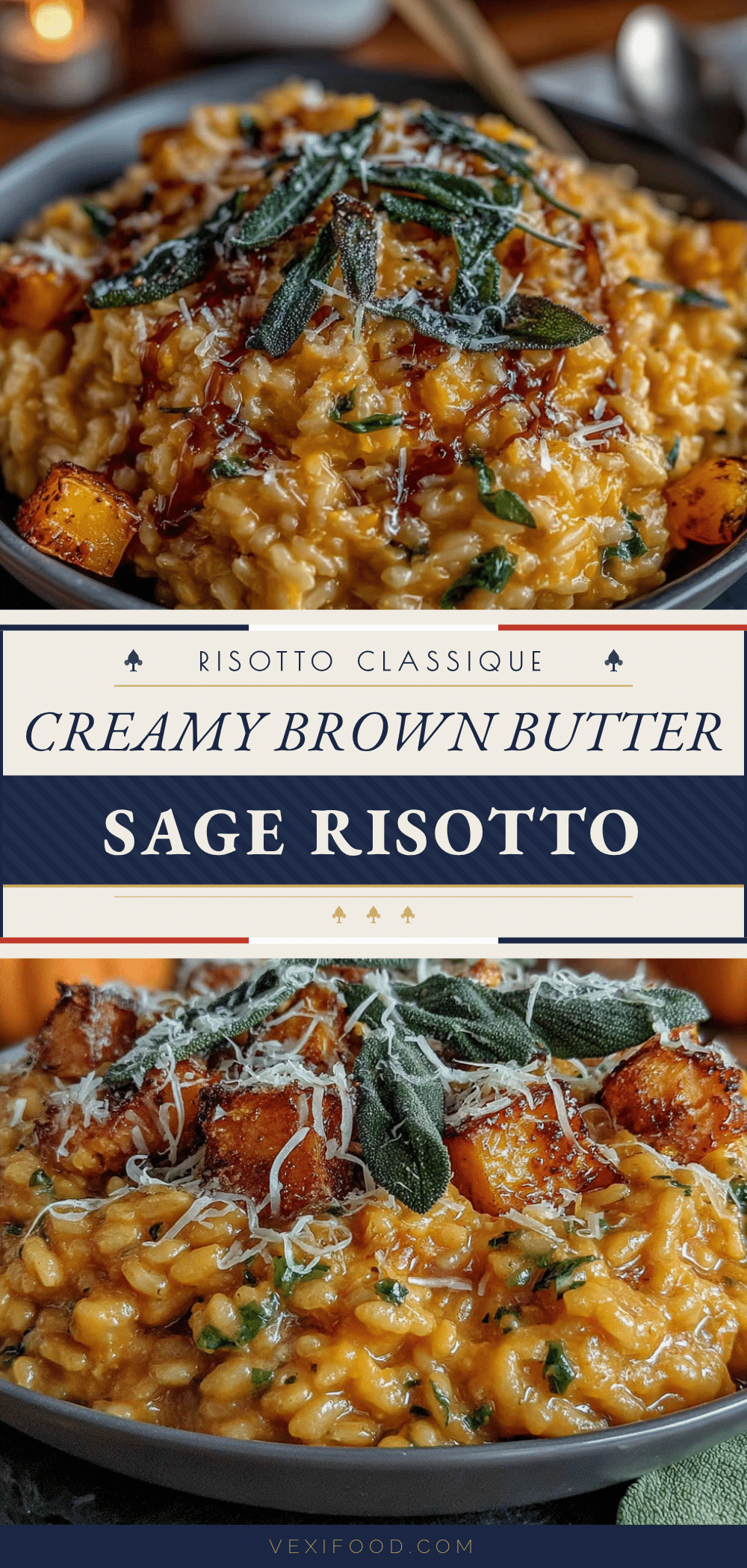
Creamy Brown Butter Sage Butternut Squash Risotto

This creamy brown butter sage butternut squash risotto is rich without being heavy, comforting without being boring, and tastes like something you’d order at a fancy restaurant—but you can make it in your own kitchen on a random Tuesday night.
- Prep Time: 15 minutes
- Cook Time: 45 minutes
- Total Time: 1 hour
- Yield: 6 servings 1x
- Category: Main Course
- Cuisine: Italian
Ingredients
- 3 cups butternut squash, peeled and diced into ½-inch cubes (about 1 medium squash)
- 2 tablespoons olive oil
- ½ teaspoon salt
- ¼ teaspoon black pepper
- ¼ teaspoon smoked paprika (optional)
- 6 tablespoons unsalted butter
- 10–12 fresh sage leaves (plus extra for garnish)
- 1½ cups Arborio rice
- 1 small yellow onion, finely diced (about ¾ cup)
- 3 cloves garlic, minced
- ½ cup dry white wine (like Pinot Grigio or Sauvignon Blanc)
- 5–6 cups low-sodium vegetable or chicken broth, warmed
- ½ cup freshly grated Parmesan cheese (plus more for serving)
- Salt and pepper to taste
Instructions
- Preheat your oven to 400°F (200°C). Toss the diced butternut squash with olive oil, salt, pepper, and smoked paprika if using. Spread it in a single layer on a baking sheet. Roast for 20-25 minutes, flipping halfway through, until the squash is tender and lightly caramelized around the edges. Set aside.
- While the squash roasts, melt 6 tablespoons of butter in a small skillet over medium heat. Swirl the pan occasionally. After about 3-4 minutes, when the butter starts to foam and turn golden with amber-colored specks at the bottom and smells nutty, add the sage leaves. They’ll sizzle and crisp up in about 30 seconds. Remove the sage leaves with a fork and set them on a paper towel. Pour the brown butter into a small bowl, leaving about 1 tablespoon in the skillet for later.
- In your large pot or Dutch oven, heat the reserved 1 tablespoon of brown butter over medium heat. Add the diced onion and cook for 4-5 minutes until translucent and soft, stirring occasionally. Add the minced garlic and cook for another 30 seconds until fragrant.
- Add the Arborio rice to the pot and stir to coat each grain with the butter mixture. Cook for 2 minutes, stirring constantly, until the rice becomes slightly translucent around the edges.
- Pour in the white wine and stir until it’s mostly absorbed by the rice, about 1-2 minutes.
- Reduce the heat to medium-low. Add one ladleful (about ½ cup) of warm broth to the rice and stir gently but constantly. Wait until the broth is mostly absorbed before adding the next ladleful. Continue this process for 18-20 minutes, until the rice is tender but still has a slight bite in the center (al dente).
- Remove the pot from heat. Gently fold in the roasted butternut squash and the remaining brown butter. Be careful not to mash the squash. Let the risotto rest for 2 minutes.
- Stir in the grated Parmesan cheese until melted and creamy. Taste and adjust seasoning with salt and pepper. Serve immediately, topped with the crispy sage leaves and extra Parmesan if desired.
Notes
Don’t rinse the Arborio rice—it needs its surface starch for creaminess. Keep the broth warm on the stove; cold broth shocks the rice. Stir every 30-45 seconds in a figure-eight pattern. Start checking doneness at 16 minutes. If risotto becomes too thick, stir in a splash of warm broth or water. For best results, serve immediately.
Nutrition
- Serving Size: 1 serving
- Calories: 385
- Sugar: 4
- Sodium: 480
- Fat: 16
- Saturated Fat: 9
- Carbohydrates: 52
- Fiber: 4
- Protein: 9
Keywords: risotto, butternut squash, brown butter, sage, creamy, fall, winter, comfort food, vegetarian, gluten-free