Love this? Save it for later!
Share the inspiration with your friends
I used to think cast iron was only for steaks and cornbread. Honestly, I had a beautiful, well-seasoned skillet sitting in my cabinet for years, and it never once occurred to me to make pizza in it. Then a friend texted me a photo of her Friday night dinner—a pizza with a crust so golden and bubbly it looked like it came from a wood-fired oven—and I had to know how she did it. “Cast iron,” she said, like it was obvious. I was skeptical. Wouldn’t the bottom burn? Would the cheese get that perfect, blistered top?
I tried it the very next Tuesday. I mean, I had some leftover mozzarella and a jar of sauce, so I figured, why not? The first attempt was a little messy—I forgot to preheat the skillet properly, and the dough stuck in one corner. But even that imperfect first slice had something special. The crust was crispy on the bottom, soft and chewy in the middle, and the cheese had melted into these glorious, golden-brown pools. I was hooked. I’ve made this crispy cast iron four-cheese pizza at least once a week for the last six months. It’s become my go-to for busy weeknights, lazy Sundays, and anytime I want to impress someone without breaking a sweat.
This recipe is the result of all those trials. I’ve tweaked the cheese ratios, tested different dough temperatures, and figured out the exact preheating time for that perfect crunch. If you’ve been hesitant to try cast iron pizza, let me tell you—it’s easier than you think. And the payoff? A restaurant-quality crust right in your own kitchen. Maybe you’ve been there, staring at a pizza stone you never use, wondering if there’s a better way. There is. It’s this skillet.
Why You’ll Love This Recipe
This isn’t just another pizza recipe. It’s the one that makes you question why you ever ordered delivery. Here’s what makes it stand out:
- Unbelievably Crispy Crust: The cast iron skillet gets screaming hot, which gives the bottom of the dough an immediate sear. You get that satisfying crunch with every bite, without the dough being dry or tough.
- Four Cheeses, Perfectly Melted: We’re using a blend of mozzarella, provolone, parmesan, and fontina. Each cheese brings something different—stretchiness, sharpness, creaminess, and that beautiful golden-brown color on top.
- Simple Ingredients: No special pizza flour or fancy equipment needed. You probably have most of these ingredients in your kitchen right now. I mean, I’ve made this with store-bought dough and it was still incredible.
- Faster Than Delivery: From start to finish, this pizza comes together in about 30 minutes. That’s faster than waiting for the delivery driver, and it tastes a hundred times better.
- Crowd-Pleaser: I’ve served this at parties, family dinners, and quiet nights in. It gets rave reviews every single time. Even my friend who claims to “not really like pizza” ate three slices.
What makes this recipe different from other cast iron pizzas is the technique. I preheat the skillet on the stovetop before adding the dough, which creates that immediate sizzle and prevents sticking. Then I layer the cheeses in a specific order—some under the sauce, some on top—so every bite has that perfect cheese pull. It’s a small detail, but it makes a big difference.
This pizza is comfort food at its finest. It’s the kind of meal that makes you close your eyes after the first bite and just enjoy the moment. Whether you’re cooking for one or feeding a crowd, this crispy cast iron four-cheese pizza delivers every single time.
What Ingredients You Will Need
This recipe uses simple, high-quality ingredients to create something truly special. The cheese blend is the star here, so don’t skimp on the good stuff. Most of these are pantry staples or easy to find at any grocery store.
- Pizza dough: 1 pound (about 450 grams), store-bought or homemade. I use store-bought on busy nights, but if you have time, a simple homemade dough takes this pizza to another level. Let it come to room temperature for about 30 minutes before stretching—it’s much easier to work with that way.
- Mozzarella cheese: 1 cup (about 120 grams), shredded. Use low-moisture mozzarella for the best melt. Fresh mozzarella is too watery and can make the crust soggy. I prefer the block-style mozzarella that you shred yourself—it melts more evenly than pre-shredded.
- Provolone cheese: ½ cup (about 60 grams), shredded. This adds a buttery, slightly sharp flavor that balances the richness of the other cheeses.
- Parmesan cheese: ¼ cup (about 25 grams), grated. Use freshly grated parmesan if you can. The pre-grated stuff in the can has anti-caking agents that prevent it from melting smoothly.
- Fontina cheese: ½ cup (about 60 grams), shredded. Fontina is the secret weapon here. It melts into this creamy, nutty layer that ties everything together. If you can’t find fontina, you can substitute with gouda or gruyère.
- Pizza sauce: ½ cup (about 120 ml). Use your favorite jarred sauce or make a quick one with crushed tomatoes, garlic, and oregano. I like a simple, chunky sauce that isn’t too sweet.
- Olive oil: 2 tablespoons (30 ml), plus more for the skillet. A good quality extra-virgin olive oil adds flavor and helps the crust get golden and crispy.
- Cornmeal or semolina: 1 tablespoon (about 10 grams), for dusting. This is optional but highly recommended. It adds a subtle crunch to the bottom of the crust and prevents sticking.
- Fresh basil: A handful of leaves, for garnish. This is optional but adds a bright, fresh finish to the pizza.
- Salt and pepper: To taste. A pinch of flaky sea salt right before serving really makes the flavors pop.
For the cheese blend, I recommend using a mix of mild and sharp cheeses. The mozzarella and provolone provide the stretchy, melty base, while the parmesan and fontina add depth and complexity. If you’re feeling adventurous, you can add a sprinkle of crumbled gorgonzola or goat cheese for an extra tangy kick.
Equipment Needed
You don’t need a lot of fancy equipment for this recipe, but a few key tools make all the difference.
- 12-inch cast iron skillet: This is the star of the show. A well-seasoned cast iron skillet distributes heat evenly and gets incredibly hot, which is what gives the crust that perfect crunch. If you don’t have a 12-inch skillet, a 10-inch will work—just adjust the dough amount slightly.
- Rolling pin: For stretching the dough. You can also use your hands, but a rolling pin gives you a more even thickness. I like a wooden rolling pin, but any kind works.
- Pizza cutter or sharp knife: For slicing the finished pizza. A wheel cutter is easiest, but a chef’s knife works in a pinch.
- Measuring cups and spoons: For accurate ingredient measurements. I use a set of dry measuring cups for the cheese and a liquid measuring cup for the sauce.
- Small bowl: For mixing the cheese blend. This makes it easier to distribute the cheeses evenly.
- Spatula or offset spatula: For spreading the sauce and lifting the pizza out of the skillet. A thin, flexible spatula works best.
If you don’t have a cast iron skillet, you can use a heavy-bottomed oven-safe skillet or a baking sheet. The crust won’t be quite as crispy, but it’ll still be delicious. I’ve also used a well-seasoned carbon steel pan with great results. Just make sure whatever you use can handle high heat.
Preparation Method
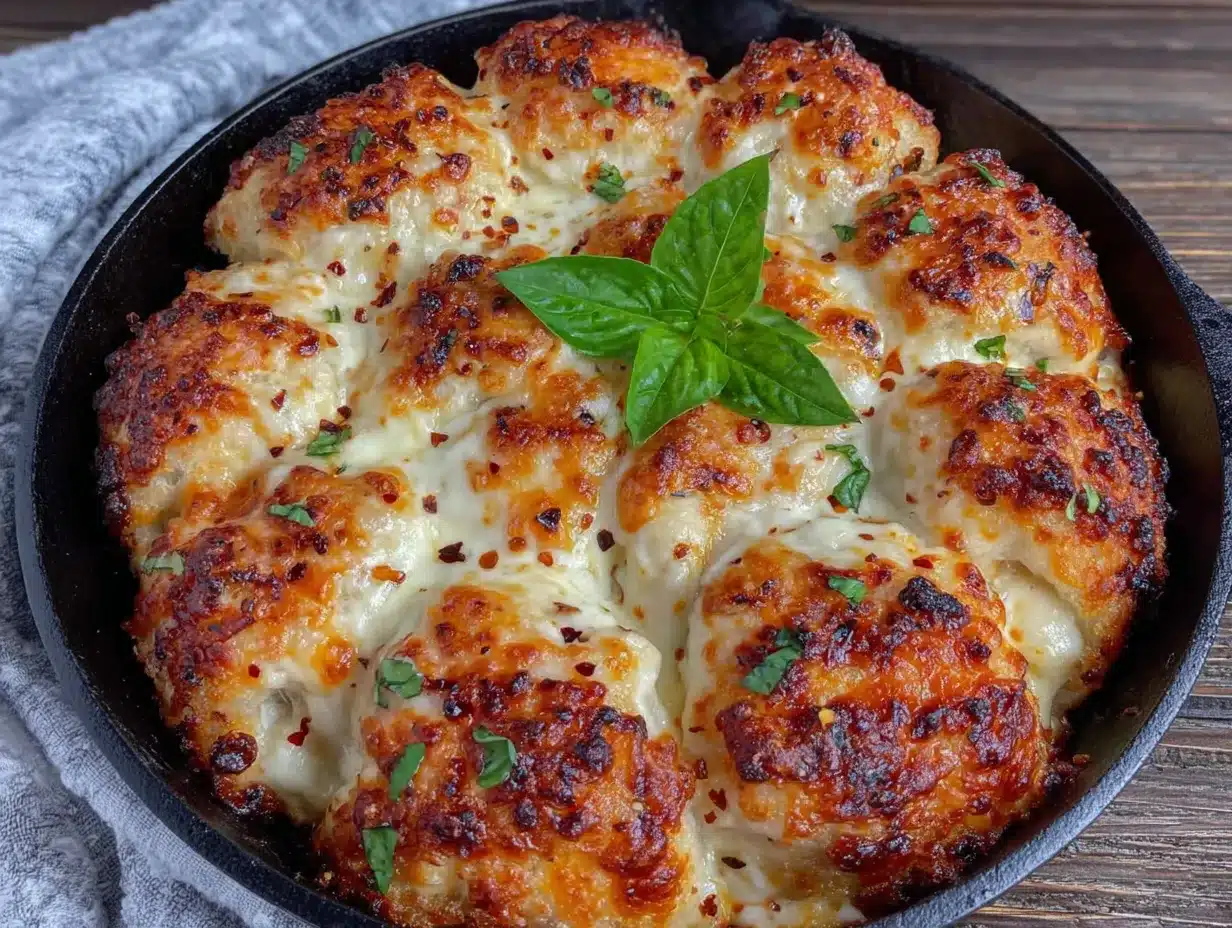
This recipe comes together quickly, so have all your ingredients ready before you start. The key is getting that skillet screaming hot.
- Preheat your oven to 500°F (260°C). If your oven runs hot, you can use 475°F (245°C). Place your cast iron skillet on the stovetop over medium-high heat. Let it heat up for about 5 minutes. You want it hot enough that a drop of water sizzles and evaporates immediately.
- While the skillet heats, prepare your dough. On a lightly floured surface, stretch or roll your pizza dough into a 12-inch circle. Don’t worry if it’s not perfectly round—rustic is fine. If the dough keeps springing back, let it rest for 5 minutes and try again. I’ve had dough that fought me every step of the way, and it still turned out great.
- Carefully add oil to the hot skillet. Drizzle about 1 tablespoon of olive oil into the skillet and swirl to coat the bottom. Be careful—the skillet is extremely hot at this point. The oil should shimmer immediately.
- Transfer the dough to the skillet. Lay the dough in the skillet and gently press it into the edges. It should sizzle when it hits the hot oil. If it doesn’t sizzle, the skillet wasn’t hot enough. Don’t worry—just let it cook for an extra minute on the stovetop.
- Cook the dough on the stovetop for 2-3 minutes. This gives the bottom a head start on getting crispy. You’ll see the edges start to puff up and turn golden. While it’s cooking, quickly mix your cheeses together in a small bowl.
- Remove the skillet from the heat. Spread ½ cup of pizza sauce over the dough, leaving a ½-inch border for the crust. You don’t need a lot of sauce—just enough to cover the surface. Too much sauce can make the pizza soggy.
- Sprinkle the cheese blend over the sauce. Start with about ¾ of the cheese mixture, then reserve the rest for the top. This layering ensures every bite has that perfect cheese pull. I like to add a little extra parmesan on top for that golden-brown finish.
- Transfer the skillet to the preheated oven. Bake for 12-15 minutes, or until the cheese is bubbly and golden brown. The edges of the crust should be deep golden and crispy. If you want extra browning, you can broil for the last 1-2 minutes, but keep a close eye on it—it can burn quickly.
- Remove the skillet from the oven. Use oven mitts—the handle will be extremely hot. Let the pizza cool in the skillet for 5 minutes. This allows the cheese to set slightly, making it easier to slice.
- Carefully remove the pizza from the skillet. Use a spatula to lift it out, or slide it onto a cutting board. Sprinkle with fresh basil and a pinch of flaky sea salt. Slice and serve immediately.
The total time from start to finish is about 25-30 minutes. The crust should be crispy on the bottom, chewy in the middle, and the cheese should be perfectly melted with some golden-brown spots. If your crust isn’t as crispy as you’d like, try preheating the skillet for an extra minute or two next time.
Cooking Tips & Techniques
I’ve made this pizza more times than I can count, and I’ve learned a few things along the way. Here are my best tips for getting that perfect crispy cast iron four-cheese pizza every time.
Don’t skip the stovetop preheat. This is the most important step. Preheating the skillet on the stovetop gives the bottom of the dough an immediate sear, which creates that crispy crust. If you just put the dough in a cold skillet and bake it, the bottom will be soft and pale. Trust me on this—I made that mistake once and ended up with a soggy mess.
Use room temperature dough. Cold dough is stiff and difficult to stretch. It also tends to shrink back when you try to shape it. Let your dough sit on the counter for at least 30 minutes before you start. If you’re using store-bought dough, take it out of the fridge when you preheat the oven. By the time the skillet is hot, the dough will be ready.
Don’t overload the pizza. It’s tempting to pile on the cheese and toppings, but less is more here. Too much cheese can make the pizza greasy, and too many toppings can weigh down the crust. Stick with the recommended amounts, and you’ll get that perfect balance of crispy crust, melty cheese, and tangy sauce.
Watch the broiler carefully. If you decide to broil the pizza for extra browning, keep a close eye on it. The cheese can go from perfectly golden to burnt in a matter of seconds. I usually broil for about 60 seconds, then check it. If it needs more, I give it another 30 seconds. It’s better to under-broil than to over-broil.
Let it rest before slicing. I know it’s hard to wait, but letting the pizza rest for 5 minutes after baking makes a big difference. The cheese sets slightly, so it doesn’t slide off when you cut it. Plus, the crust firms up a bit more. I’ve burned my mouth on impatient slices more times than I’d like to admit.
One mistake I made early on was using too much oil. I thought more oil would make the crust crispier, but it just made it greasy. A tablespoon is plenty. Also, don’t be afraid to get the skillet really hot. I used to be timid about high heat, but cast iron can handle it. That sizzle when the dough hits the pan is exactly what you want.
Variations & Adaptations
This recipe is incredibly versatile. Here are some of my favorite variations:
Spicy Pepperoni Version: Add a layer of pepperoni slices under the cheese. The pepperoni gets crispy and slightly curled at the edges, and the rendered fat flavors the cheese. I like to use a mix of regular and spicy pepperoni for extra kick.
Vegetarian Delight: Top the pizza with sautéed mushrooms, caramelized onions, and roasted red peppers. The sweetness of the onions pairs beautifully with the savory cheese blend. I add the vegetables after the cheese so they don’t burn.
Gluten-Free Option: Use a gluten-free pizza dough. Most store-bought gluten-free doughs work well in cast iron. Just make sure to let it come to room temperature before stretching. The texture will be slightly different, but still delicious.
Low-Carb Version: Swap the dough for a cauliflower crust or a low-carb tortilla. The cooking time will be shorter—about 8-10 minutes—so keep an eye on it. The cheese blend still works perfectly.
Breakfast Pizza: This is my secret indulgence. After baking the pizza, crack an egg on top and return it to the oven for 3-4 minutes, until the white is set but the yolk is still runny. Add some cooked bacon or sausage, and you’ve got breakfast for dinner.
I once tried a version with truffle oil drizzled over the top, and it was incredible. The earthy truffle flavor complemented the fontina and parmesan beautifully. Just use truffle oil sparingly—a little goes a long way.
Serving & Storage Suggestions
This pizza is best served fresh out of the skillet, while the cheese is still hot and stretchy and the crust is at its crispiest. I like to slice it into 8 wedges and serve it on a wooden board with a side of marinara sauce for dipping.
For a complete meal, pair it with a simple green salad dressed with lemon vinaigrette. The acidity of the dressing cuts through the richness of the cheese. A glass of red wine, like a Chianti or a Zinfandel, is a perfect match. If you’re feeding a crowd, I also like to serve some garlic bread bites on the side—they’re great for dipping in any leftover sauce.
If you have leftovers (which is rare in my house), store them in an airtight container in the refrigerator for up to 3 days. To reheat, I recommend using the oven or a toaster oven. Preheat to 375°F (190°C) and bake for 5-7 minutes, until the cheese is bubbly and the crust is crispy again. The microwave works in a pinch, but it makes the crust soft and chewy.
You can also freeze the baked pizza. Let it cool completely, then wrap it tightly in plastic wrap and aluminum foil. It will keep in the freezer for up to 2 months. To reheat, bake from frozen at 400°F (200°C) for 12-15 minutes. The crust won’t be quite as crispy as fresh, but it’s still pretty darn good.
The flavors actually develop a bit overnight. I’ve found that leftover pizza, when reheated properly, tastes even better the next day. The cheeses have had time to meld together, and the crust absorbs a bit of the sauce. It’s a different experience, but still delicious.
Nutritional Information & Benefits
Here’s the estimated nutritional breakdown for one slice (based on 8 slices per pizza):
- Calories: 320-350
- Protein: 15-18 grams
- Fat: 16-20 grams
- Carbohydrates: 28-32 grams
- Fiber: 2-3 grams
- Calcium: 25-30% of the Daily Value
This pizza is a good source of protein and calcium, thanks to the cheese blend. Mozzarella and provolone are rich in protein and calcium, which are essential for bone health. Parmesan is high in umami flavor and contains beneficial probiotics if it’s aged. Fontina adds a dose of vitamin A and healthy fats.
If you’re watching your sodium intake, you can use low-sodium mozzarella and reduce the added salt. The cheese blend itself is quite salty, so you might not need any additional salt at all. For a lower-fat option, use part-skim mozzarella and reduce the fontina.
This recipe is not gluten-free, but it can be adapted as mentioned above. It contains dairy, so it’s not suitable for vegans or those with lactose intolerance. However, you can use dairy-free cheese alternatives if needed. I’ve tried it with a plant-based mozzarella, and while the texture is different, it’s still tasty.
I love that this pizza feels indulgent but can be part of a balanced diet. Pair it with a big salad or some roasted vegetables, and you’ve got a satisfying meal that doesn’t leave you feeling heavy.
Conclusion
This crispy cast iron four-cheese pizza has become a staple in my kitchen for good reason. It’s quick, it’s easy, and it delivers that perfect combination of crispy crust and melty, flavorful cheese every single time. Whether you’re a seasoned home cook or someone who’s never made pizza from scratch, this recipe is foolproof.
I love how versatile it is. You can stick with the classic four-cheese blend or customize it with your favorite toppings. I’ve made it for quiet weeknight dinners and for parties with friends, and it never fails to impress. There’s something special about pulling a golden, bubbly pizza out of a cast iron skillet—it feels like you’ve done something magical, even though it only took 30 minutes.
I’d love to hear how yours turns out. Did you add any fun toppings? Did you try a different cheese blend? Drop a comment below and let me know. And if you enjoyed this recipe, please share it with a friend who loves pizza as much as you do. Happy cooking!
Frequently Asked Questions
Can I use pre-shredded cheese?
You can, but I recommend shredding your own cheese for the best melt. Pre-shredded cheese contains anti-caking agents that can prevent it from melting smoothly. If you’re in a pinch, pre-shredded will work, but the texture won’t be as creamy.
Do I need to preheat the cast iron skillet?
Yes, absolutely. Preheating the skillet on the stovetop is what gives the crust that crispy, golden bottom. If you skip this step, the crust will be soft and pale. It only takes 5 minutes, and it makes all the difference.
Can I make this pizza without a cast iron skillet?
Yes, you can use any oven-safe skillet or a baking sheet. The crust won’t be quite as crispy, but it will still be delicious. Just make sure to preheat the pan or sheet in the oven before adding the dough for the best results.
How do I store leftover pizza?
Store leftover pizza in an airtight container in the refrigerator for up to 3 days. To reheat, use the oven or a toaster oven at 375°F (190°C) for 5-7 minutes. Avoid the microwave if you want to keep the crust crispy.
Can I freeze this pizza?
Yes, you can freeze the baked pizza. Let it cool completely, then wrap it tightly in plastic wrap and aluminum foil. It will keep in the freezer for up to 2 months. Reheat from frozen at 400°F (200°C) for 12-15 minutes.
Pin This Recipe!
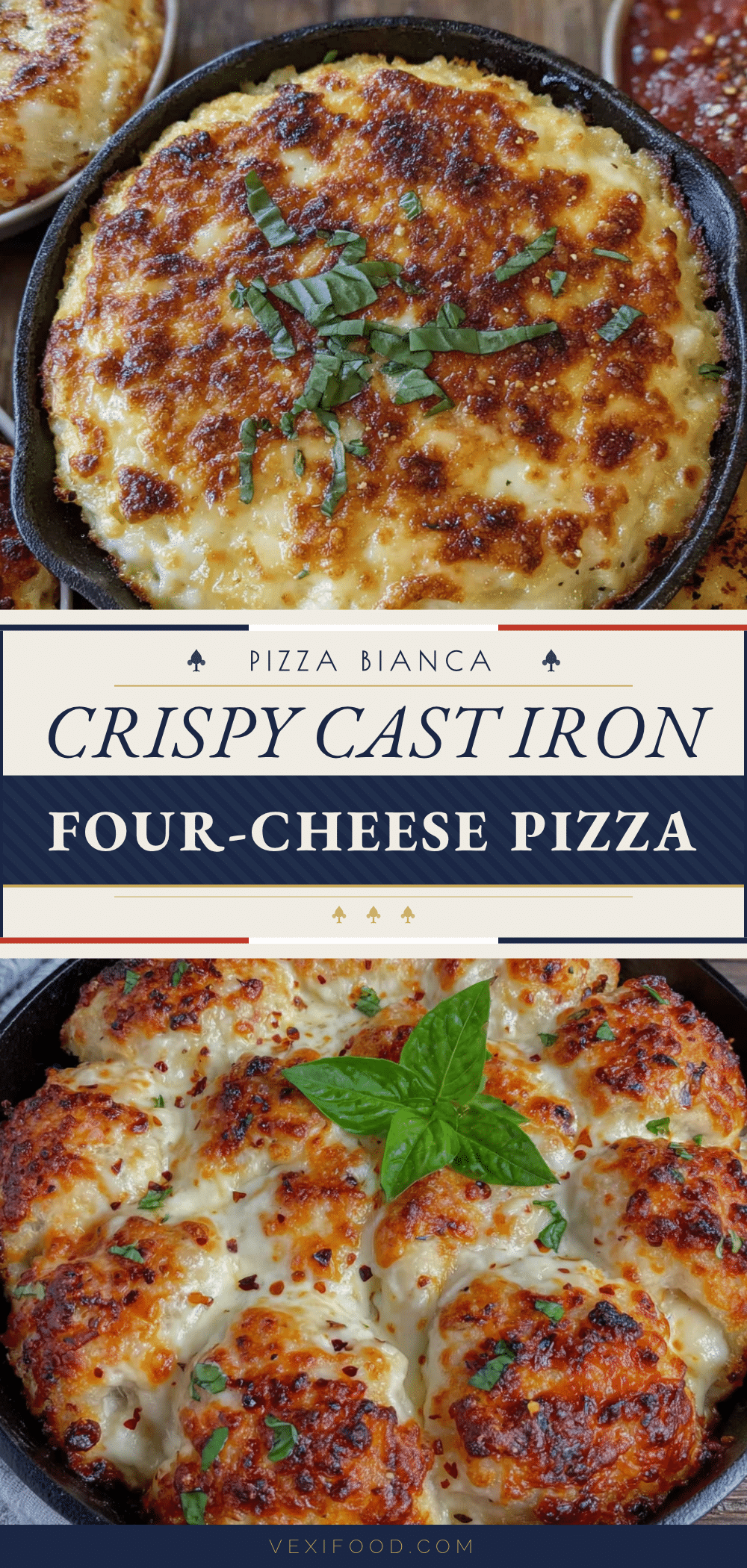
Crispy Cast Iron Four-Cheese Pizza

This crispy cast iron four-cheese pizza features an unbelievably crunchy crust and a perfect blend of mozzarella, provolone, parmesan, and fontina. Ready in about 30 minutes, it’s faster than delivery and tastes like it came from a wood-fired oven.
- Prep Time: 15 minutes
- Cook Time: 15 minutes
- Total Time: 30 minutes
- Yield: 8 servings 1x
- Category: Main Course
- Cuisine: Italian-American
Ingredients
- 1 pound (about 450 grams) pizza dough, store-bought or homemade, at room temperature
- 1 cup (about 120 grams) low-moisture mozzarella cheese, shredded
- ½ cup (about 60 grams) provolone cheese, shredded
- ¼ cup (about 25 grams) parmesan cheese, freshly grated
- ½ cup (about 60 grams) fontina cheese, shredded
- ½ cup (about 120 ml) pizza sauce
- 2 tablespoons (30 ml) olive oil, plus more for the skillet
- 1 tablespoon (about 10 grams) cornmeal or semolina, for dusting (optional)
- Fresh basil leaves, for garnish (optional)
- Salt and pepper, to taste
- Flaky sea salt, for finishing (optional)
Instructions
- Preheat your oven to 500°F (260°C). Place a 12-inch cast iron skillet on the stovetop over medium-high heat and let it heat up for about 5 minutes, until a drop of water sizzles and evaporates immediately.
- On a lightly floured surface, stretch or roll the pizza dough into a 12-inch circle. If the dough springs back, let it rest for 5 minutes and try again.
- Carefully drizzle about 1 tablespoon of olive oil into the hot skillet and swirl to coat the bottom. The oil should shimmer immediately.
- Transfer the dough to the skillet and gently press it into the edges. It should sizzle on contact. Cook on the stovetop for 2-3 minutes, until the bottom starts to turn golden and the edges puff up.
- While the dough cooks, mix the mozzarella, provolone, parmesan, and fontina cheeses together in a small bowl.
- Remove the skillet from the heat. Spread ½ cup of pizza sauce over the dough, leaving a ½-inch border for the crust.
- Sprinkle about ¾ of the cheese blend over the sauce, then reserve the remaining cheese for the top. Add a little extra parmesan on top for golden-brown finish.
- Transfer the skillet to the preheated oven and bake for 12-15 minutes, until the cheese is bubbly and golden brown and the crust edges are deep golden and crispy. For extra browning, broil for the last 1-2 minutes, watching carefully.
- Remove the skillet from the oven (the handle will be extremely hot). Let the pizza cool in the skillet for 5 minutes to allow the cheese to set.
- Carefully remove the pizza from the skillet using a spatula, or slide it onto a cutting board. Sprinkle with fresh basil and a pinch of flaky sea salt. Slice into 8 wedges and serve immediately.
Notes
Preheating the skillet on the stovetop is crucial for a crispy crust. Use room temperature dough for easier stretching. Don’t overload with toppings. Let the pizza rest for 5 minutes before slicing to allow the cheese to set. For extra browning, broil for 1-2 minutes at the end, watching carefully to avoid burning.
Nutrition
- Serving Size: 1 slice
- Calories: 335
- Sugar: 3
- Sodium: 650
- Fat: 18
- Saturated Fat: 9
- Carbohydrates: 30
- Fiber: 2.5
- Protein: 16.5
Keywords: cast iron pizza, four-cheese pizza, crispy crust, homemade pizza, easy pizza recipe, skillet pizza