Love this? Save it for later!
Share the inspiration with your friends
I used to think breakfast casseroles were just for holidays. You know, the kind of thing you drag out for Easter brunch or Christmas morning when the whole family is around. But honestly, the best recipes are the ones that sneak into your regular rotation when you least expect them. This one did exactly that.
Last Tuesday, I was staring into my fridge at a carton of eggs that was about to expire, a half-used package of breakfast sausage, and some shredded cheese that was looking a little lonely. I had a busy week ahead, and the thought of scrambling eggs every single morning made me want to cry a little. That’s when I remembered a casserole my neighbor, a woman named Pat who runs a small community garden, had mentioned in passing. She didn’t give me a formal recipe—she just described how she throws everything in a dish on Sunday and eats it all week. I took that idea and ran with it.
The first attempt was messy. I forgot to thaw the sausage, so I had to cook it while half-asleep, and the bread I used was too crusty, so the top burned before the middle set. But you know that feeling when a recipe is almost there, and you can taste exactly what it needs to be? That was this casserole. I tweaked it, tested it again, and finally landed on a version that is so forgiving and so practical that I now make it every single week. Let me tell you, waking up to breakfast that’s already done? That’s a game-changer, and I’m honestly a little mad I didn’t figure this out sooner.
Why You’ll Love This Recipe
This isn’t just another egg casserole. After testing this recipe about six times (including one where I accidentally used maple sausage instead of regular—not bad, actually), I can tell you exactly why this version works so well.
- Truly Make-Ahead Friendly: You can assemble this the night before, or even two days ahead. The flavors actually get better as they meld together in the fridge.
- Simple Ingredients: No fancy grocery trips. You likely have eggs, milk, cheese, and bread in your kitchen right now. The sausage is the only “special” item, and even that is a pantry staple for most of us.
- Perfect for Busy Mornings: Just bake and serve. No standing over a stove, no flipping pancakes. It gives you back 20 minutes of your morning, which is honestly priceless.
- Always Gets Rave Reviews: I’ve served this for brunch, for a weeknight dinner (yes, breakfast for dinner is a thing), and for a potluck. People always ask for the recipe.
- Unbelievably Satisfying: The combination of savory sausage, fluffy eggs, and that slightly crispy top layer of cheese is pure comfort food. It keeps you full until lunch without feeling heavy.
What makes this recipe different from the dozens of other egg casseroles out there? It’s the ratio. I spent a lot of time getting the egg-to-bread-to-sausage balance just right. Too much bread, and it’s like eating a soggy sandwich. Too much egg, and it’s tough. This version stays soft and custard-like in the center with a golden, slightly crispy top. It’s the kind of breakfast that makes you close your eyes after the first bite, and for something you can prep in 15 minutes, that’s pretty special.
What Ingredients You Will Need
This recipe uses simple, everyday ingredients that come together to create something genuinely delicious. Most of these are probably already in your kitchen, which is exactly how I like to cook.
- Breakfast Sausage (1 lb): I prefer using ground breakfast sausage, either mild or spicy depending on your mood. I’ve tested this with Jimmy Dean and Jones brands, and both work beautifully. If you use sausage links, just remove the casings and crumble them as they cook.
- Large Eggs (10): This is the backbone of the casserole. Room temperature eggs blend more smoothly, but cold eggs work fine too. If you’re short on eggs, you can substitute 2 cups of liquid egg substitute, but the texture will be slightly less fluffy.
- Whole Milk (1 ½ cups): Whole milk gives the richest texture, but 2% works well too. For a dairy-free option, unsweetened oat milk or cashew milk are good substitutes. Avoid skim milk—it makes the casserole a bit watery.
- Day-Old Bread (4 cups, cubed): This is a great way to use up leftover bread. I like using a crusty sourdough or a simple French loaf. Fresh bread works, but day-old bread absorbs the egg mixture better without turning into mush. Gluten-free bread works if you need it, just make sure it’s sturdy.
- Shredded Cheddar Cheese (2 cups): Sharp cheddar adds the most flavor, but a mix of cheddar and Monterey Jack is lovely. I recommend shredding your own cheese—pre-shredded bags have anti-caking agents that prevent smooth melting. Trust me on this one.
- Onion (1 medium, diced): Yellow or white onion works. If you’re not a fan of onion texture, you can grate it finely—it will melt into the casserole and just add flavor.
- Bell Pepper (1 medium, diced): Any color works. Red or orange adds a touch of sweetness. Green bell peppers are more savory and budget-friendly.
- Salt (1 teaspoon): I use kosher salt. If you’re using table salt, reduce to ¾ teaspoon.
- Black Pepper (½ teaspoon): Freshly ground is always best.
- Garlic Powder (½ teaspoon): This adds a subtle savory note without being overpowering. Don’t use fresh garlic here—it can become bitter during the long bake time.
- Dried Mustard (¼ teaspoon): This is my secret ingredient. It doesn’t make the casserole taste like mustard; it just enhances the egg flavor and adds a little tang. You can skip it if you don’t have it, but I highly recommend trying it.
Equipment Needed
You don’t need much for this recipe, which is part of its charm. Here’s what you’ll need:
- 9×13-inch Baking Dish: This is the standard size. A glass or ceramic dish works best because it heats evenly. If you only have metal, reduce the oven temperature by 25°F and check for doneness a few minutes earlier.
- Large Skillet: For cooking the sausage and vegetables. A non-stick skillet makes cleanup easier, but stainless steel works too.
- Large Mixing Bowl: For whisking the eggs and milk. Any large bowl will do.
- Whisk: A whisk incorporates air into the eggs better than a fork. If you don’t have one, use two forks held together.
- Measuring Cups and Spoons: For accuracy. I’ve learned the hard way that eyeballing ingredients in a casserole can lead to a soggy or dry disaster.
- Aluminum Foil: For covering the casserole during the first part of baking. This prevents the top from burning before the center is set.
If you don’t have a 9×13 dish, you can use two 8×8 dishes and reduce the baking time by about 10 minutes. I’ve also made this in a 10-inch cast iron skillet, which gives it a lovely crusty edge. Just keep an eye on the baking time.
Preparation Method

Let me walk you through this step by step. I’ve made this casserole more times than I can count, so I’ll share all the little tricks I’ve learned along the way.
- Cook the Sausage: Heat your large skillet over medium-high heat. Add the ground sausage and break it apart with a wooden spoon. Cook for 5-7 minutes, until it’s browned and no longer pink. Don’t drain all the fat—leave about a tablespoon in the pan for flavor. Remove the sausage with a slotted spoon and set it aside.
- Sauté the Vegetables: In the same skillet with the remaining sausage fat, add the diced onion and bell pepper. Cook over medium heat for 4-5 minutes, until the onion is translucent and the pepper is softened. Scrape up any browned bits from the bottom of the pan—that’s flavor. Remove from heat and let cool slightly.
- Prepare the Bread: While the sausage and vegetables are cooking, cube your bread into 1-inch pieces. If your bread is fresh, spread the cubes on a baking sheet and toast them in a 300°F oven for 5-7 minutes. This dries them out so they absorb the egg mixture perfectly. If you’re using day-old bread, skip this step.
- Whisk the Egg Mixture: In a large mixing bowl, crack the 10 eggs. Add the milk, salt, pepper, garlic powder, and dried mustard. Whisk vigorously for about 1 minute, until the eggs are fully combined and slightly frothy. You want a uniform, pale yellow liquid. Set this aside.
- Layer the Casserole: Spread the bread cubes evenly in the bottom of your greased 9×13 baking dish. Sprinkle the cooked sausage over the bread. Then scatter the sautéed onion and bell pepper on top. Finally, sprinkle 1 ½ cups of the shredded cheese over everything. Reserve the remaining ½ cup for the top.
- Pour the Egg Mixture: Slowly pour the egg mixture evenly over the layered ingredients. Use a spatula to gently press down on the bread cubes so they all get soaked. Don’t stir—just press gently. The liquid should come about halfway up the sides of the dish.
- Top with Cheese: Sprinkle the reserved ½ cup of cheese over the top. This will create that gorgeous golden crust.
- Refrigerate (Optional but Recommended): Cover the dish with plastic wrap or aluminum foil and refrigerate for at least 2 hours, or overnight. This step is what makes the flavors meld together beautifully. If you’re in a rush, you can bake it immediately, but the texture won’t be quite as good.
- Bake: When you’re ready to bake, preheat your oven to 350°F. Remove the casserole from the fridge and let it sit on the counter while the oven heats (about 15 minutes). Cover with foil and bake for 35 minutes. Then remove the foil and bake for another 15-20 minutes, until the top is golden brown and the center is set. You’ll know it’s done when a knife inserted in the center comes out clean and the edges are pulling away from the dish.
- Rest Before Serving: This is crucial. Let the casserole rest for at least 10 minutes before cutting. It needs this time to set properly. If you cut into it too soon, it will fall apart. I learned this the hard way when I served a beautiful casserole that immediately turned into scrambled egg soup.
Cooking Tips & Techniques
After making this casserole more times than I care to admit, I’ve collected a few tips that will save you from some common mistakes.
Don’t Overmix the Eggs: When you whisk the eggs, stop as soon as they’re combined. Over-whisking incorporates too much air, which can cause the casserole to puff up in the oven and then collapse into a dense, rubbery mess. You want it frothy, not foamy.
The Bread Matters More Than You Think: I once used a soft, squishy sandwich bread because it was all I had. The casserole came out like a wet sponge. Use a sturdy bread with some structure. Sourdough, French bread, or even a good quality Italian loaf are my go-tos. The bread should be able to hold its shape after absorbing the egg mixture.
Watch Your Oven Temperature: Every oven runs a little differently. If your casserole is browning too quickly on top but still jiggly in the center, tent it with foil for the remaining bake time. If it’s taking too long to set, increase the temperature by 25°F for the last 10 minutes. I’ve had to do this with a friend’s oven that ran cool, and it saved the casserole.
Let It Rest: I cannot stress this enough. The resting time is not optional. It allows the eggs to finish setting from residual heat and makes slicing much cleaner. If you’re serving a crowd, this is the perfect time to set out plates and pour coffee.
Test for Doneness Properly: Instead of just looking at the top, insert a knife or toothpick into the center. It should come out clean, with no wet egg clinging to it. The edges should be slightly browned and pulling away from the dish. If the top is getting too dark before the center is done, cover it with foil for the rest of the bake.
Variations & Adaptations
This recipe is incredibly forgiving, so feel free to make it your own. Here are some variations I’ve tried and loved.
Vegetarian Version: Skip the sausage and add 1 cup of sautéed mushrooms, 1 cup of spinach (wilted), and ½ cup of sun-dried tomatoes. The mushrooms add that savory, umami flavor that replaces the meat beautifully. I made this for a friend who doesn’t eat meat, and she asked for the recipe twice.
Spicy Southwest Twist: Use spicy breakfast sausage, add 1 diced jalapeño (seeds removed if you want less heat), and swap the cheddar for pepper jack cheese. Top with fresh salsa and avocado slices after baking. This version is fantastic for brunch with a side of black beans.
Low-Carb Adaptation: Replace the bread cubes with 4 cups of frozen hash browns (thawed and pressed dry) or 3 cups of steamed cauliflower florets. The texture is different—more dense and hearty—but it’s just as satisfying. I’ve made this for friends on keto diets, and they couldn’t believe it wasn’t the original.
Cheese Variations: Try using Gruyère for a nutty, sophisticated flavor, or smoked gouda for a deeper, richer taste. A mix of cheddar and mozzarella gives you that perfect stretchy cheese pull. I once used leftover brie and it was surprisingly amazing—very creamy and decadent.
Add More Vegetables: This casserole is a great way to clean out your fridge. Diced zucchini, shredded carrots, chopped broccoli, or even leftover roasted sweet potatoes all work well. Just make sure to sauté any watery vegetables first to remove excess moisture, or your casserole will be soggy.
Serving & Storage Suggestions
This casserole is best served warm, right out of the oven, but it’s also surprisingly good at room temperature. I’ve eaten it cold straight from the fridge on busy mornings, and honestly, it’s still delicious.
Serving Temperature: Let the casserole rest for 10 minutes after baking, then serve warm. If you’re making it for a brunch buffet, you can keep it warm in a 200°F oven for up to 30 minutes. Just cover it loosely with foil so it doesn’t dry out.
What to Serve With It: A simple side of fresh fruit balances the richness of the casserole. I love serving it with a small green salad dressed with a light vinaigrette. For a heartier meal, add roasted potatoes or a side of toast. A dollop of sour cream or a drizzle of hot sauce on top is never a bad idea.
Storage Instructions: Store leftover casserole in an airtight container in the refrigerator for up to 4 days. The flavors actually continue to develop, so day-two casserole is often even better. I’ve also frozen individual portions—wrap them tightly in plastic wrap and then foil, and they’ll keep for up to 2 months.
Reheating Methods: For best results, reheat in a 350°F oven for 10-15 minutes, or until warmed through. The microwave works in a pinch (about 1 minute per serving), but the texture will be softer. If reheating from frozen, thaw overnight in the fridge and then reheat in the oven.
How Flavors Develop: If you make this casserole a day ahead and refrigerate it before baking, the flavors meld together beautifully. The bread absorbs the egg mixture more evenly, and the sausage flavor permeates every bite. This is actually my preferred method—the casserole is noticeably better after a 24-hour rest.
Nutritional Information & Benefits
Here’s an estimated nutritional breakdown for one serving (based on 8 servings per casserole):
| Nutrient | Amount per Serving |
|---|---|
| Calories | 385 |
| Protein | 24g |
| Fat | 26g |
| Saturated Fat | 10g |
| Carbohydrates | 16g |
| Fiber | 2g |
| Sugar | 4g |
| Sodium | 720mg |
This casserole is packed with protein from the eggs and sausage, which helps keep you full and satisfied until lunch. Eggs are a great source of choline, which supports brain health, and the bell peppers add a good dose of vitamin C. If you’re watching your sodium, you can use low-sodium sausage and reduce the added salt.
For a lighter option, you can use turkey sausage and reduced-fat cheese. The texture will be slightly different, but it still works well. I’ve made this for friends who are watching their calories, and they didn’t even notice the swap.
Frequently Asked Questions
Can I make this casserole completely ahead of time and bake it later?
Absolutely. You can assemble the casserole up to 2 days in advance and keep it covered in the refrigerator. Just add about 10 minutes to the baking time if it’s going straight from fridge to oven. I often make it on Saturday for Sunday brunch, and it’s always perfect.
Can I freeze this breakfast casserole?
Yes, you can freeze it either before or after baking. If freezing before baking, assemble the casserole in a freezer-safe dish, cover tightly, and freeze for up to 3 months. Thaw overnight in the fridge before baking. If freezing after baking, let it cool completely, then wrap individual portions and freeze. Reheat in the oven or microwave.
Why is my egg casserole watery?
This usually happens for two reasons: either the vegetables released too much water (if you didn’t sauté them first), or the casserole wasn’t baked long enough. Make sure to cook your vegetables until they’re softened and any excess moisture has evaporated. Also, let the casserole bake until the center is fully set before removing it from the oven.
Can I use different types of meat?
Definitely. Cooked bacon, diced ham, or even leftover crumbled meatballs work well. If using bacon, cook it until crispy and crumble it. Ham is great because it’s already cooked—just dice it and add it without any prep. I’ve also used leftover taco meat for a Tex-Mex version, and it was fantastic.
How do I know when the casserole is fully cooked?
The best test is to insert a knife or toothpick into the center. If it comes out clean, with no liquid egg clinging to it, the casserole is done. The edges should be golden brown and pulling away from the sides of the dish. The center should feel set, not jiggly, when you gently shake the dish.
Conclusion
This easy make-ahead breakfast egg casserole with sausage has honestly changed my mornings. It’s one of those recipes that feels like cheating because it’s so simple, but the results are genuinely impressive. Whether you’re feeding a crowd on a holiday morning, meal-prepping for a busy week, or just want to treat yourself to a hot breakfast without the morning rush, this casserole delivers every single time.
I love that this recipe is forgiving enough to let you experiment. Swap in your favorite vegetables, try different cheeses, or add a pinch of cayenne for heat. The basic formula is so solid that you can make it your own without worrying about it falling apart. That’s the kind of recipe I keep coming back to.
So go ahead—give it a try this weekend. Make it on a Sunday, bake it on a Monday morning, and enjoy the feeling of having breakfast handled for the rest of the week. And if you come up with a variation that blows your mind, I’d love to hear about it. Drop a comment below and share your creation. Happy cooking!
Pin This Recipe!

Easy Make-Ahead Breakfast Egg Casserole with Sausage
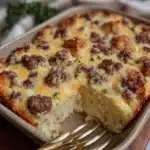
A simple, make-ahead breakfast casserole with savory sausage, fluffy eggs, and melted cheese. Perfect for busy mornings, this dish can be assembled the night before and baked fresh in the morning.
- Prep Time: 15 minutes
- Cook Time: 50 minutes
- Total Time: 1 hour 5 minutes (plus optional refrigeration time)
- Yield: 8 servings 1x
- Category: Breakfast / Brunch
- Cuisine: American
Ingredients
- 1 lb breakfast sausage (mild or spicy)
- 10 large eggs
- 1 ½ cups whole milk
- 4 cups day-old bread, cubed (such as sourdough or French loaf)
- 2 cups shredded cheddar cheese (sharp recommended)
- 1 medium onion, diced
- 1 medium bell pepper, diced (any color)
- 1 teaspoon kosher salt (or ¾ teaspoon table salt)
- ½ teaspoon black pepper (freshly ground)
- ½ teaspoon garlic powder
- ¼ teaspoon dried mustard
Instructions
- Cook the Sausage: Heat a large skillet over medium-high heat. Add the ground sausage and break it apart with a wooden spoon. Cook for 5-7 minutes until browned and no longer pink. Leave about a tablespoon of fat in the pan for flavor. Remove sausage with a slotted spoon and set aside.
- Sauté the Vegetables: In the same skillet with the remaining sausage fat, add the diced onion and bell pepper. Cook over medium heat for 4-5 minutes until the onion is translucent and the pepper is softened. Scrape up any browned bits from the bottom of the pan. Remove from heat and let cool slightly.
- Prepare the Bread: Cube the bread into 1-inch pieces. If using fresh bread, spread cubes on a baking sheet and toast in a 300°F oven for 5-7 minutes to dry them out. If using day-old bread, skip this step.
- Whisk the Egg Mixture: In a large mixing bowl, crack the 10 eggs. Add the milk, salt, pepper, garlic powder, and dried mustard. Whisk vigorously for about 1 minute until fully combined and slightly frothy.
- Layer the Casserole: Spread the bread cubes evenly in the bottom of a greased 9×13-inch baking dish. Sprinkle the cooked sausage over the bread. Scatter the sautéed onion and bell pepper on top. Sprinkle 1 ½ cups of the shredded cheese over everything. Reserve the remaining ½ cup for the top.
- Pour the Egg Mixture: Slowly pour the egg mixture evenly over the layered ingredients. Use a spatula to gently press down on the bread cubes so they all get soaked. Do not stir.
- Top with Cheese: Sprinkle the reserved ½ cup of cheese over the top.
- Refrigerate (Optional but Recommended): Cover the dish with plastic wrap or aluminum foil and refrigerate for at least 2 hours, or overnight.
- Bake: When ready to bake, preheat oven to 350°F. Remove casserole from fridge and let sit on the counter for about 15 minutes. Cover with foil and bake for 35 minutes. Remove foil and bake for another 15-20 minutes until the top is golden brown and the center is set. A knife inserted in the center should come out clean.
- Rest Before Serving: Let the casserole rest for at least 10 minutes before cutting. This allows it to set properly.
Notes
For best results, refrigerate the assembled casserole overnight to allow flavors to meld. Use day-old bread for better texture. Let the casserole rest for 10 minutes after baking before slicing. To test for doneness, insert a knife into the center—it should come out clean. If the top browns too quickly, tent with foil.
Nutrition
- Serving Size: 1 slice (1/8 of cass
- Calories: 385
- Sugar: 4
- Sodium: 720
- Fat: 26
- Saturated Fat: 10
- Carbohydrates: 16
- Fiber: 2
- Protein: 24
Keywords: breakfast casserole, egg casserole, make-ahead breakfast, sausage casserole, brunch recipe, easy breakfast, overnight casserole