Love this? Save it for later!
Share the inspiration with your friends
“You know that feeling when you spot the last basket of fresh strawberries at the farmers market, but it’s already late afternoon and you’re not quite ready to eat them all?” That was me last summer, juggling a busy day and a fridge already packed to the brim. Honestly, I almost left those vibrant red gems behind, but then I remembered a trick a barista at my neighborhood coffee shop shared one slow afternoon. She swore by freezing strawberries in three different ways to keep that fresh-picked flavor all year long.
That day, with a cracked mixing bowl and a little spilled sugar on the counter (classic me), I tried her methods. It wasn’t perfect at first—half-frozen berries stuck in a clump, a forgotten ziplock bag left open overnight—but I tweaked and tested until I found the easiest, most foolproof ways to freeze strawberries that honestly changed how I use fruit in my kitchen. Maybe you’ve been there too, staring at a box of berries ready to spoil and wishing you could just pause summer’s sweetness for later.
Let me tell you, these three simple freezing methods—whole, sliced, and macerated—are game-changers. Not only do they keep your strawberries fresh, but they also make it easy to pull out just what you need, whether for smoothies, desserts, or a quick snack. And if you’re thinking freezing strawberries is just tossing them in a bag, wait until you see how a few small steps transform your fruit game. I still laugh remembering my first messy attempt, but now I freeze berries like a pro, and I can’t wait to share how you can too.
Why You’ll Love This Recipe
Freezing strawberries might seem straightforward, but after testing these three methods countless times, I can confidently say this guide will save you time and frustration. Here’s why you’ll want to keep it handy in your kitchen:
- Quick & Easy: Each method takes less than 10 minutes to prep, perfect for those busy days when you grab your strawberries last minute.
- Simple Ingredients: No extra additives or weird preservatives—just fresh strawberries and a bit of sugar if you want to macerate.
- Perfect for Year-Round Use: Whether it’s summer or winter, you’ll have ready-to-use strawberries for smoothies, baking, or topping your morning oatmeal.
- Crowd-Pleaser: Family-tested and loved—kids especially adore the macerated frozen berries as a sweet frozen treat.
- Unbelievably Delicious: These methods lock in the natural sweetness and vibrant color, so your strawberries taste like they were just picked.
What makes this guide stand out? It’s the way you can choose the freezing method based on what you plan to do with the berries next. Whole frozen strawberries are perfect for snacking or cocktails, sliced ones blend effortlessly in smoothies, and macerated berries add a touch of natural syrupy sweetness to desserts. Plus, these methods don’t require fancy tools or ingredients—just your trusty freezer and a little love.
What Ingredients You Will Need
This recipe uses simple, wholesome ingredients to deliver fresh strawberry flavor without any fuss. Most of these items are pantry staples or easy to find at your local market.
- Fresh Strawberries: About 1 to 2 pounds (450 to 900 grams), washed and hulled. Look for firm, ripe berries without bruises for best results.
- Sugar (Optional): Granulated sugar or superfine sugar, about 2 to 4 tablespoons (25 to 50 grams), depending on sweetness preference. This is mainly for the macerated method and helps preserve freshness and flavor.
- Lemon Juice (Optional): A teaspoon (5 ml) of fresh lemon juice can be added to macerated strawberries to boost brightness and prevent browning.
- Freezer Bags or Airtight Containers: For storing your strawberries. I prefer heavy-duty ziplock bags from brands like Ziploc for resealability and durability.
Substitution tips:
- If you want to skip sugar, the whole and sliced freezing methods work perfectly well without it.
- For an alternative sweetener in macerated berries, you can try honey or maple syrup, but sugar keeps the texture just right.
- If you’re looking to avoid plastic bags, glass freezer containers with tight lids are a great eco-friendly choice.
Equipment Needed
- Mixing Bowls: At least one medium-size bowl for tossing sliced or macerated strawberries.
- Baking Sheet or Tray: To flash freeze strawberries before bagging and prevent clumping. A rimmed cookie sheet works well.
- Parchment Paper or Silicone Mat: Optional but useful to line the tray for easier cleanup and to keep berries from sticking.
- Knife and Cutting Board: For slicing strawberries evenly if you choose that method.
- Measuring Spoons: To measure sugar or lemon juice precisely for the macerated berries.
- Freezer-Safe Storage: Ziplock bags or airtight containers that seal well to protect flavor and prevent freezer burn.
One thing I learned is that a sturdy tray is a must-have for flash freezing. I once tried a flimsy pan, and the berries slid off mid-freeze—lesson learned! Also, if you’re on a budget, parchment paper is a great inexpensive liner instead of silicone mats, and it helps keep your cleanup easy.
Preparation Method
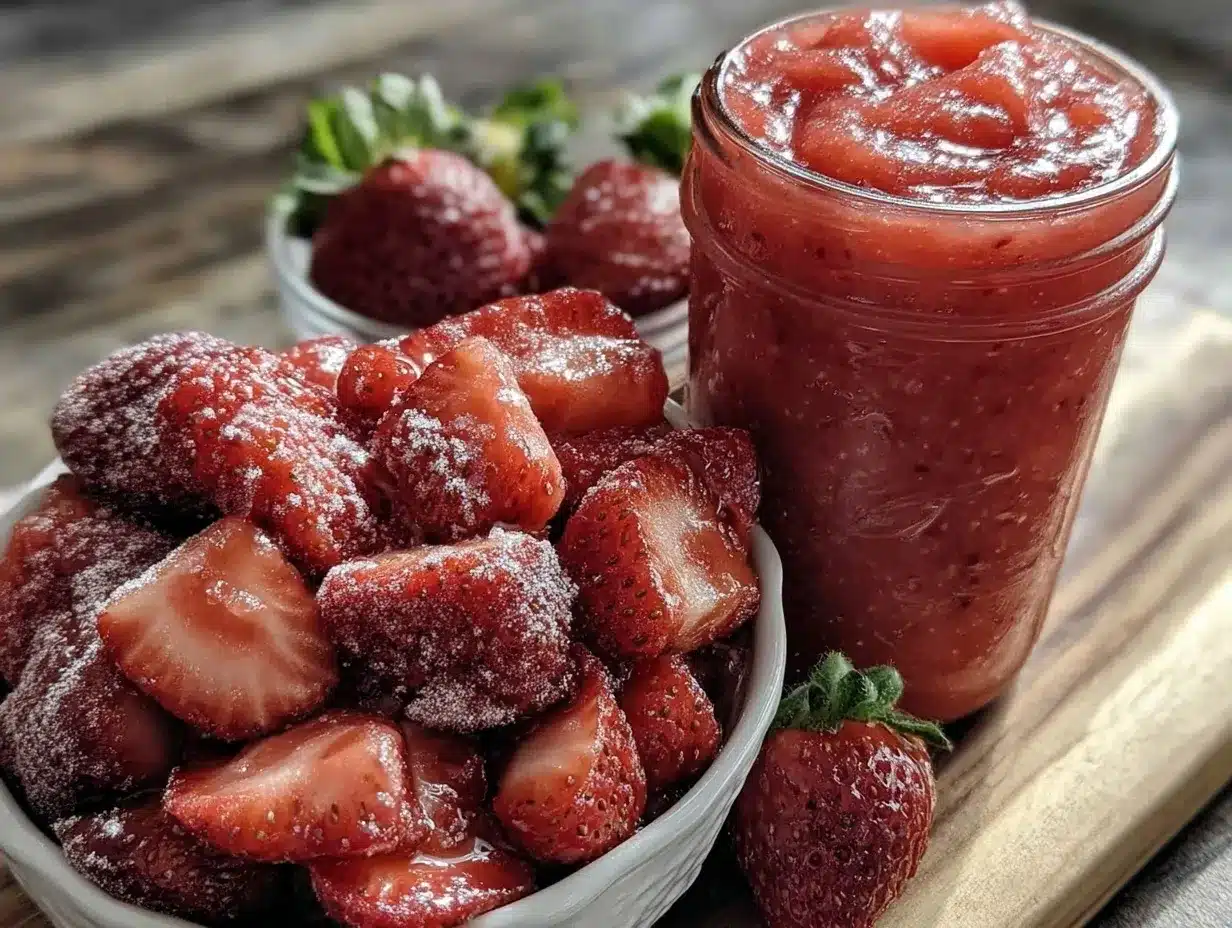
- Prepare the Strawberries: Rinse 1 to 2 pounds (450-900 g) of fresh strawberries under cold water. Pat dry gently with paper towels to remove excess moisture. Hull the strawberries by removing the green leafy tops using a paring knife.
- Method 1: Whole Freezing
- Place the cleaned strawberries in a single layer on a baking sheet lined with parchment paper.
- Put the tray in the freezer for about 2 to 3 hours, until the berries are frozen solid. This step prevents them from clumping together.
- Transfer the frozen strawberries into a freezer-safe ziplock bag or airtight container. Press out as much air as possible before sealing.
- Label with the date and store for up to 6 months.
- Method 2: Sliced Freezing
- Slice strawberries into halves or quarters, depending on size.
- Toss the slices gently in a bowl to remove excess juice (pat with paper towels if very juicy).
- Arrange the slices on a lined baking sheet in a single layer.
- Freeze for 2 to 3 hours until firm.
- Move the frozen slices into a labeled freezer bag or container.
- Method 3: Macerated Freezing
- Slice strawberries and place them in a bowl.
- Add 2 to 4 tablespoons (25-50 g) of sugar and 1 teaspoon (5 ml) of fresh lemon juice.
- Mix gently and let the berries sit at room temperature for about 15 minutes to release juices and create a natural syrup.
- Transfer the macerated strawberries and syrup into a freezer-safe container, leaving some room for expansion.
- Seal tightly, label, and freeze.
- Thawing Tips: When you want to use your frozen strawberries, thaw in the refrigerator for a few hours or use directly in smoothies or baking recipes.
Pro tip: Don’t skip the flash freezing step! It keeps your berries separate and easier to portion later. Also, always label your bags with the freezing date — trust me, you’ll thank yourself in a few months.
Cooking Tips & Techniques
Freezing strawberries isn’t just about tossing them in the freezer. Here are some tips I’ve learned the hard way to get consistently yummy results:
- Dry Thoroughly: Excess moisture before freezing leads to clumps and icy texture. Pat your strawberries dry gently but thoroughly.
- Flash Freeze: This is crucial for keeping berries separate. I skip this step only when I want a berry mash for smoothies.
- Use Quality Storage: Invest in sturdy freezer bags or containers that seal tightly. Air is the enemy of frozen fruit.
- Portion Before Freezing: Divide your berries into meal-sized portions to avoid thawing too much at once.
- Don’t Refreeze Thawed Berries: Once thawed, use the berries quickly to avoid mushiness and spoilage.
One time, I tried freezing berries in a flimsy bag without flash freezing—huge mistake. The berries froze together in a big clump, and I had to thaw the entire batch just to get a handful. Lesson learned: take the extra 2 hours for flash freezing, and your future self will thank you!
Variations & Adaptations
You can easily switch up these methods to fit your needs or dietary preferences. Here are a few ideas:
- Diet-Friendly: Skip the sugar in macerated strawberries for a no-added-sugar option. The natural berry sweetness still shines through.
- Seasonal Twist: In fall or winter, add a sprinkle of cinnamon or nutmeg to the macerated berries before freezing for a cozy flavor.
- Flavor Boost: Mix in fresh mint leaves or a splash of vanilla extract to macerated strawberries for a gourmet touch.
- Allergen Alternative: If you prefer, swap sugar for a natural sweetener like agave or stevia, adjusting to taste.
- Personal Favorite: I love blending frozen sliced strawberries with a splash of coconut milk to make an easy dairy-free sorbet straight from the freezer.
Also, you can freeze strawberries inside ice cube trays filled with water or juice for fruity ice cubes that jazz up drinks—fun and practical!
Serving & Storage Suggestions
Frozen strawberries are super versatile. Here’s how to get the most out of your stash:
- Serving Temperature: Use straight from the freezer for smoothies or let thaw for 10-15 minutes if you want a softer texture in desserts.
- Presentation: Sprinkle whole or sliced frozen berries over yogurt bowls, pancakes, or salads for a pop of color and flavor.
- Complementary Pairings: Frozen strawberries go beautifully with dark chocolate, fresh mint, or a dollop of whipped cream.
- Storage: Keep frozen strawberries for up to 6 months in the freezer. Avoid freezer burn by keeping bags sealed and removing excess air.
- Reheating: For baking, you can add frozen strawberries directly without thawing. For sauces or jams, thaw gently over low heat.
Flavors and textures will mellow a bit over time but stay delightful. I find that frozen sliced strawberries work best for smoothies after a couple of months, while whole frozen ones keep their shape better for longer.
Nutritional Information & Benefits
Strawberries are a nutrient-packed treat loaded with vitamin C, antioxidants, and fiber. Here’s a quick snapshot per 100 grams (about 3.5 ounces) of fresh strawberries:
- Calories: ~32 kcal
- Vitamin C: 59 mg (almost 100% daily value)
- Fiber: 2 grams
- Low in fat and sodium
Freezing strawberries preserves most of their nutrients, especially vitamin C, making your frozen stash a healthy choice year-round. Plus, strawberries have anti-inflammatory properties and support heart health.
For those watching carbs, strawberries are naturally low-carb and gluten-free. Just watch added sugars if you macerate them.
Conclusion
If you’ve ever wished you could keep the bright, sweet taste of strawberries all year, this easy guide to freezing strawberries three ways is your answer. Whether you want whole berries for snacking, sliced for smoothies, or macerated for desserts, these methods make freshness and flavor last beyond the growing season.
I love this recipe because it makes my kitchen feel stocked with summer, even in the dead of winter. Plus, it’s simple enough for beginners but reliable enough for anyone who wants consistent results. Now, it’s your turn to try these freezing methods and find your favorite way to store strawberries at home.
Don’t forget to share your results or any creative twists you try—I’m always curious how others make this recipe their own! Happy freezing and enjoy your fresh strawberries all year long!
Frequently Asked Questions
How long can I keep frozen strawberries fresh?
Frozen strawberries maintain best quality for about 6 months. After that, they may lose flavor and texture but are still safe to eat if kept frozen.
Do I need to wash strawberries before freezing?
Yes, always rinse strawberries under cold water before freezing to remove dirt and pesticides. Dry thoroughly to avoid ice crystals.
Can I freeze strawberries without sugar?
Absolutely! Whole and sliced freezing methods don’t require sugar. Sugar is optional and mainly used for macerated strawberries.
What’s the difference between flash freezing and regular freezing?
Flash freezing means freezing the strawberries in a single layer on a tray first so they don’t stick together. Regular freezing without this step often results in clumps.
Can I use frozen strawberries directly in recipes?
Yes! Frozen strawberries can be used straight in smoothies, baking, sauces, or thawed gently for toppings and desserts.
Pin This Recipe!
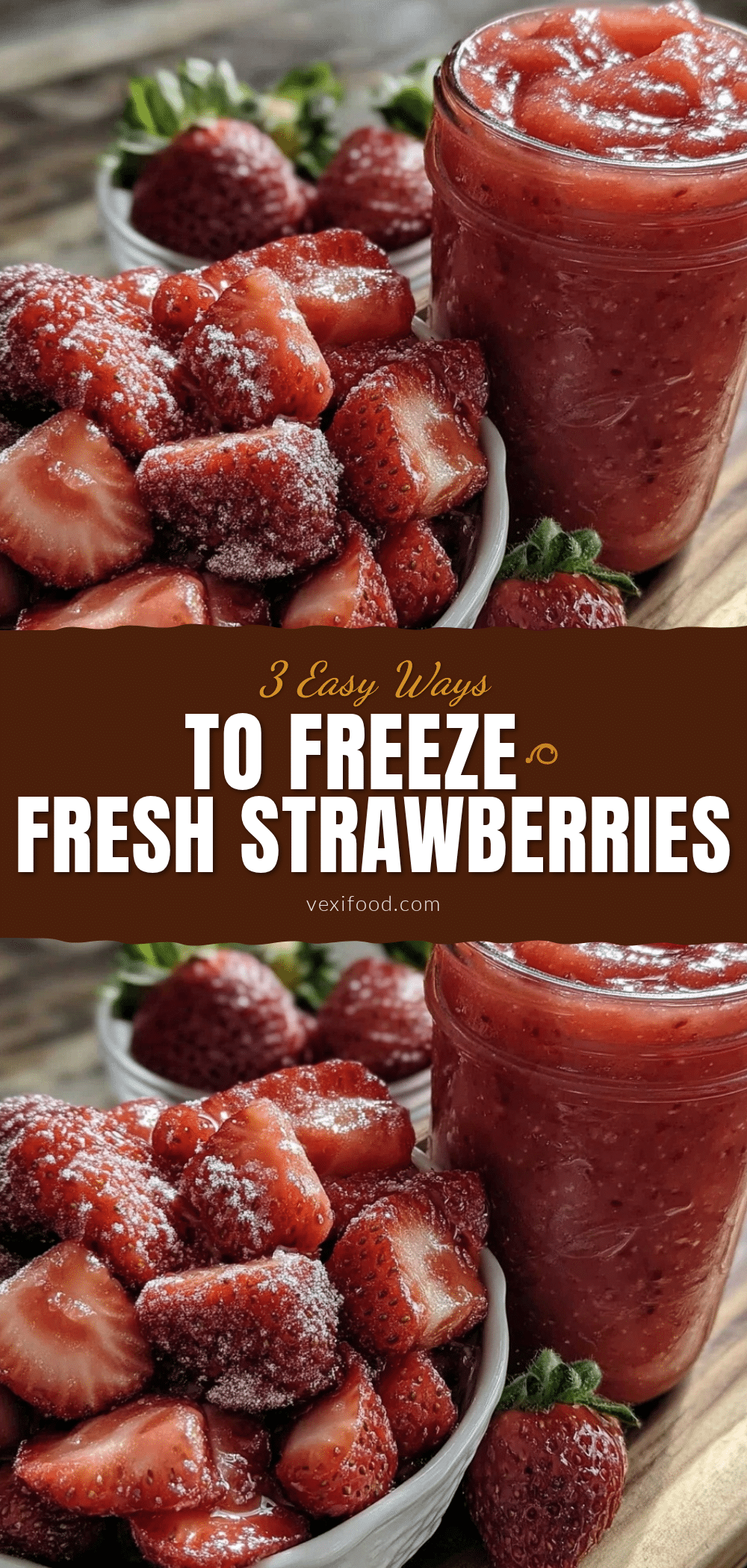
How to Freeze Strawberries Easy 3 Ways for Perfect Freshness Year-Round
Learn three simple and foolproof methods to freeze strawberries—whole, sliced, and macerated—to preserve their fresh-picked flavor all year long. Perfect for smoothies, desserts, or snacking.
- Prep Time: 10 minutes
- Cook Time: 2 to 3 hours (freezing time)
- Total Time: 2 hours 10 minutes to 3 hours 10 minutes
- Yield: Varies depending on amount frozen, approximately 4 servings
- Category: Preserving / Freezing
- Cuisine: American
Ingredients
- 1 to 2 pounds (450 to 900 grams) fresh strawberries, washed and hulled
- 2 to 4 tablespoons (25 to 50 grams) granulated sugar or superfine sugar (optional, for macerated method)
- 1 teaspoon (5 ml) fresh lemon juice (optional, for macerated method)
- Freezer bags or airtight containers for storage
Instructions
- Rinse 1 to 2 pounds (450-900 g) of fresh strawberries under cold water. Pat dry gently with paper towels to remove excess moisture. Hull the strawberries by removing the green leafy tops using a paring knife.
- Method 1: Whole Freezing – Place the cleaned strawberries in a single layer on a baking sheet lined with parchment paper. Freeze for about 2 to 3 hours until frozen solid. Transfer the frozen strawberries into a freezer-safe ziplock bag or airtight container, press out as much air as possible, seal, label with the date, and store for up to 6 months.
- Method 2: Sliced Freezing – Slice strawberries into halves or quarters. Toss slices gently in a bowl to remove excess juice if very juicy. Arrange slices on a lined baking sheet in a single layer. Freeze for 2 to 3 hours until firm. Move frozen slices into a labeled freezer bag or container.
- Method 3: Macerated Freezing – Slice strawberries and place in a bowl. Add 2 to 4 tablespoons sugar and 1 teaspoon fresh lemon juice. Mix gently and let sit at room temperature for about 15 minutes to release juices and create syrup. Transfer macerated strawberries and syrup into a freezer-safe container, leaving room for expansion. Seal tightly, label, and freeze.
- Thawing Tips: Thaw frozen strawberries in the refrigerator for a few hours or use directly in smoothies or baking recipes.
Notes
Flash freezing strawberries on a baking sheet before bagging prevents clumping and makes portioning easier. Pat strawberries dry thoroughly to avoid icy texture. Label bags with freezing date and use within 6 months for best quality. Sugar is optional and mainly used for macerated method to preserve flavor and texture. Do not refreeze thawed berries to avoid mushiness.
Nutrition
- Serving Size: Approximately 1/2 cu
- Calories: 32
- Sugar: 4.9
- Sodium: 1
- Fat: 0.3
- Carbohydrates: 7.7
- Fiber: 2
- Protein: 0.7
Keywords: freeze strawberries, freezing strawberries, how to freeze strawberries, strawberry preservation, frozen strawberries, macerated strawberries, sliced strawberries, whole strawberries, flash freezing