Love this? Save it for later!
Share the inspiration with your friends
My sister asked me why I couldn’t just mix everything together the night before and bake it the next day. I started to explain why that wouldn’t work — then stopped. Honestly, I had no good reason. I’d been making mashed potatoes the same way for years, always rushing at the last minute, always stressed while guests waited. Her question hung in the air, and I realized I was defending habit, not flavor.
So I tried it. I made the full casserole on a Wednesday afternoon — mashed potatoes, cheese, sour cream, the works — covered it, and stuck it in the fridge. The next day, I pulled it out, let it sit on the counter while the oven preheated, and baked it until golden and bubbly. The result? Creamier than my usual last-minute version. The flavors had time to get to know each other overnight. I mean, honestly, it was better.
That was three years ago, and I haven’t made mashed potatoes any other way since. This loaded make-ahead mashed potato casserole became my secret weapon for every holiday, potluck, and Sunday dinner. It saves me from that frantic peeling-and-boiling dance while guests sip wine in my kitchen. Maybe you’ve been there — the timer ticking, the butter not quite soft enough, everyone asking when dinner’s ready. This recipe fixes all of that.
The best part? It tastes like you spent all day in the kitchen when you really just did the work the night before while watching TV. That’s the kind of cooking I can get behind.
Why You’ll Love This Recipe
This isn’t just another mashed potato recipe — it’s the one that changed how I host dinners. After testing this dish for three different holiday gatherings and two casual Sunday suppers, I can tell you with confidence: it works every single time.
- Make-Ahead Magic: Assemble it up to 48 hours in advance. No more last-minute potato peeling while your guests arrive.
- Simple Ingredients: You need potatoes, butter, cream cheese, sour cream, cheddar, and a few pantry staples. Nothing fancy, nothing hard to find.
- Perfect for Holidays: Thanksgiving, Christmas, Easter, or any potluck — this dish travels well and reheats beautifully.
- Crowd-Pleaser: I’ve served this to picky kids and foodie adults alike. The cheesy, creamy top layer gets everyone.
- Unbelievably Creamy: The secret is cream cheese and a touch of sour cream mixed in while the potatoes are warm. It creates a texture that’s silky without being gluey.
What makes this recipe different from every other loaded mashed potato casserole out there? It’s the balance. I tested ratios of potato to dairy to cheese until I found the sweet spot — creamy enough to feel indulgent, but sturdy enough to hold its shape when sliced. Plus, the make-ahead method actually improves the texture. The starches settle, the flavors meld, and the top gets that perfect golden crust.
This is comfort food reimagined — make-ahead, stress-free, but with the same soul-soothing satisfaction as the version your grandmother made from scratch. It’s perfect for impressing guests without breaking a sweat, or turning a simple weeknight dinner into something memorable.
What Ingredients You Will Need
This recipe uses simple, wholesome ingredients to deliver bold flavor and satisfying texture without the fuss. Most of these are pantry staples, which makes this dish perfect for those moments when you need to bring something impressive but don’t have time for a specialty grocery run.
For the Mashed Potato Base
- 5 pounds Yukon Gold potatoes, peeled and cut into 2-inch chunks (Yukon Golds give the creamiest texture — Russets work too, but they’re starchier and can get gummy if overworked)
- 1 cup whole milk, warmed (adds richness; use 2% or oat milk if needed, but avoid skim — it makes the potatoes watery)
- ½ cup unsalted butter, melted (I recommend Kerrygold for the best flavor, but any good-quality butter works)
- 4 ounces cream cheese, softened and cut into cubes (this is the secret to ultra-creamy potatoes — don’t skip it)
- ½ cup sour cream, room temperature (adds tang and helps keep the potatoes light)
- 1 teaspoon garlic powder (not garlic salt — you’ll season with salt separately)
- 1 teaspoon onion powder
- 1 ½ teaspoons salt, plus more for the cooking water
- ½ teaspoon black pepper
For the Loaded Topping
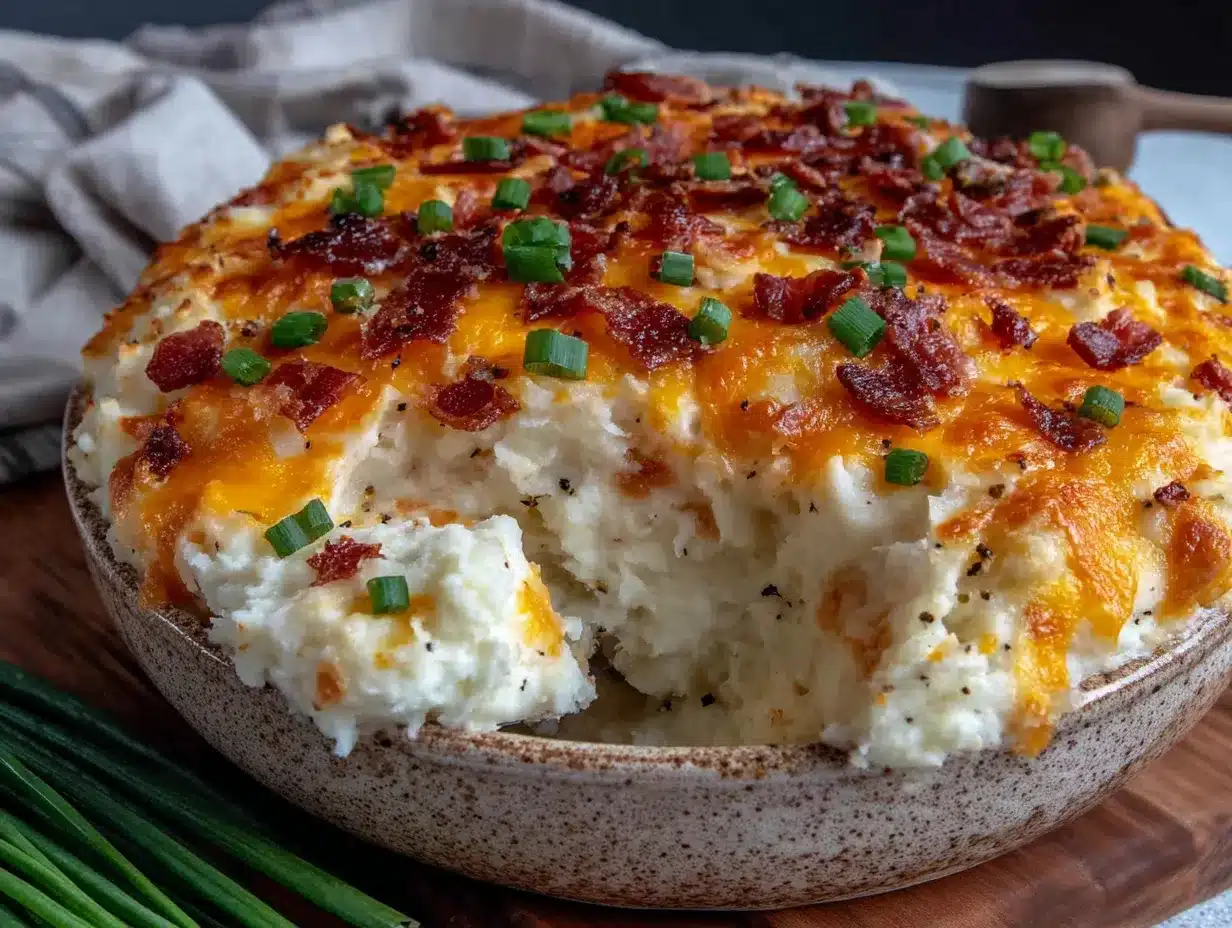
- 2 cups shredded sharp cheddar cheese, divided (I prefer Tillamook or Cabot for the sharpest flavor; mild cheddar works but won’t give you that same punch)
- 1 cup cooked and crumbled bacon (about 10 slices; turkey bacon works but won’t get as crispy)
- ½ cup chopped green onions, plus more for garnish
- 2 tablespoons melted butter, for brushing the top before baking
When selecting your potatoes, look for firm, smooth-skinned Yukon Golds without any green spots or sprouting eyes. For the bacon, I like thick-cut because it stays chunkier in the casserole. And please — use block cheese and shred it yourself. The pre-shredded bags have anti-caking agents that prevent smooth melting, and you’ll notice the difference in the final dish.
Equipment Needed
You don’t need a fancy kitchen to pull off this recipe. Here’s what you’ll actually use:
- Large stockpot (at least 6 quarts) — for boiling the potatoes. A Dutch oven works great too.
- Colander — for draining the cooked potatoes
- Potato masher or ricer — I prefer a ricer for the smoothest texture, but a good old-fashioned masher works perfectly. Avoid using an electric mixer — it can make potatoes gluey.
- Large mixing bowl — for combining everything
- 9×13-inch baking dish — glass or ceramic works best. Metal pans can react with the dairy and give a slight metallic taste.
- Aluminum foil — for covering during refrigeration and initial baking
- Chef’s knife and cutting board — for prepping potatoes and toppings
- Measuring cups and spoons — precise measurements matter here
If you don’t have a ricer, don’t stress. I used a fork for years before upgrading. The texture is slightly different — a bit more rustic — but the flavor is exactly the same. Also, if your baking dish is smaller or larger, adjust the bake time by about 10 minutes either way.
Preparation Method
This recipe breaks down into two phases: the prep day and the bake day. I’ll walk you through both.
Phase 1: The Prep Day (Up to 48 Hours Before Serving)
Step 1: Boil the potatoes
Place the peeled and cut potatoes in your large stockpot and cover them with cold water by about 2 inches. Add a generous tablespoon of salt to the water — this seasons the potatoes from the inside out. Bring to a boil over high heat, then reduce to a simmer. Cook for 15-20 minutes, until a fork slides into the largest piece with no resistance. Don’t overcook them — waterlogged potatoes make sad casserole.
Step 2: Drain and steam dry
Drain the potatoes in your colander and let them sit there for 2-3 minutes. This steaming step is crucial — excess water is the enemy of creamy mashed potatoes. You want them dry so they can soak up all that butter and cream cheese.
Step 3: Mash and mix
Return the hot potatoes to the pot (or transfer to your large bowl). Add the melted butter and cream cheese first — the heat from the potatoes will soften the cream cheese beautifully. Mash until mostly smooth, then add the warm milk, sour cream, garlic powder, onion powder, salt, and pepper. Mix until just combined. Overmixing develops gluten and makes potatoes gluey — stop as soon as it looks uniform.
Step 4: Layer the casserole
Spread half the mashed potatoes in your greased 9×13 dish. Sprinkle with 1 cup of shredded cheddar, half the bacon, and half the green onions. Top with the remaining potatoes and spread evenly. Top with the remaining cheddar, bacon, and green onions.
Step 5: Cool and refrigerate
Let the casserole cool completely on the counter — about 30 minutes. Then cover tightly with foil and refrigerate for up to 48 hours. The flavors get better as they sit, I promise.
Phase 2: The Bake Day (When You’re Ready to Serve)
Step 6: Bring to room temperature
Take the casserole out of the fridge 30-45 minutes before baking. This step is non-negotiable — baking a cold casserole leads to uneven heating and a watery texture.
Step 7: Preheat and bake
Preheat your oven to 375°F. Brush the top with the remaining 2 tablespoons of melted butter — this creates that gorgeous golden crust. Cover with foil and bake for 30 minutes. Remove the foil and bake another 15-20 minutes, until the top is bubbly and golden brown. The internal temperature should reach 165°F.
Step 8: Rest and serve
Let the casserole rest for 10 minutes before serving. This allows the structure to set so you get clean slices. Garnish with extra green onions and a crack of black pepper.
Cooking Tips & Techniques
After making this casserole at least two dozen times, here’s what I’ve learned the hard way so you don’t have to:
Don’t rinse the potatoes after draining. I know it’s tempting to give them a quick rinse, but you want that starch. It helps the casserole hold together. I made this mistake once and ended up with a soupy mess.
Warm your dairy. Cold milk or cold cream cheese into hot potatoes creates lumps. I microwave the milk for 45 seconds and let the cream cheese sit on the counter while the potatoes boil. Small effort, huge payoff.
Season the cooking water. This is the single biggest tip for flavorful mashed potatoes. The potatoes absorb salted water as they cook, seasoning them from the inside. I use about 1 tablespoon of salt per gallon of water.
Watch your oven. All ovens run differently. If your top is browning too fast but the center isn’t hot yet, tent with foil for the last 10 minutes. I learned this after burning three batches in my old apartment oven.
Double the recipe for a crowd. This casserole freezes beautifully, so I often make two — one for now, one for later. Just wrap the unbaked casserole tightly in foil and plastic wrap, and freeze for up to 3 months. Bake from frozen, adding 20 minutes to the covered bake time.
Variations & Adaptations
This recipe is endlessly adaptable. Here are a few versions I’ve tried and loved:
Loaded Broccoli Cheddar: Steam 2 cups of broccoli florets until tender, chop them small, and fold them into the potato mixture before layering. The broccoli adds color and a slight sweetness that balances the sharp cheddar. My kids actually eat this version without complaint.
Spicy Southwest: Swap the cheddar for pepper jack cheese, add 1 can of drained diced green chiles, and use crumbled chorizo instead of bacon. Top with pickled jalapeños before the final bake. This version is my go-to for game day parties.
Herb and Garlic: Roast a whole head of garlic (cut the top off, drizzle with olive oil, wrap in foil, bake at 400°F for 40 minutes), then squeeze the soft cloves into the potatoes. Add 2 tablespoons of fresh chopped rosemary and thyme. This version tastes fancy but takes almost no extra effort.
Dairy-Free Option: Use plant-based butter, oat milk, and vegan cream cheese and sour cream. I’ve tested this with Violife and Kite Hill brands — the texture is slightly less creamy but still delicious. The dairy-free version doesn’t hold together as well for leftovers, so eat it fresh.
Low-Carb Version: Substitute the potatoes with an equal amount of cooked and mashed cauliflower. Squeeze the cauliflower in a clean kitchen towel to remove excess moisture before mixing. The texture is lighter, and the flavor is surprisingly close.
Serving & Storage Suggestions
This casserole shines at room temperature — I actually prefer it after it’s sat out for 15-20 minutes. The flavors open up, and the texture relaxes into something almost pudding-like. Serve it alongside roasted meats like turkey, ham, or a simple roast chicken. It also pairs beautifully with a crisp green salad dressed with vinaigrette to cut through the richness.
For storage, let the casserole cool completely, then cover tightly with foil or transfer to an airtight container. It keeps in the refrigerator for up to 5 days. The flavors actually deepen over the first two days — I’ve been known to make it just for the leftovers.
To reheat, I prefer the oven: 350°F for 15-20 minutes, covered. The microwave works in a pinch (about 2 minutes per serving), but the top won’t stay crispy. If you’re reheating from frozen, thaw overnight in the fridge, then bake covered at 350°F for 25 minutes, then uncovered for 10 minutes.
One thing to note: this casserole does not freeze well after baking. The texture gets grainy. But unbaked? It’s a freezer superstar. Assemble, wrap tightly, freeze for up to 3 months, and bake straight from frozen (add 20 minutes to the covered bake time).
Nutritional Information & Benefits
Per serving (based on 12 servings): Approximately 380 calories, 22g fat, 35g carbohydrates, 12g protein, 3g fiber. These are estimates — your numbers will vary based on specific brands and substitutions.
Potatoes get a bad rap, but they’re actually nutritious. One medium potato with the skin has more potassium than a banana, plus vitamin C, B6, and fiber. The dairy in this recipe adds calcium and protein. And yes, there’s butter and cheese — but this is a celebration dish, not an everyday meal. Balance is everything.
If you’re watching sodium, use low-sodium bacon and reduce the added salt. The cream cheese and sour cream already bring plenty of flavor. For a lighter version, swap half the potatoes with cauliflower and use reduced-fat cheese.
This recipe contains dairy and gluten (if using certain bacon brands with added wheat). For a truly gluten-free version, check your bacon label and use certified gluten-free ingredients.
Conclusion
This loaded make-ahead mashed potato casserole has saved my sanity more times than I can count. It’s the dish I bring to every holiday gathering, the one friends request for potlucks, and the one I make just because it’s Tuesday and I want comfort food without the stress. The make-ahead method isn’t just convenient — it genuinely makes the dish better.
I hope you try this recipe and make it your own. Add your favorite cheese, swap in different mix-ins, or keep it exactly as written. The beauty of this dish is that it’s forgiving. It wants to be delicious, and it will work with you, not against you.
When you make it — and I hope you do — come back and tell me how it turned out. Did you add something unexpected? Did it become your new holiday staple? I genuinely want to know. Drop a comment below or tag me in your photos. Happy cooking, friend.
Frequently Asked Questions
Can I use instant mashed potatoes for this casserole?
I wouldn’t recommend it. The texture will be noticeably different — thinner, less creamy, and more likely to separate during baking. The real potatoes are worth the extra 15 minutes of boiling time.
How far ahead can I assemble this casserole?
Up to 48 hours in advance. Any longer and the potatoes can start to discolor and develop an off flavor. If you need more lead time, freeze the unbaked casserole for up to 3 months.
Can I add other vegetables to this dish?
Absolutely. Roasted garlic, caramelized onions, sautéed mushrooms, or steamed broccoli all work beautifully. Just make sure any added vegetables are cooked and drained of excess moisture before mixing in.
Why did my casserole turn out watery?
Two common culprits: not draining the potatoes well enough after boiling, or baking from cold. Make sure to let the potatoes steam dry in the colander for a few minutes, and always bring the casserole to room temperature before baking.
Can I make this in a slow cooker?
I’ve tested this, and honestly, it’s not the same. The slow cooker creates too much steam, resulting in a mushy texture. Stick with the oven method for the best results — the dry heat is what gives you that golden, slightly crisp top layer.
Pin This Recipe!
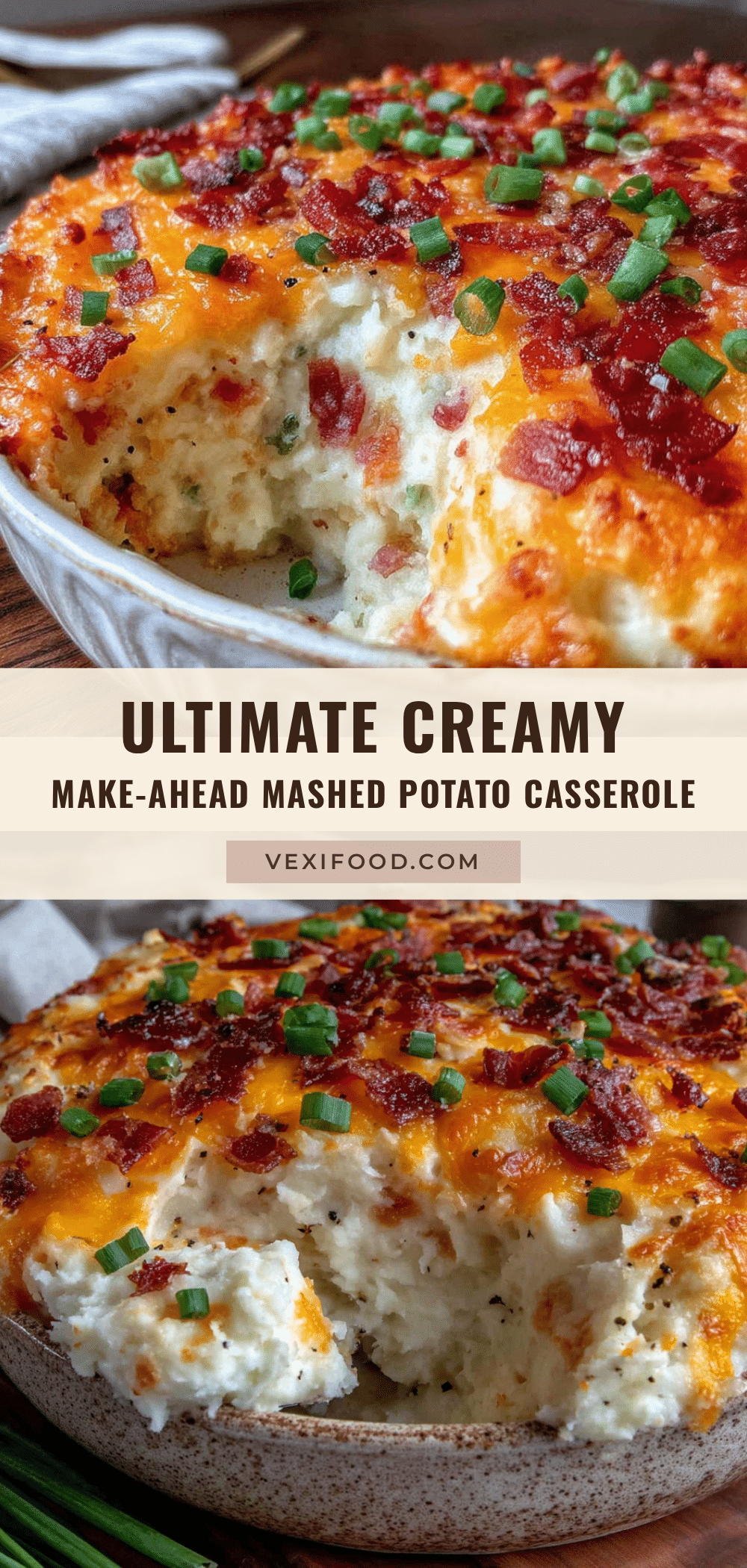
Ultimate Loaded Mashed Potato Casserole: Easy Make-Ahead Recipe

This make-ahead loaded mashed potato casserole is the ultimate stress-free side dish for holidays and potlucks. Creamy Yukon Gold potatoes are mixed with butter, cream cheese, sour cream, and cheddar, then topped with bacon and green onions for a dish that tastes like you spent all day in the kitchen.
- Prep Time: 30 minutes
- Cook Time: 45 minutes
- Total Time: 1 hour 15 minutes
- Yield: 12 servings 1x
- Category: Side Dish
- Cuisine: American
Ingredients
- 5 pounds Yukon Gold potatoes, peeled and cut into 2-inch chunks
- 1 cup whole milk, warmed
- ½ cup unsalted butter, melted
- 4 ounces cream cheese, softened and cut into cubes
- ½ cup sour cream, room temperature
- 1 teaspoon garlic powder
- 1 teaspoon onion powder
- 1 ½ teaspoons salt, plus more for cooking water
- ½ teaspoon black pepper
- 2 cups shredded sharp cheddar cheese, divided
- 1 cup cooked and crumbled bacon (about 10 slices)
- ½ cup chopped green onions, plus more for garnish
- 2 tablespoons melted butter, for brushing the top before baking
Instructions
- Place the peeled and cut potatoes in a large stockpot and cover with cold water by about 2 inches. Add a generous tablespoon of salt to the water. Bring to a boil over high heat, then reduce to a simmer. Cook for 15-20 minutes, until a fork slides into the largest piece with no resistance.
- Drain the potatoes in a colander and let them sit for 2-3 minutes to steam dry.
- Return the hot potatoes to the pot or transfer to a large bowl. Add the melted butter and cream cheese. Mash until mostly smooth, then add the warm milk, sour cream, garlic powder, onion powder, salt, and pepper. Mix until just combined.
- Spread half the mashed potatoes in a greased 9×13-inch baking dish. Sprinkle with 1 cup of shredded cheddar, half the bacon, and half the green onions. Top with the remaining potatoes and spread evenly. Top with the remaining cheddar, bacon, and green onions.
- Let the casserole cool completely on the counter, about 30 minutes. Then cover tightly with foil and refrigerate for up to 48 hours.
- When ready to bake, take the casserole out of the fridge 30-45 minutes before baking to bring to room temperature.
- Preheat the oven to 375°F. Brush the top with the remaining 2 tablespoons of melted butter. Cover with foil and bake for 30 minutes. Remove the foil and bake another 15-20 minutes, until the top is bubbly and golden brown. The internal temperature should reach 165°F.
- Let the casserole rest for 10 minutes before serving. Garnish with extra green onions and a crack of black pepper.
Notes
For best results, use Yukon Gold potatoes and shred your own cheddar cheese. Do not rinse potatoes after draining; the starch helps the casserole hold together. Warm the dairy before adding to hot potatoes to prevent lumps. If the top browns too fast, tent with foil for the last 10 minutes. This casserole can be assembled up to 48 hours in advance or frozen unbaked for up to 3 months.
Nutrition
- Serving Size: 1 serving
- Calories: 380
- Sugar: 3
- Sodium: 680
- Fat: 22
- Saturated Fat: 12
- Carbohydrates: 35
- Fiber: 3
- Protein: 12
Keywords: mashed potato casserole, loaded mashed potatoes, make-ahead casserole, holiday side dish, cheesy potatoes, bacon and cheese potatoes